The route of the Most Beautiful Villages of the Pyrenees
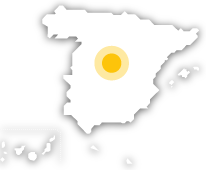
Is this a dream or is it real? You will often ask yourself this question during this journey through some of the most beautiful mountain villages in the Pyrenees. You will pass through 12 small towns in Navarre, Aragon and Catalonia, among majestic peaks, quiet valleys and crystal-clear rivers.They all belong to the network of the Most Beautiful Villages of Spain. For enough time to really enjoy the culture, the environment and the main sights of each place, it is advisable to do the route in five days. Don't be surprised if you decide to stay longer, because these rural gems will undoubtedly win you over.
-
1. Ujué-Uxue (Navarre)
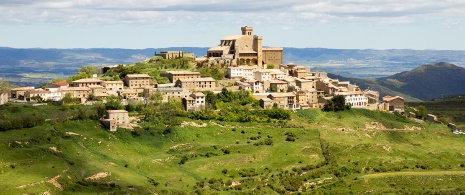
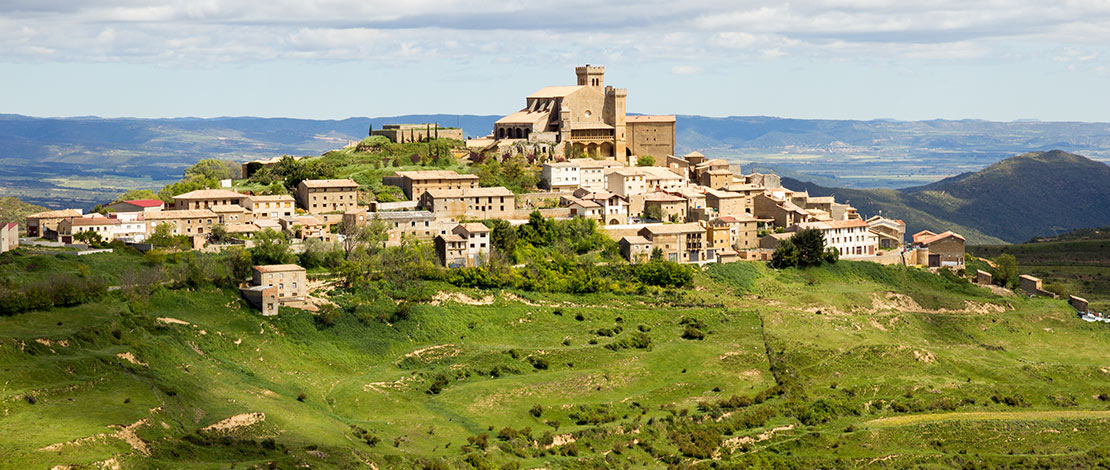
This picture-postcard village marks the beginning of the route. Situated on a hill, from its viewpoints you can already make out the mountains of the Pyrenees of Navarre. Its steep cobbled streets form a medieval tangle of tiered houses. The church-fortress of Santa María, a shrine of special devotion in the area and a place of pilgrimage for hundreds of people during the procession of the Virgin of Ujué, held every year on the Sunday following 25th April, presides over the scene at the top of the hill.What to try of the local cuisineYou can savour the essence of Navarrese country cooking with specialities such as migas de pastor (breadcrumbs with meat and vegetables, traditionally made in a wood-fired oven), candied almonds, and tortas de chistorra (chistorra sausage cakes).How to get thereIt is located in the middle of Navarre, 53 kilometres from Pamplona and 18 kilometres from Tafalla and Olite.Bonus: things to do in the areaThe road journey to Ujué passes through the nearby town of San Martín de Unx, where you can visit the church of San Martín de Tours and its medieval crypt.
-
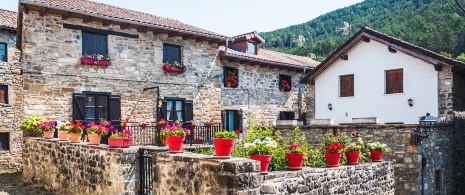
2. Roncal-Erronkari (Navarra)
The journey continues towards the Roncal valley and the village of the same name, with large houses and cobbled streets arranged in a "Y" shape around the river Esca. This is the birthplace of the opera singer Julián Gayarre, who achieved worldwide fame and was considered the best tenor of his time. You can visit his house-museum and see his mausoleum in the cemetery: an impressive work in bronze and Carrara marble by the sculptor Mariano Benlliure, which was awarded the Medal of Honour for Sculpture at the Universal Exhibition in Paris in 1900.What to try of the local cuisineRoncal cheese is a delight to eat and take home as a souvenir. Made from sheep's milk using the traditional method, it is so good that it has its own festival in June: Cheese Day.How to get thereThe journey by road from Ujué is approximately 90 kilometres. The journey from Pamplona is slightly longer, about 96 kilometres. The Pamplona-Uztárroz bus starts in Pamplona and stops at Roncal.Bonus: things to do in the areaThe Roncal Valley is a Starlight-certified destination, so take the opportunity to enjoy some astro-tourism. You can also go hiking along the Camino Real (GR 321) route, which links the villages in the valley.
-
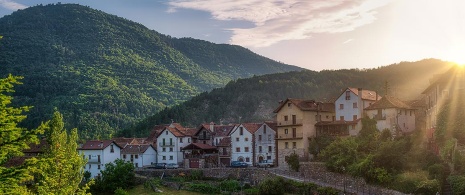
3. Ansó (Huesca, Aragon)
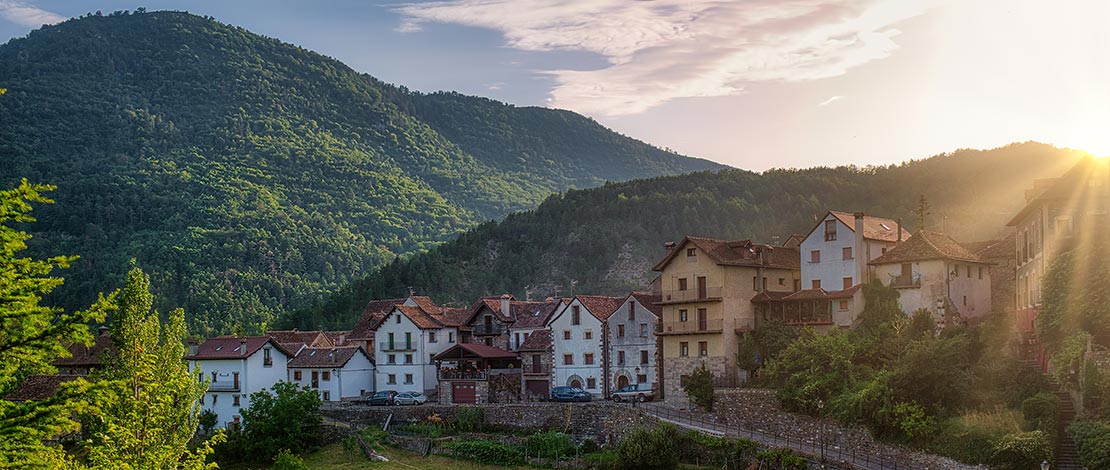
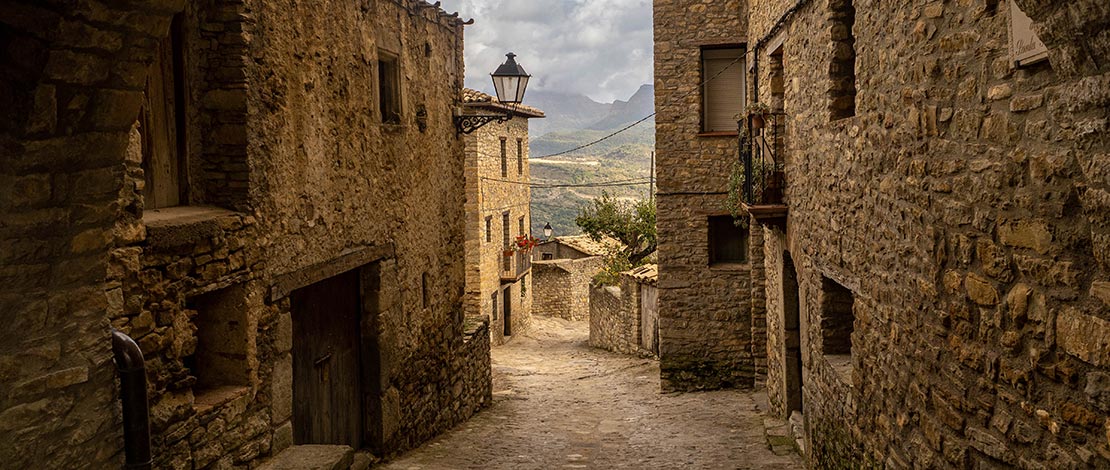
This fascinating Pyrenean village is one of the best examples of traditional high mountain architecture. Note the "arteas" (the narrow passages between the houses); the "espantabrujas" (the shapes on top of the chimneys); the double-sloped roofs to withstand winter snowfalls... After visiting the church of San Pedro, the old Abbey and the Prison Tower, enter the Museum of Typical Ansotano Costume to discover the traditional clothing of medieval origin, a hallmark of the area.What to try of the local cuisineYou'll love the traditional migas de pastor (breadcrumbs with lamb and vegetables), lamb stews and curd cheese with honey. Try dishes made with fresh vegetables, picked straight from the garden, and seasonal mushrooms.How to get thereThe journey from Roncal to Ansó is barely 20 kilometres by road. The town is 54 kilometres from Jaca, which can also be reached by bus.Bonus: things to do in the areaThere are different routes and trails that allow you to admire the spectacular landscapes of the area. In August, during the Ansotano Traditional Costume Day Festival, the locals dress up in traditional costume and show off the customs of yesteryear.
-
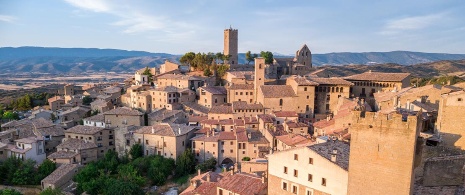
4. Sos del Rey Católico (Zaragoza, Aragon)
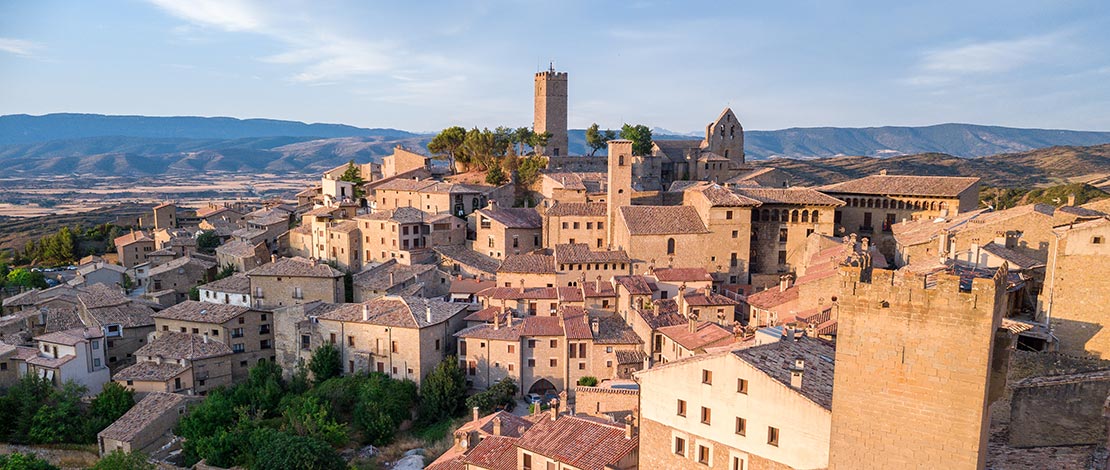
With this stop you will have reached one of the finest medieval sites in Aragon and, as the name itself indicates, the birthplace of King Ferdinand II of Aragon (Ferdinand the Catholic). In the palace of Sada you will find the visitor centre dedicated to King Ferdinand, and the tourist office, which organises guided tours of the town. You will also discover that its beautiful town centre has been the setting for the filming of the famous movie “The Heifer”, the TV series “Cathedral of the Sea” and even a Christmas lottery advert.What to try of the local cuisinePocha beans, roast lamb, trout and game dishes are part of the traditional cuisine. Another classic is migas de pastor (breadcrumbs with lamb and vegetables), prepared with local mushrooms when they are in season.How to get thereIt is located 60 kilometres from Pamplona and 120 kilometres from Zaragoza, where there are buses to the town. The journey between Ansó and Sos del Rey Católico is approximately 80 kilometres by road.Bonus: things to do in the areaEnjoy all that the Cinco Villas region has to offer. Around 10 March, the medieval festival "The Birth of a King" is held, with historical re-enactments, street markets and culinary activities.
-
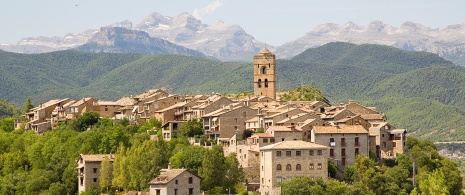
5. Aínsa (Huesca, Aragon)
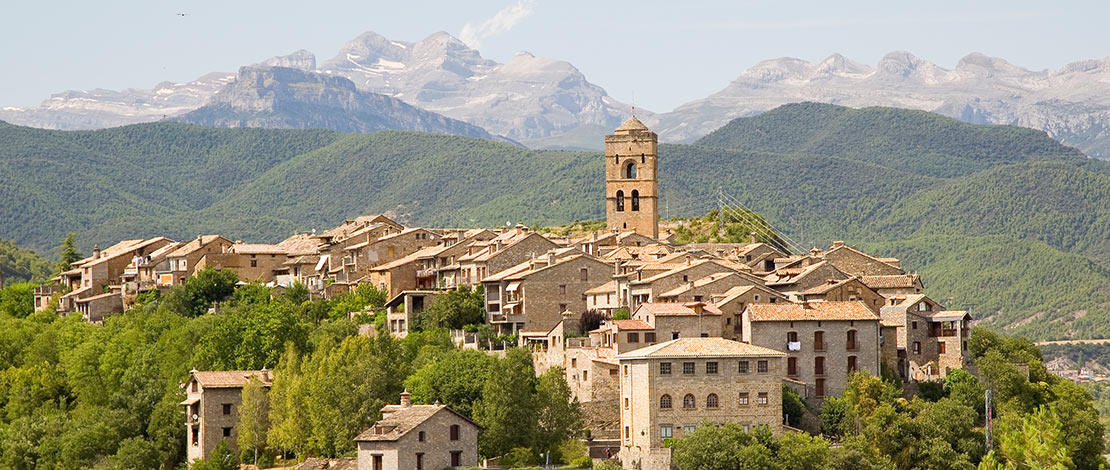
The capital of the Sobrarbe region, at the confluence of the Ara and Cinca rivers, is the next destination. Walking through the streets of its historic quarter you will have the sensation that time has stood still. You will reach the Romanesque church of Santa María, its unique arcaded main square, and the castle grounds, the venue every summer for the Aínsa Castle Music Festival, where you can also visit the eco-museum on Pyrenean fauna and the Sobrarbe-Pyrenees Geopark visitor centre.What to try of the local cuisineLocal delicacies include cured sausages, veal, lamb and kid, and in particular, tasty local desserts such as almond and walnut pastillos (pastries) and crespillos (pancakes). How to get thereThe village is located some 54 kilometres from Barbastro, 106 from Huesca and 175 from Zaragoza. The distance from Sos del Rey Católico is 156 kilometres by road.Bonus: things to do in the areaAínsa is a good starting point for excursions on foot or by bike to explore the Sobrarbe-Pyrenees Geopark.
-
6. Roda de Isábena (Huesca, Aragon)
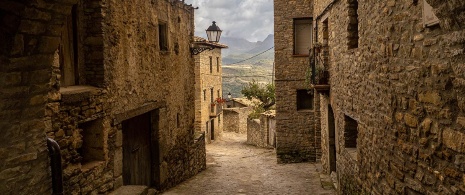
Although it may seem hard to believe, this small village of fifty inhabitants boasts a cathedral, as it was an episcopal see for almost 200 years. The then cathedral of San Vicente was built in the 11th century in the Lombard Romanesque style, and one of its treasures is its cosy cloister. From there you can access the Hospedería restaurant, which is located in the former refectory. Near the old cathedral is the Prior's palace and the Airela viewpoint, perfect for relaxing and enjoying the views of the mountains.What to try of the local cuisineLonganiza de Graus (pork sausage) and traditional dishes such as roast lamb and recau (potato stews with meat) are some of the flavours not to be missed. How to get there Roda de Isábena is located in the region of La Ribagorza, some 100 kilometres from the city of Lleida and 110 from Huesca. It is 56 kilometres from Aínsa. Bonus: things to do in the areaIn the museum "La era de Vicen" you can see an interesting collection of old farm implements and model ships and aeroplanes. A route around the village will take you past several hermitages to the Romanesque bridge of San Jaime.
-
7. Alquézar (Huesca, Aragon)
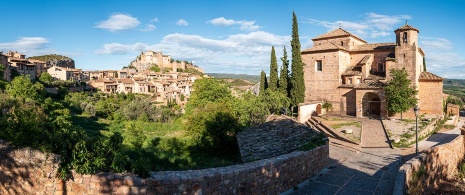
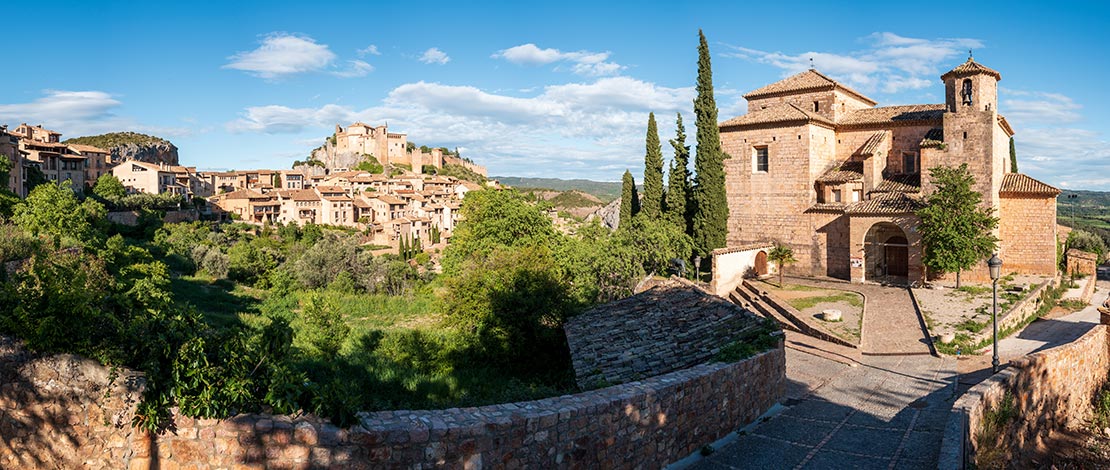
The route approaches the heart of the Sierra y Cañones de Guara Natural Park to reach this medieval village, dominated by the Collegiate Church of Santa María la Mayor, built over the former 9th-century Arab fortress that is the origin of the village's name (al-qasr). From the Sonrisa del Viento viewpoint you will get a complete panoramic view of the village. Another viewpoint, near Plaza de Rafael Ayerbe, will show you the final stretch of the Vero river canyon and the spectacular walkway route that will allow you to cross it.What to try of the local cuisineLocal products such as Barbastro pink tomatoes, olive oil and cheeses, accompanied by the high-quality wines grown in the region, belonging to the Somontano PDO.How to get thereIt is located less than 50 kilometres from Huesca, and the road from Roda de Isábena is 82 kilometres.Bonus: things to do in the area The hills and canyons of Guara are ideal for hiking, climbing and canyoning. Come and discover the rock art of the Vero River Cultural Park, and take advantage of the fact that you are on the Somontano Wine Route to do wine tourism.
-
8.- Durro (Lleida, Catalonia)
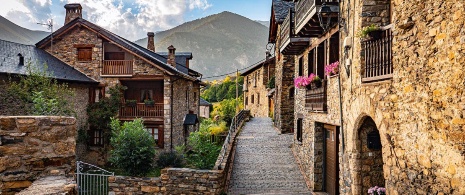
In this village you will find two of the nine Romanesque churches of the Vall de Boí declared World Heritage by UNESCO in 2000. The church of La Nativitat, with its characteristic slate roof and tower, is the first example of this group of Catalan Romanesque architecture that you can see. The second is the chapel of Sant Quirc, a smaller building located a little further up the mountain, about 20 minutes' walk away, which also gives you the opportunity to enjoy a wonderful panoramic view of the valley. What to try of the local cuisineGrilled lamb, sausages and mountain trintxat (potato and cabbage) are some of the traditional dishes that you can enjoy in the old farmhouses converted into rural guesthouses.How to get thereIt is located approximately 140 kilometres from Lleida. The distance from Alquézar is 136 kilometres.Bonus: things to do in the areaNearby you can visit other Romanesque churches in the Vall de Boí, such as San Clemente de Taüll or San Juan de Boí. In mid-July there are festivities known as the Summer Solstice Fire Festivals in the Pyrenees, declared Intangible Heritage of Humanity by UNESCO.
-
9.- Garòs (Lleida, Catalonia)
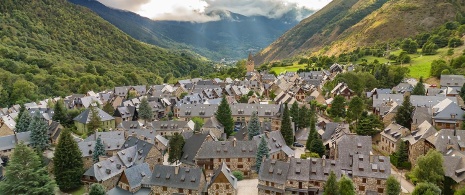
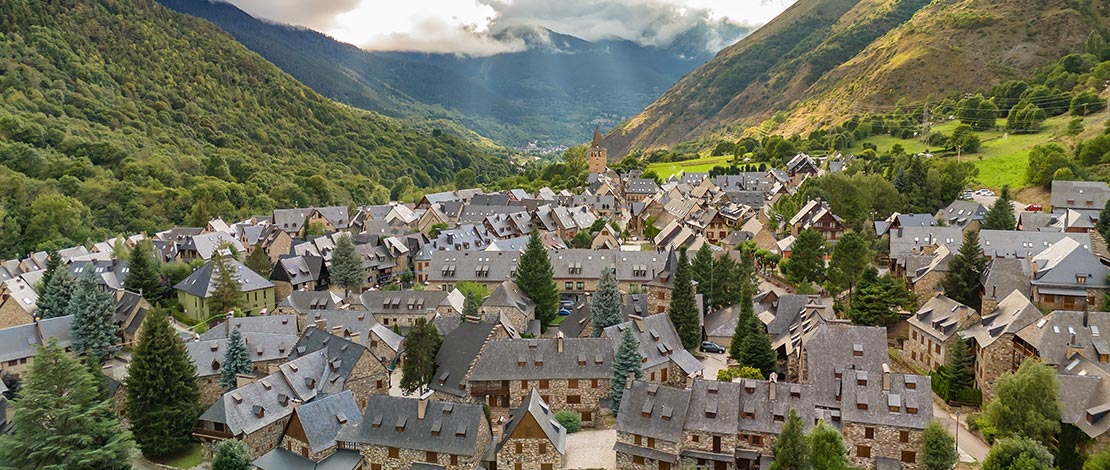
The route goes into the Haute Aran area, to this quiet village on the right bank of the river Garonne. Here, new buildings recreate the vernacular architecture of the Aran valley and are perfectly integrated with the old part of the village, a model that has been repeated in other enclaves in the region. Take a leisurely stroll around the main square, one of its most charming spots, and then go and see the Gothic church of San Julián, which you'll quickly spot for its sturdy tower.What to try of the local cuisineWild boar civet or Aranese-style trout are some of the most traditional dishes you can try.How to get thereThe journey by road from Durro is 58 kilometres. Garós is about 170 kilometres from Lleida, from where you can reach the neighbouring town of Vielha (5 km away) by bus.Bonus: things to do in the areaThe Camin Reiau passes through Garòs, a circular route that connects the 33 villages of the Vall d'Aran thanks to the recovery of traditional paths whose origin dates back to the Roman road that crossed the valley.
-
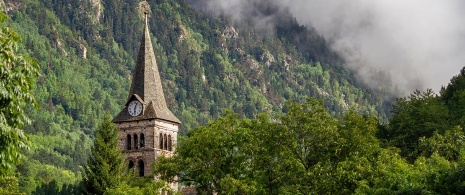
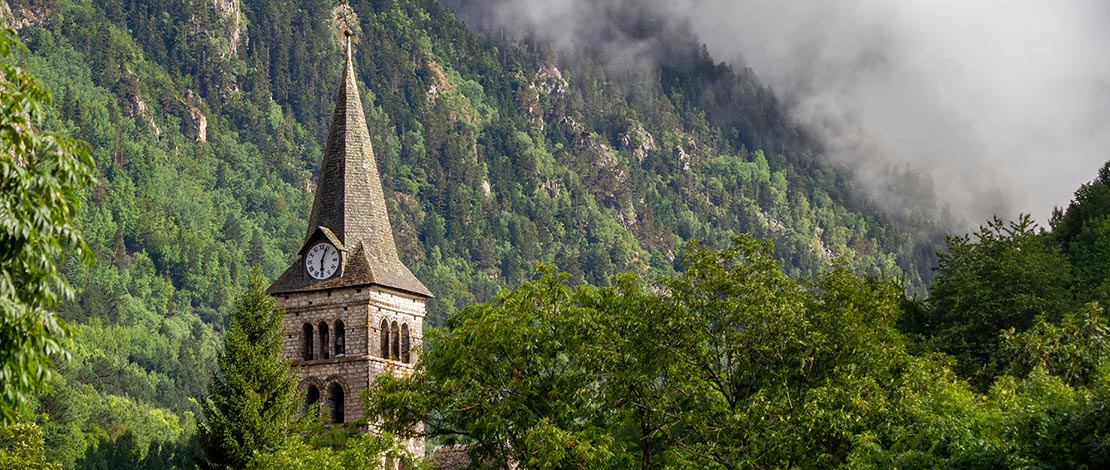
10.- Arties (Lleida, Catalonia)
At an altitude of over 1,100 metres, at the confluence of the rivers Valarties and Garona, this is another of the most charming villages in the Vall d'Aran. A pointed bell tower unmistakably marks the church of Santa María de Arties, one of the best examples of Romanesque architecture in the area. Nearby you will see the Gothic church of Sant Joan and, next to the Parador de Arties, the Casa Portolá building, a jewel of Aranese architecture. On the night of 23 June you can experience the cremà deth Taro, another of the summer solstice fire festivals of the Pyrenees.What to try of the local cuisineYou will find hearty mountain cuisine, with no shortage of soups, stews and casseroles such as olla aranesa and caulets.How to get thereOnly 2.5 kilometres separate Garós from Arties. If you want to go from Lleida, the journey by road is 170 kilometres (the nearest bus stop is in the neighbouring town of Vielha, 7 km away).Bonus: things to do in the areaYou can go hiking or mountain biking to one of the glacial lakes in the surrounding area and, in winter, ski at the nearby ski resort of Baqueira Beret. Afterwards, if you stay at the Parador de Arties, you can relax in its spa with views of the mountains.
-
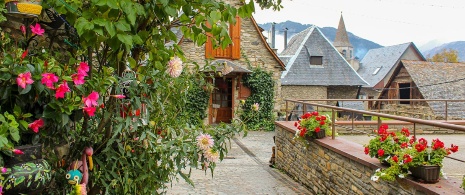
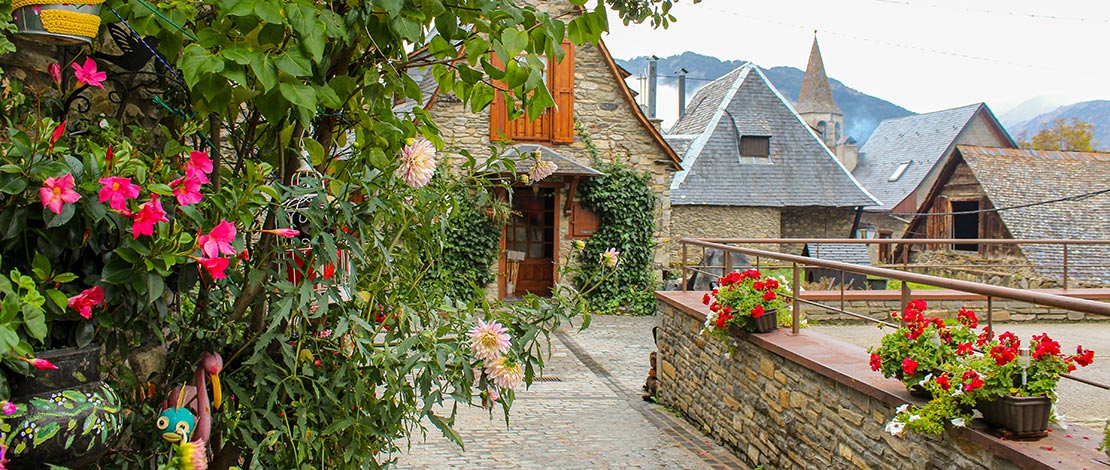
11.- Bagergue (Lleida, Catalonia)
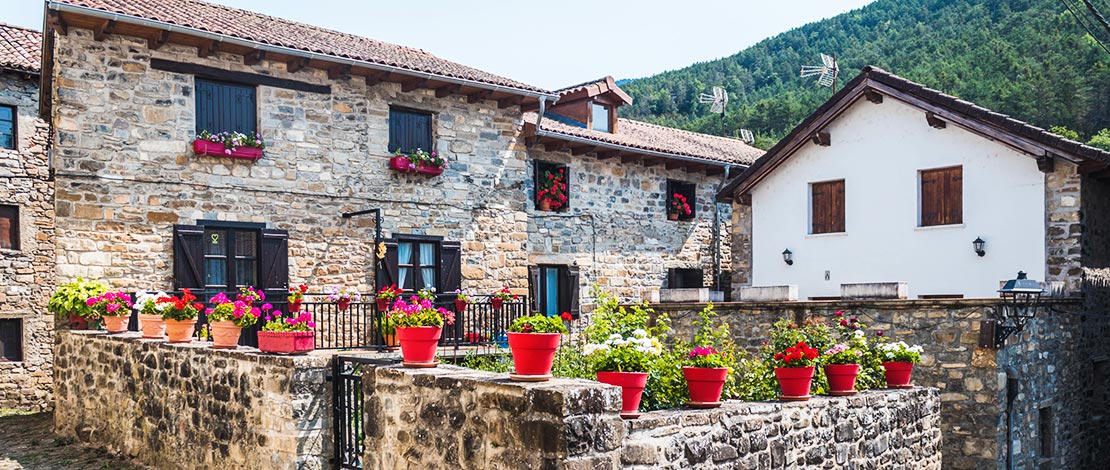
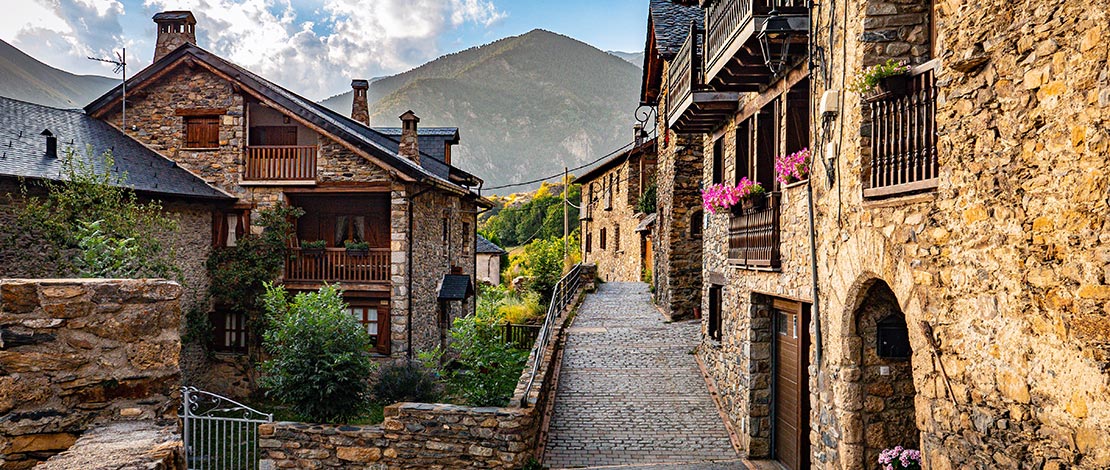
Located at an altitude of over 1,400 metres, with this stop you will have reached the highest village in the Vall d'Aran. If you travel in summer and autumn, you will be greeted by the multicoloured explosion of flowerpots that adorn every corner of the town. The contrast with the slate roofs and the dark stone of the houses creates a magical atmosphere that invites you to enjoy everything at a leisurely pace. Visit the church of Sant Feliu, of Romanesque origin, and the Eth Corrau museum, which contains more than 2,500 objects related to the traditional activities and daily life of the area. What to try of the local cuisineAuthentic Pyrenean cuisine, with artisan cheeses, grilled meats, soups and homemade desserts prepared with local products.How to get thereJust over 5 kilometres separate it from Arties. From Lleida, the journey by road is 175 kilometres.Bonus: things to do in the areaNearby you can see the hermitage of Santa Margalida or take the hiking route to the sanctuary of Montgarri. You can also cool off in the natural pools of the river in the stretch known as "Bagergue beach".
-
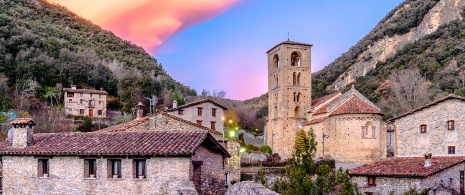
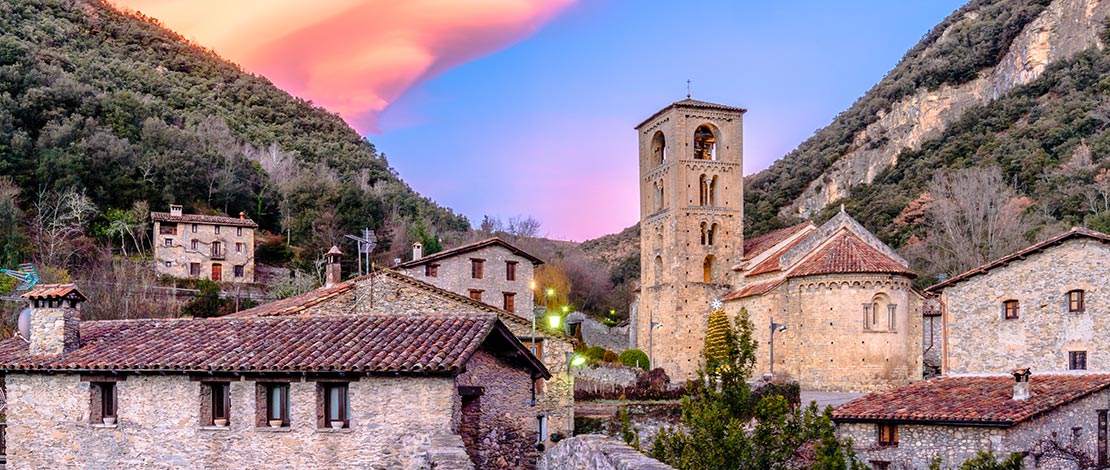
12.- Beget (Girona, Catalonia)
The route ends at an altitude of almost 600 metres, in the foothills of the Girona Pyrenees. There awaits this picturesque mountain village made of stone, which has maintained its natural beauty and where tranquillity reigns supreme. It is a delight to cross its two medieval bridges and stroll among the houses with wooden balconies and gabled roofs. Here you will see the church of Sant Cristòfol, the most important example of Romanesque architecture in the area, with its characteristic bell tower and its famous two-metre high carving of Christ in Majesty.What to try of the local cuisineDon't miss the recipes with butifarra sausage, accompanied by typical country bread with tomato or sheep's cheese, and the traditional mountain cuisine prepared with local vegetables and products such as potatoes, veal and lamb.How to get thereLocated in the Alta Garrotxa area, it is 75 kilometres from Girona and 42 kilometres from Ripoll. The distance from Bagergue to Beget is approximately 250 kilometres.Bonus: things to do in the areaOn the outskirts you can see the chapel of Los Remedios and, if you travel in summer, cool off in the pools of the Salarsa stream. Another option is hiking, as Beget forms part of the GR 11 Pyrenees route.
These are just a few of the most beautiful villages you can visit in Spain. In spain.info you can find information about more small destinations where you can disconnect.
Travel plans for inspiring you
Book yours
Choose between thousands of activities to live your best life on holiday.