Sustainable travel
Happy, responsible travels
Spain in a guide
Facts and figures
A diverse country open to the world
Looking for a destination that has it all? In Spain, diversity is our essence: a vibrant urban life coexists with centuries-old traditions, and the country boasts stunning, contrasting landscapes, from volcanoes to deserts, from snow-capped peaks to endless coastlines.Travelling around Spain is to discover how different cultures have shared the same territory, leaving their mark on its heritage and a gastronomy that is renowned the world over.We invite you to discover the secrets of a country where art, history, and the way of enjoying life are experienced in the streets and shared around the table. Come, and we will welcome you with open arms.
Spain at a glance
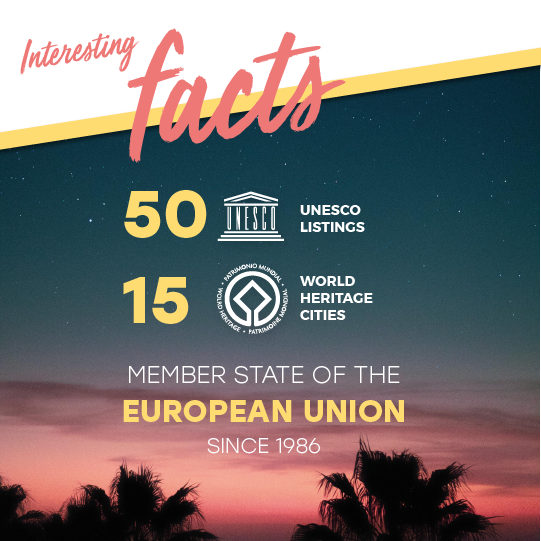
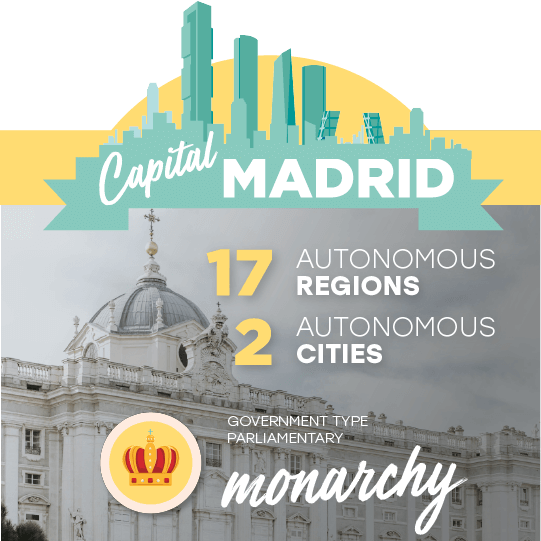
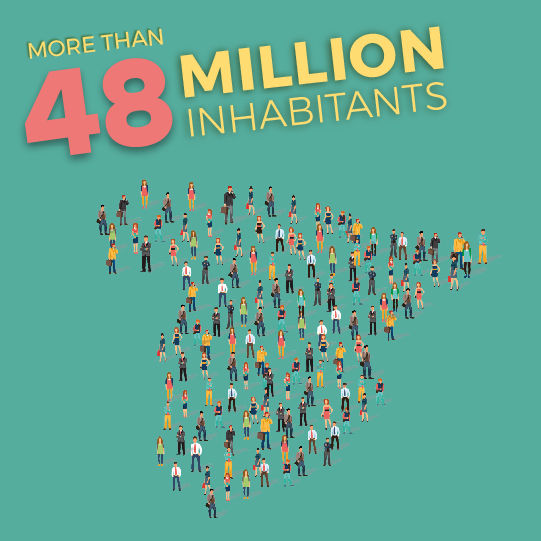
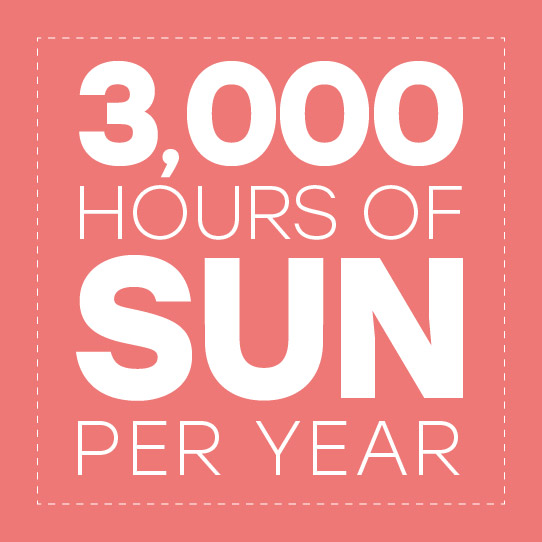
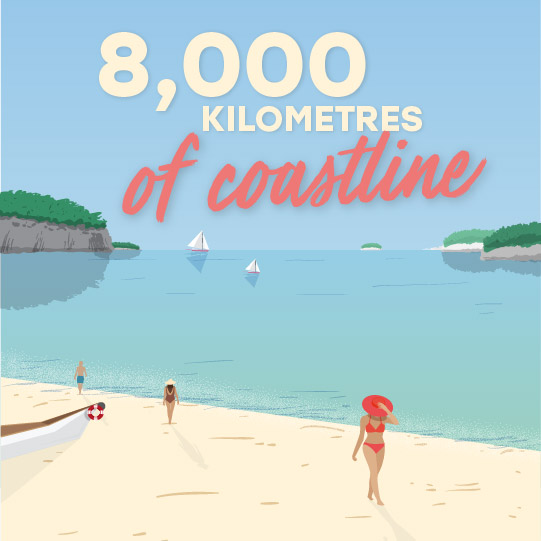
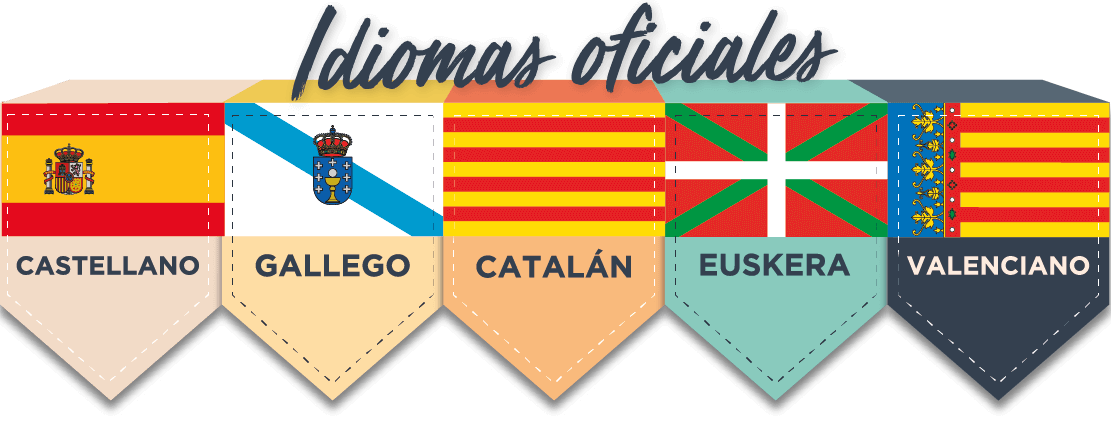
Do you want to find out more about Spain? Here are some key figures on the country.
FAQs
Find answers to the most common questions about Spain, from transport and accommodation to culture, cuisine and curiosities, to plan your trip easily and safely.
-
-
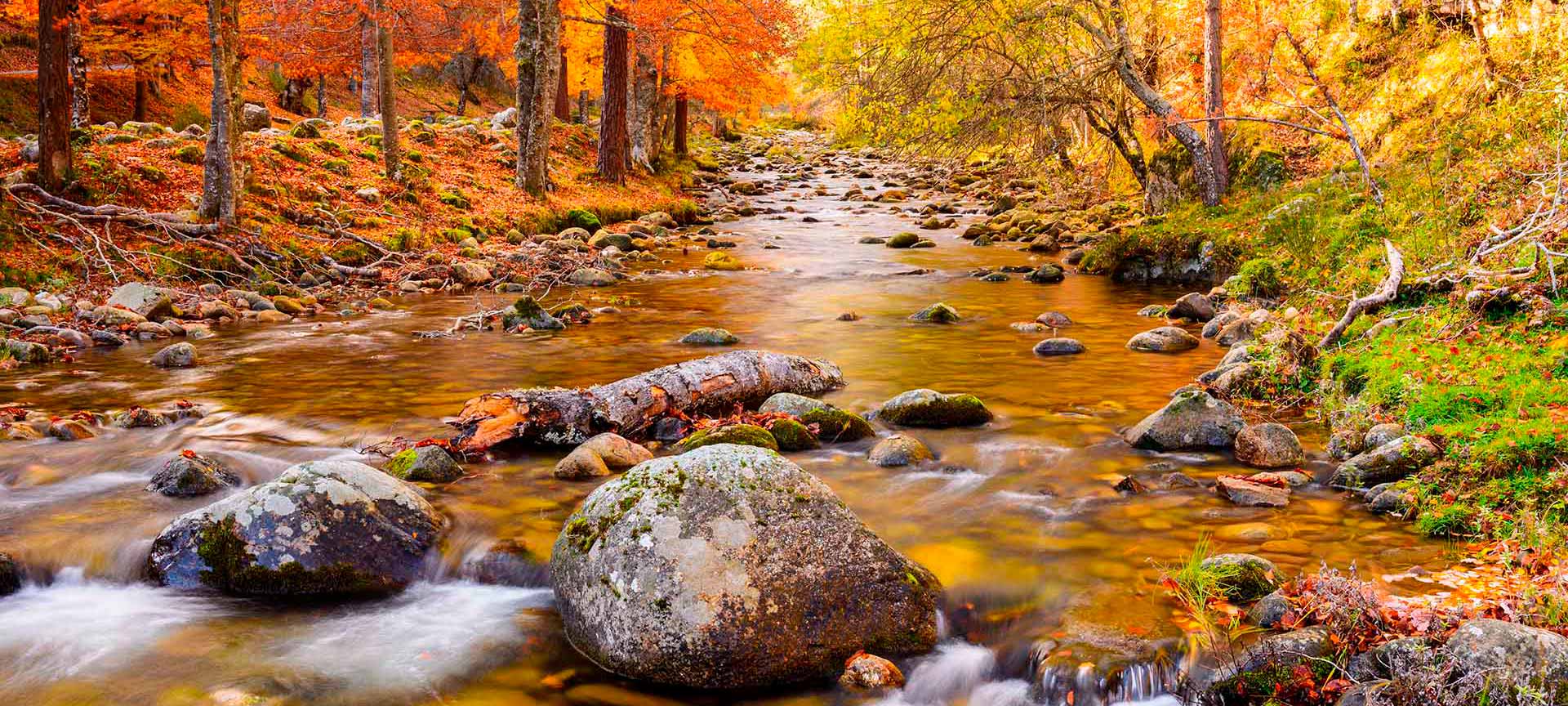
It's always a good time to travel to Spain. Spring and autumn, when the weather is milder, are perfect for exploring charming towns and villages, going on cultural routes and enjoying nature. Summer is the ideal time to go to the beaches, do all kinds of outdoor activities and listen to great music at the many music festivals that take place at this time of year. Winter is a good time to visit cities with a Christmas atmosphere or to practice winter sports in the Pyrenees or the Sierra Nevada mountains. Each season offers a different way to explore Spain.
-
Spain has a very diverse climate depending on its regions. Summers are generally hot, sunny and dry, and winters are mild, especially in the Mediterranean region. In the north, the climate is more temperate and humid, favouring very green landscapes. Inland, on the other hand, temperatures tend to be more extreme, with hot summers and cold winters. The Canary Islands have a unique climate, with mild temperatures and spring-like weather all year round. If you want detailed information about the climate in Spain click on this link.
-
On a first trip to Spain many people go to some of the most visited destinations, such as Madrid, Barcelona and its Sagrada Familia, the Alhambra in Granada, or historic cities like Seville and Toledo. But the diversity of the country invites you to discover less usual places: beautiful villages, National Parks, cultural routes and small towns with a lot of personality and flavour. Each of them shows equally seductive aspects of the country. The first visit is often just the beginning of discovering Spain.
-
Each region of Spain offers different landscapes, traditions and experiences.
In the north, Galicia is known for its Atlantic coast, its seafood, and for being the end of the Camino de Santiago. Asturias and Cantabria surprise with green mountains very close to the sea and spectacular natural parks. The Basque Country and Navarre combine ancestral customs, villages with character and one of the most renowned cuisines in the world. La Rioja is one of the great wine destinations in Spain. And Catalonia offers everything from Gaudí's famous architecture in Barcelona to Mediterranean coves.
If we continue along the Mediterranean and the south, the Region of Valencia, the Region of Murcia, Andalusia and the Balearic Islands stand out for their beaches, their Mediterranean atmosphere and their well-known popular festivals.
Inland, the Region of Madrid combines great museums, cultural life, and excursions to nearby historic cities. Castile and Leon is home to some of the country’s most important historic heritage sites. Castilla-La Mancha is famous for its great plains and the landscapes linked to Don Quixote. Extremadura boasts sweeping plains and impressive Roman remains, while Aragon combines the Pyrenees with unique landscapes such as the Monegros desert.
The Canary Islands, with their volcanic landscapes and mild climate all year round, are not to be missed either.
-
A route planneris available on our website. This tool allows you to discover cities, heritage sites, natural areas, beaches and activities between a departure and arrival point, taking into account the time of year. You will also find activities, fiestas, events and leisure parks.
-
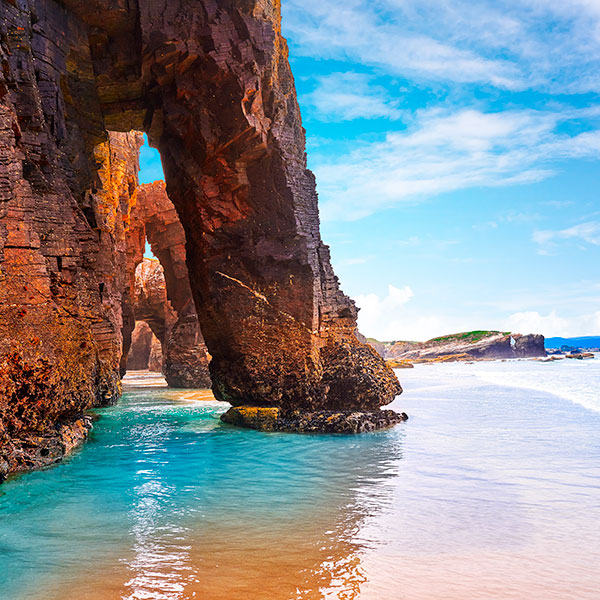
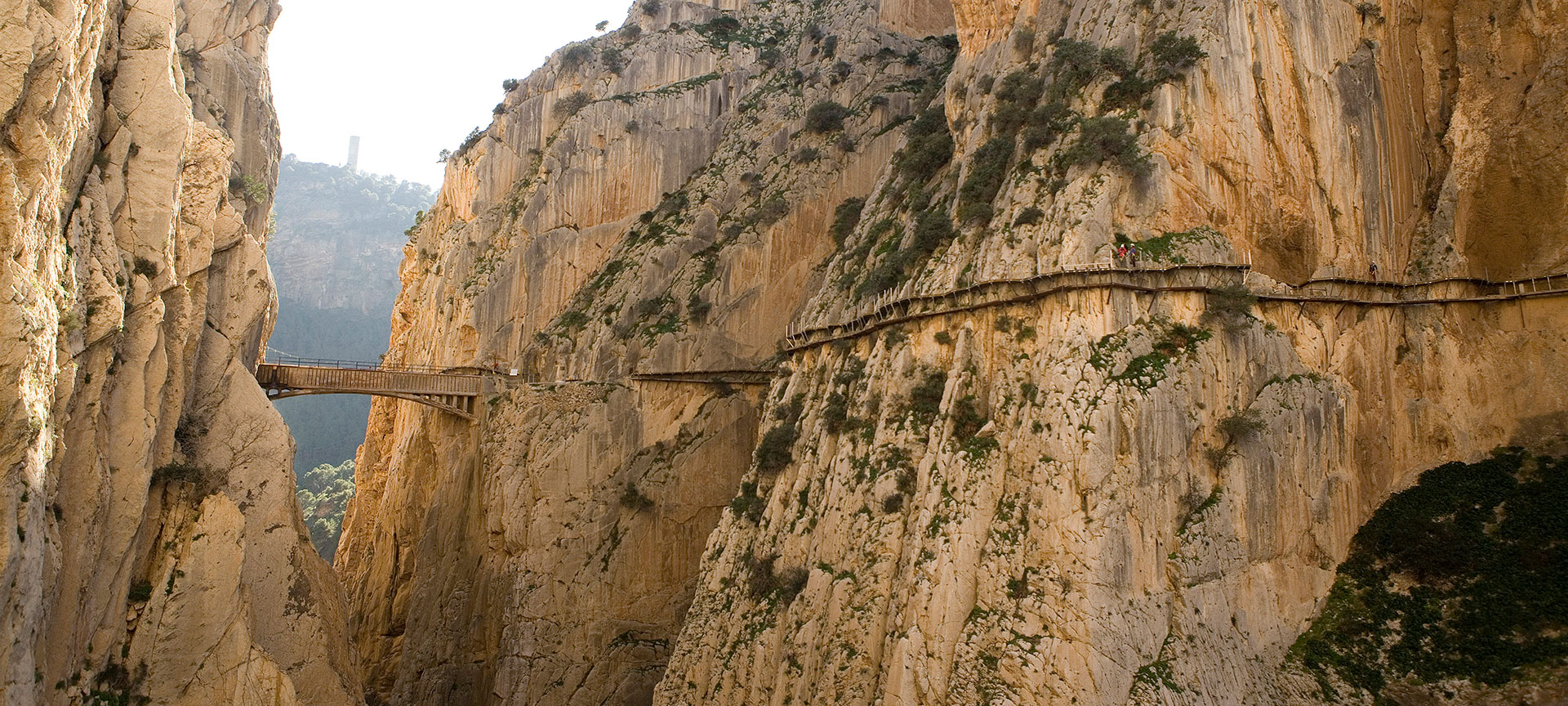
Spain has such fascinating places as the volcanic landscape of Montañas de Fuego in Lanzarote's Timanfaya National Park, the Riotinto mining basin and its breathtaking open-pit mines, and the bizarre geological formations of the Bardenas Reales desert. There are also the evocative stalactites and stalagmites of the Grotto of Wonders; the Flysch Route, where you can admire its infinite number of strata; or the site of Las Médulas, an ancient open-cast gold mine from the Roman Empire. There are places like the beach of Las Catedrales and its arches carved by the force of the ocean; the laurel forests of Garajonay National Park, shrouded in legends and mysteries; the Enchanted City of Cuenca, where the imagination runs wild; the vertiginous Caminito del Rey; or the Monasterio de Piedra, with its waterfalls, forests and lakes. They are all environments in which nature, sometimes with human help, has created truly striking landscapes.
-
-
-
All localities in Spain have 14 annual public holidays, which can be local, regional or national. National holidays are 1 and 6 January, Good Friday (in spring, with a variable date), 1 May, 15 August, 12 October, 1 November, 6 and 25 December. This will not interfere with your trip, as transport, restaurants, many shops, cultural institutions and, of course, accommodation, all provide their services normally during these days.
-
Citizens of the European Union, Iceland, Liechtenstein, Norway and Switzerland only need a valid national identity card or passport to enter and move around Spain. The rest must be identified by a passport valid for at least three months after the date of arrival. In addition, those coming from various countries in Asia, Africa and the Americas are required to have a valid visa. By the end of 2026, the new visa-free traveller authorisation ETIAS (European Travel Information and Authorisation System) is scheduled to be implemented. More information at this link.
-
Spain's currency is the euro and you can check its current value at the European Central Bank. In addition to cash, physical or mobile phone bank cards (especially Visa and MasterCard) are accepted in most shops, restaurants, hotels and museums. It is also easy to find 24-hour ATMs in cities, airports, stations, shopping centres and tourist areas. When using them, bear in mind that withdrawal or currency exchange fees are often charged.
-
Tax Free allows tourists residing outside the European Union to claim reimbursement of VAT (Value Added Tax) on purchases made during their trip. To benefit from this advantage, you have to buy in the establishments participating in this system, ask for the invoice and the electronic refund form and validate it before leaving European territory, for example, at the airport. You can find more information about the Tax Free management process here.
-
Yes. Travelling in Spain is generally a safe and relaxed experience. This is corroborated by international bodies such as the Global Peace Index. However, for your trip to be perfect, you should always take basic precautions, such as carrying only the money you need at all times and keeping an eye on your belongings in crowded areas.
-
If you have a safety or health problem, contact the official emergency services. The telephone number for all of them is 112. It is free, you can call from anywhere in the country and it geolocates the terminal from which you are making the call. The service has an automatic translation system in several languages.
-
If you are travelling from the European Union, you will be able to use your mobile phone at the same roaming rates as in your home country. Visitors from other countries are charged an additional call and mobile data usage fee. It is recommended that you purchase a prepaid SIM card.
You will easily find open WiFi networks in airports, train stations, restaurants, cafes, hotels, some shops, shopping centres and some public spaces. This link offers good ideas to help you stay connected at all times.
-
-
-
The road network and the quantity and quality of public transport means that you can get around the country efficiently and quite comfortably. Many cities are connected by high-speed train lines and there are also more than 40 airports for air connections. Between nearby towns you have the option of buses and suburban trains and, in the coastal areas, there are some boat lines. If you decide to go it alone, Spain is served by major international car rental companies, as well as local car rental companies, which often have very advantageous prices.
-
In big cities, public transport (city bus, metro, tram and train), together with cycling, is the most efficient and sustainable way of getting around. This system is also useful for travelling between different cities. In general, there are transport passes, tourist passes, and discount cards, which are ideal when you intend to make several trips in a short period of time. To get around the country by train, there are also options such as the Spain Rail Pass from Renfe, which offers slightly better prices per journey.
You can check the timetables on the websites and apps of the different operators. The high speed train companies are AVE, Avlo, Iryo and Ouigo. If you travel by long-distance bus, Alsa, Avanza, Socibus/Daibus and Monbus are some of the main companies. Tickets can be purchased through their apps and websites, in addition to the ticket offices located at the stations.
-
If you come from outside the European Union, Iceland, Liechtenstein or Norway, you must obtain an International Driving Permit in your place of residence. It is valid for one year and will allow you to drive throughout Spain.
-
-
-
In Spain we have customs that we are happy to share with our visitors. Among the main ones are spending a lot of time outside enjoying the good weather and leisure, as well as going out for tapas (small portions of food that are shared), lunch or dinner, in the company of friends and family. You will see that people often smile, that feelings are often expressed quite openly and that, when greeting people, it is common to kiss both cheeks.
-
Restaurant hours are very long and meals are generally later than in most countries. Thus, breakfast is normally eaten between 7 am and 12 noon, lunch between 1 pm and 4 pm or later, and dinner between 8 pm and 11 pm. People often meet for a drink before main meals. In tourist areas and large cities there are catering establishments with 24-hour kitchens.
-
Shops are generally open from Monday to Saturday from 10 am to 9 pm and many close between 2 pm and 5 pm, especially in summer. In big cities and tourist spots there are shops that are open longer hours and on Sundays. Museums usually open around 9-10 am and close at 6-7 pm during the winter season and at 8 pm in the summer. They are usually closed on Mondays and some are also closed on public holidays.
-
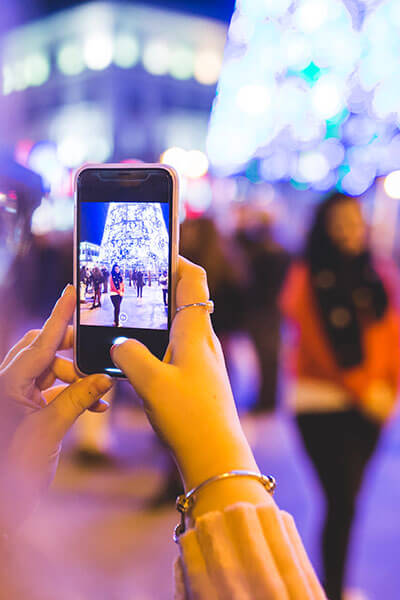
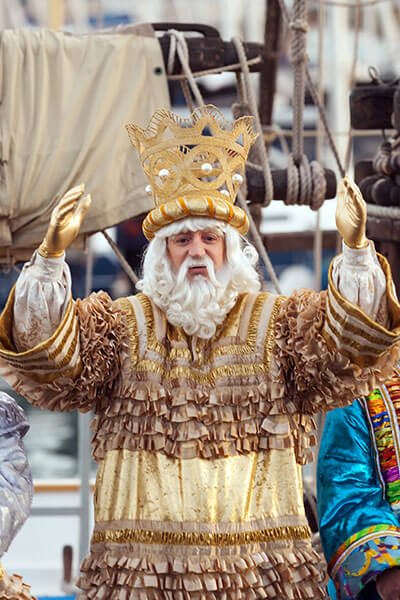
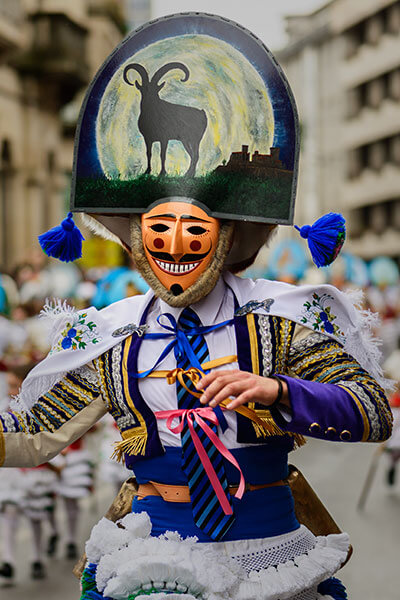
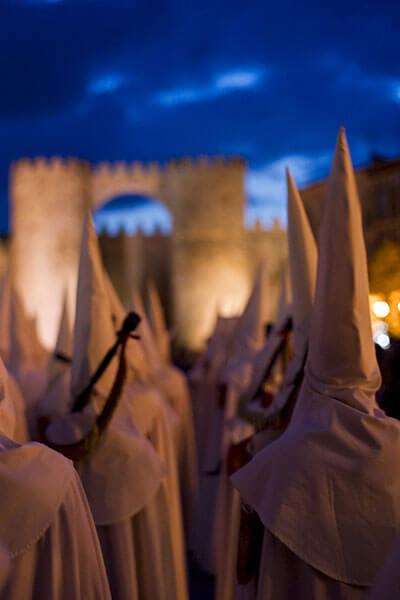
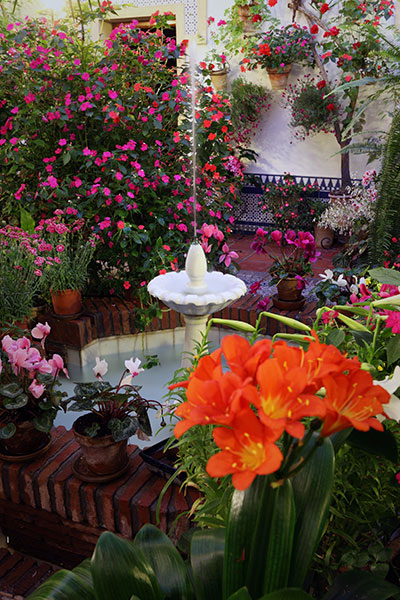
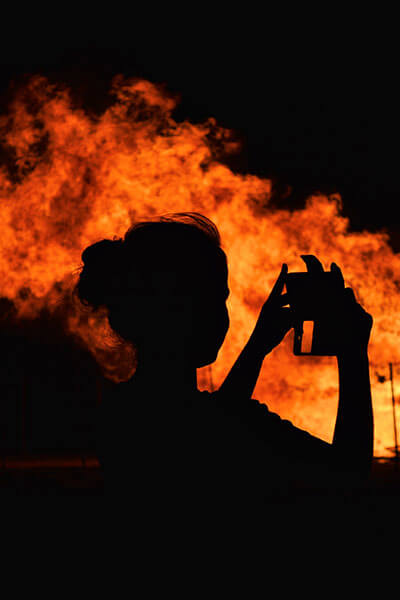
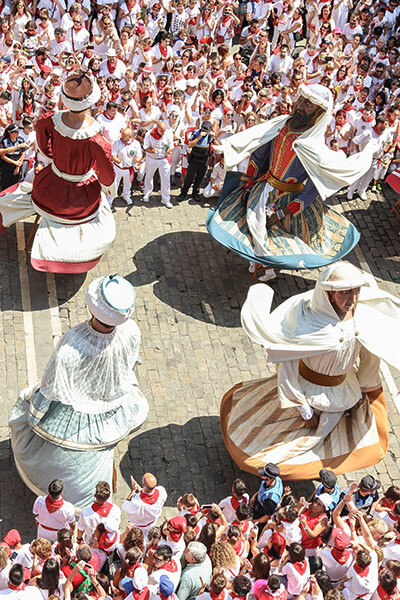
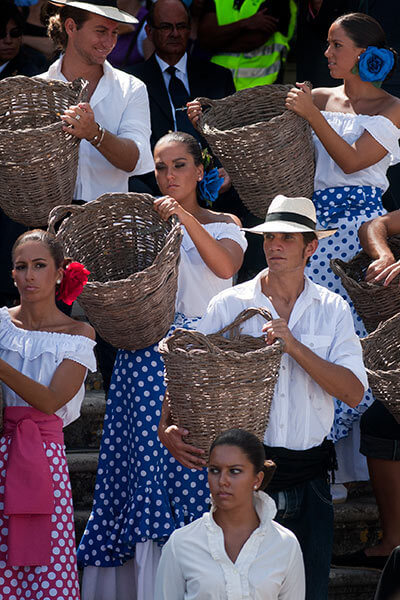
In Spain there is always a reason to celebrate and, for this reason, the calendar of celebrations extends to every month of the year. Among the festivities common to the whole country are Carnival, Easter, Christmas and New Year's Eve. Each town usually has a main festival or fiesta, and many of them are held during the summer; some of the best known are the Fallas in Valencia, the April Fair in Seville, the Pilgrimage of El Rocío, the Sanfermines in Pamplona, the Tomatina in Buñol, the Malaga Fair and the Pilar in Zaragoza. You will also find many food fairs and festivals, giving you the opportunity to taste typical local foods, cuisines and wines.
-
-
-
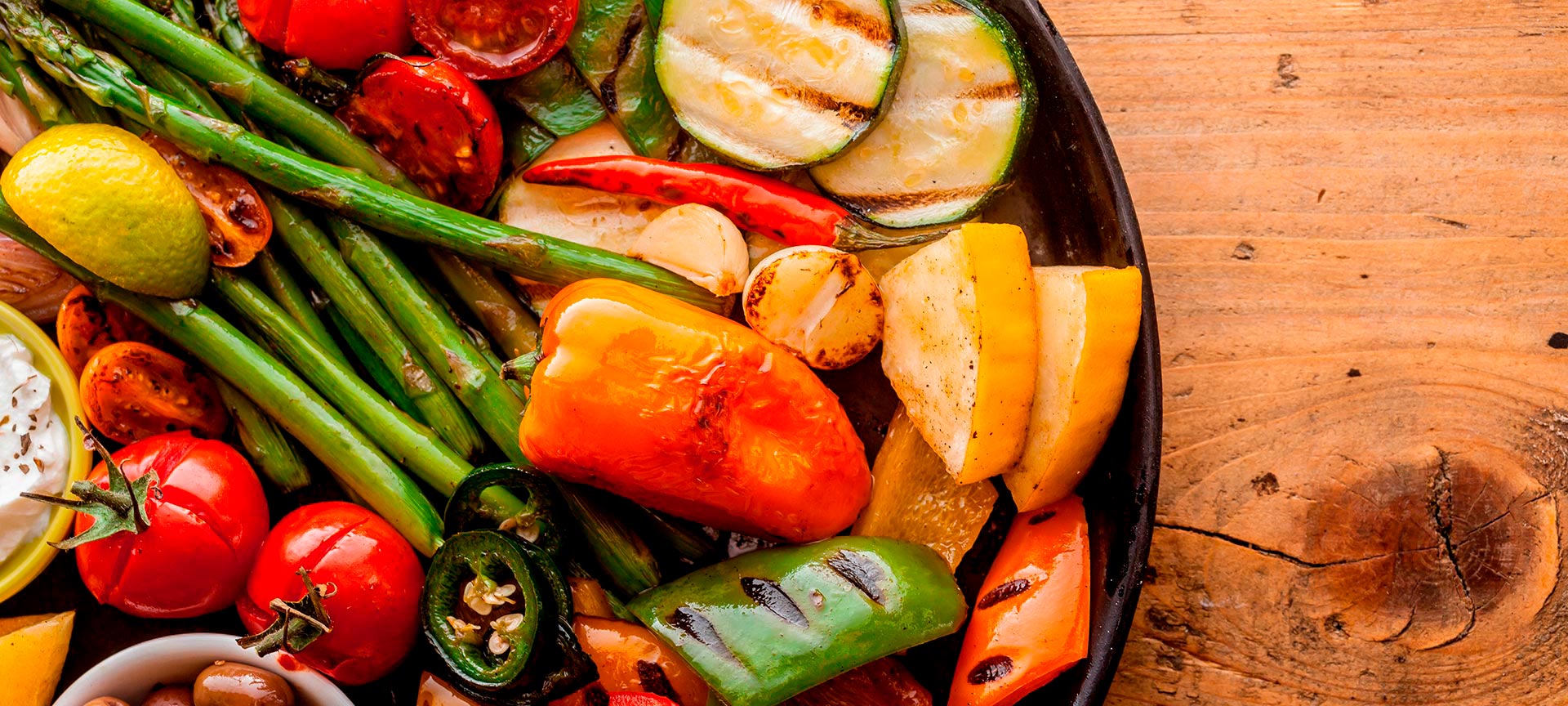
The Mediterranean diet, the basis of most Spanish cuisine, is recognised as Intangible Cultural Heritage by UNESCO and is very rich in ingredients and preparation techniques. Among the best-known dishes are paella and rice dishes in the Mediterranean area, the delicious Iberian ham produced in places such as Salamanca, Cordoba, Huelva and Extremadura, and potato omelette. If you visit the inland and northern regions, you will be surprised by the flavour of dishes such as roast lamb, cocido, fabada and other bean dishes. If your trip is to the south of Spain you can enjoy high-quality fried fish and refreshing cold soups such as gazpacho, salmorejo and ajoblanco, ideal for summer. In Galicia, octopus and seafood feature prominently on the menus of almost all restaurants. The Balearic Islands seduce with their seafood stews, such as calderetas de pescado; and in the Canary Islands, the popular papas (or potatoes) con mojo are always present on the table.
To accompany your meal, there are drinks such as sangria and tinto de verano, based on wine and lemonade, or horchata (made from tiger nuts). You can also take the opportunity to taste Spanish wines, famous for their quality and variety, and enjoy wine tourism on one of the country's Wine Routes.
-
Yes, there are many restaurants, hotel complexes and commercial establishments in Spain that offer halal or halal-friendly food. Especially in the main cities and tourist centres, such as Madrid, Barcelona, Granada and Cordoba. In addition, many of the recipes of Spanish cuisine are suitable for this type of diet, as they are based on vegetables, rice, lamb, poultry, beef, fish and seafood.
-
Vegetarian and vegan options are often available on the menus of large restaurants in Spain and in many smaller ones. In addition, since 2011, it has been mandatory in Spain to provide information on 14 allergens present in dishes in restaurants, bars and cafés. This can be via a physical menu, a digital menu with a QR code, or even verbal information, as long as a documentary record is available upon request. This is also the case in supermarkets, where there are special food sections for people with these restrictions. In any case, thanks to the variety of ingredients in Spanish cuisine, there are alternatives for all diners.
-
-
-
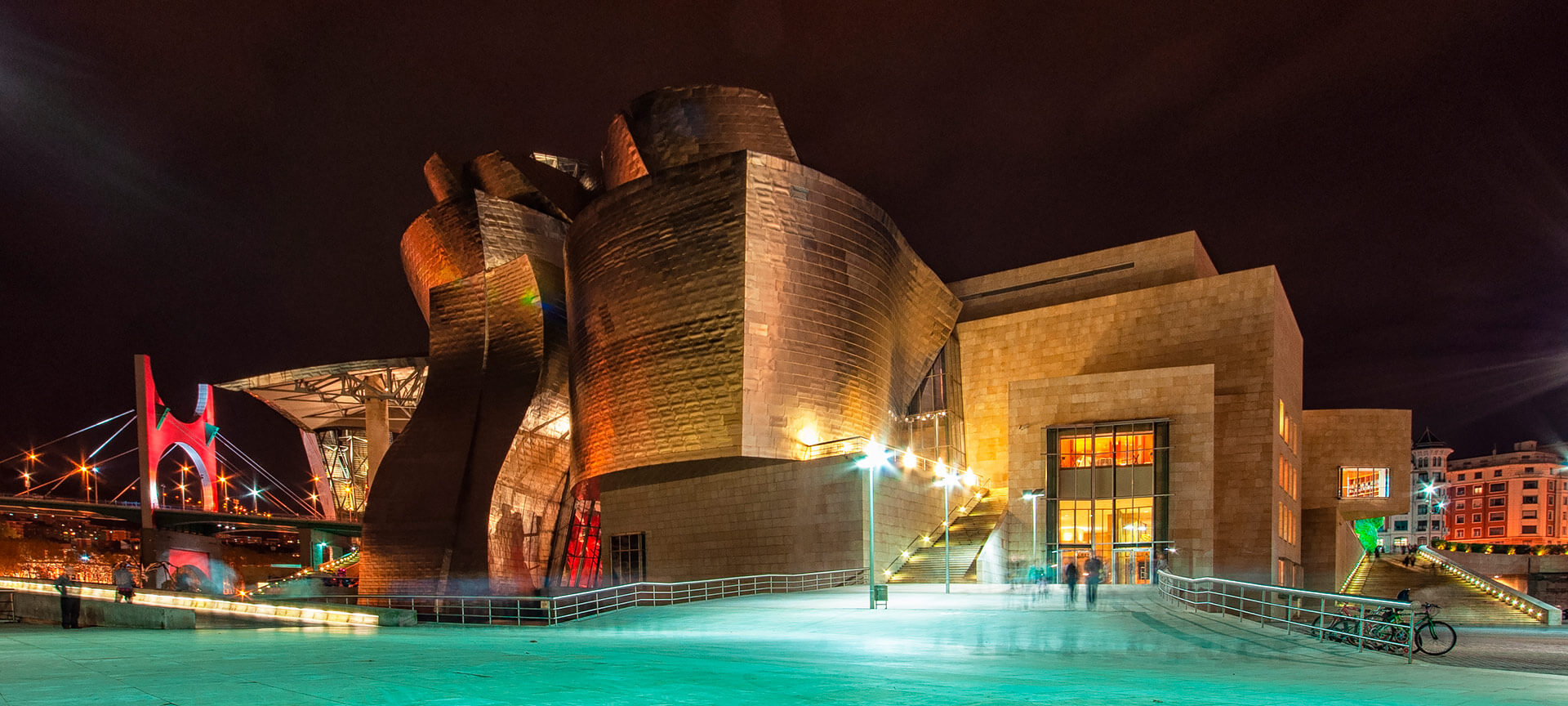
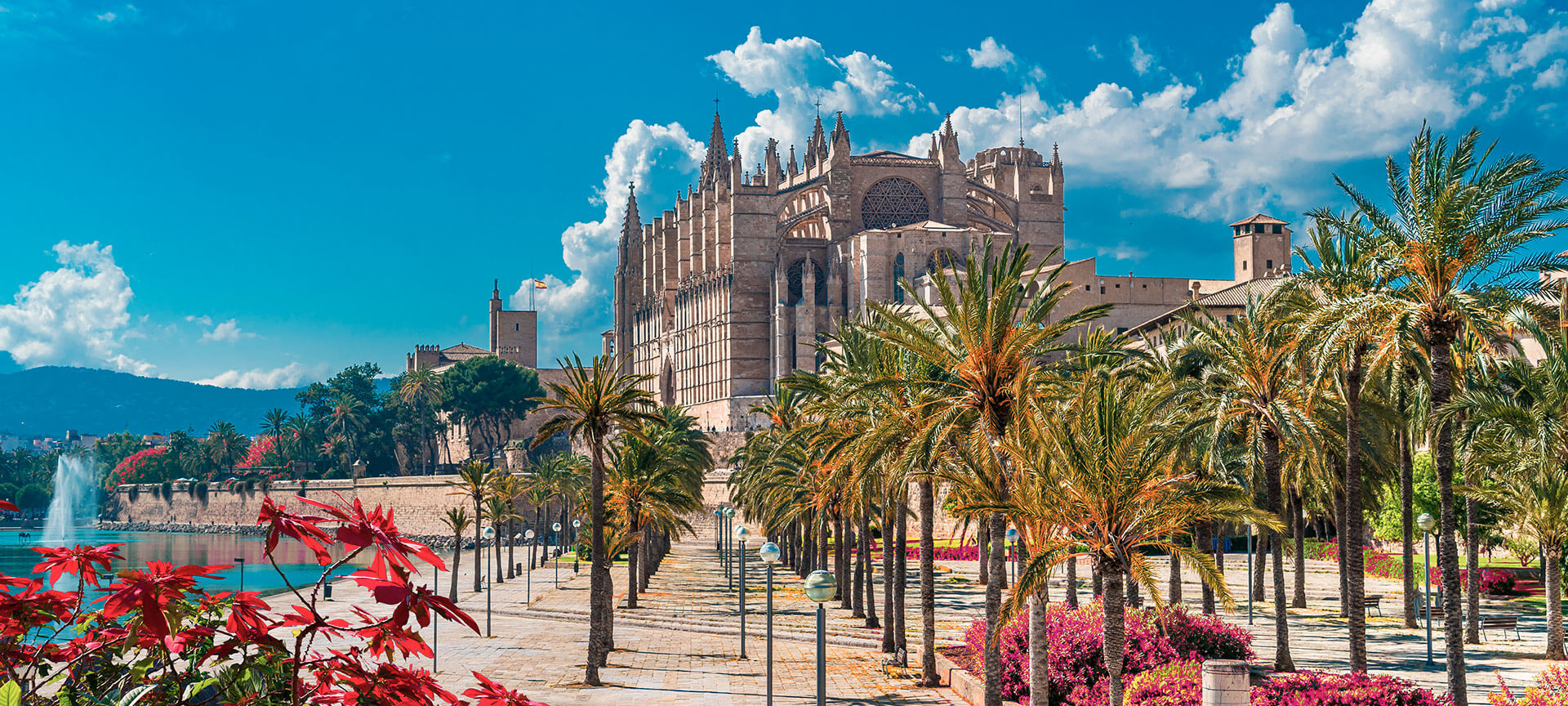
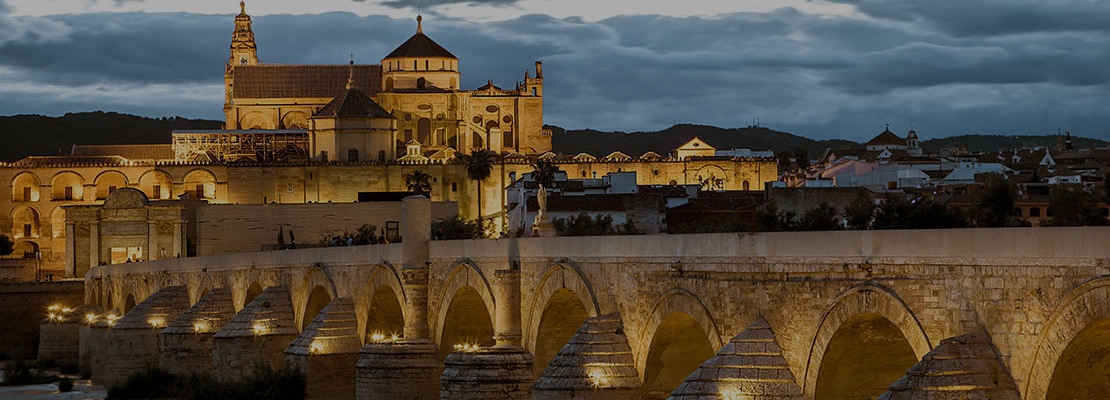
Spain has an extraordinary historical and cultural heritage. Among its most famous sights are the Alhambra in Granada, the Sagrada Familia in Barcelona, the Mosque of Cordoba, the Giralda in Seville and the Roman Theatre in Mérida, as well as iconic cathedrals such as those of Santiago de Compostela, Burgos and Palma.
To discover exceptional historic cities, a good option is to explore Spain's 15 World Heritage Cities. Beyond these places, throughout the country you will find historic sites, castles, palaces, monasteries, museums and archaeological sites that reflect Spain's cultural and artistic wealth.
-
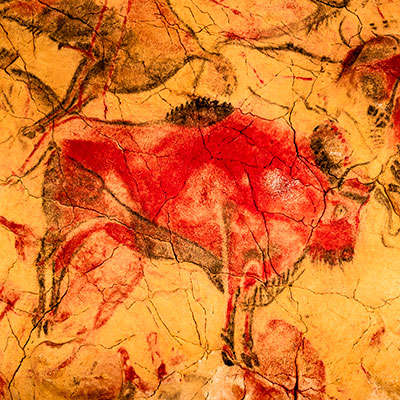
Yes, Spain has 50 cultural, natural and mixed properties recognised by UNESCO as World Heritage. Some representative examples are the palace complex of El Escorial, the Altamira Cave and Palaeolithic Cave Art of the Cantabrian Coast, the Romanesque churches of the Boí Valley, the Tower of Hercules, and Talayotic Menorca, one of the most recent additions to the prestigious list.
-
The Group of World Heritage Cities of Spain has 15 cities: Alcalá de Henares, Ávila, Baeza, Cáceres, Córdoba, Cuenca, Ibiza/Eivissa, Mérida, Salamanca, San Cristóbal de La Laguna, Santiago de Compostela, Segovia, Tarragona, Toledo, and Úbeda.
They all have stunning historic centres recognised as sites of Outstanding Universal Value by the UNESCO World Heritage List. You will discover cathedrals, walls, palaces and vestiges of different civilisations.
-
These are terrestrial, marine or mixed ecosystems of special natural value recognised as such by UNESCO's MAB programme. Spain is the country with the most Biosphere Reserves, with a total of 55 protected areas. Some examples are the Irati Forest, the Ribeira Sacra and Sierras de Oribio and Courel, Monfragüe, Sierra de Cazorla, Sierra Nevada, Ordesa, Menorca and a large part of the Canary Islands. These are environments of high ecological value that stand out for their biodiversity and their good state of conservation. They allow you to enjoy nature in a responsible and more authentic way, walking their trails, observing flora, fauna and geology, taking part in ecological workshops and enjoying all kinds of outdoor activities.
These are environments of high ecological value that stand out for their biodiversity and their good state of conservation. They allow you to enjoy nature in a responsible and more authentic way by walking their trails, observing flora, fauna and geology, taking part in ecological workshops and enjoying all kinds of outdoor activities.
-
-
-
Spain has a wide range of music festivals throughout the year, with something for everyone. If you like indie music you will enjoy the concerts at Primavera Sound (Barcelona), Bilbao BBK Live, FIB Benicàssim (Castellón) and Sonorama Ribera (Aranda de Duero, Burgos). If you prefer intense sounds, there is the Viña Rock festival (Villarrobledo, Albacete) and Sónar (Barcelona), the latter specialising in electronic music. Pop lovers have a date with Arenal Sound (Burriana, Castellón). And reggae fans, with Rototom Sunsplash (Benicàssim, Castellón). While Mad Cool Festival (Madrid) brings together performers and groups of different musical styles.
-
Every year, Spain hosts numerous film festivals of international prestige. The San Sebastian International Film Festival, Valladolid International Film Week/SEMINCI and the Gijón International Film Festival are known around the world. Fans of fantasy, SF and horror movies can enjoy events such as the International Fantastic Film Festival of Catalonia (Sitges) and the San Sebastian Horror and Fantasy Film Festival. In addition, the Huelva Ibero-American Film Festival and the Malaga Film Festival offer an excellent overview of Spanish-language cinema. And equally recommendable, with films in different languages, are the Seville European Film Festival and the LPA/Las Palmas de Gran Canaria International Film Festival.
-
-
-
Spain is an ideal destination for families, with a wide range of activities for all ages. Children can learn and have fun in interactive museums such as the CosmoCaixa Science Museum in Barcelona or the Oceanogràfic in Valencia, one of the largest aquariums in Europe. You can also have fun in theme parks such as Port Aventura World in Salou (Tarragona) and Warner Park in Madrid. There are also activities in nature that are perfect for the whole family, such as cycling along the greenways, on the route of old railway lines; or looking for dinosaur footprints in Dinópolis, Teruel. You have many more suggestions at this link.
-
Most public transport has adapted forms of access, seats or spaces for people with reduced mobility. In the case of planes and trains, assistance services for people with disabilities are available free of charge and must be requested when purchasing tickets.
In terms of accommodation, Spanish legislation stipulates that all hotels must have rooms adapted for people with mobility, hearing or visual impairments. The collaborative platform Tur4All, which provides up-to-date information on accessibility in accommodation, restaurants, heritage sites, museums, natural spaces and transport, is very useful.
-
Yes. Spain is one of the most open, safe and inclusive countries in the world for LGBTQI+ people. It was one of the first to approve equal marriage rights and has strong legislation guaranteeing equal rights and non-discrimination.
This commitment is also reflected in society, with a high level of acceptance and a diverse and respectful culture. According to the international report Spartacus Gay Travel Index 2026, Spain is among the top-rated destinations in the world in terms of rights and safety for the LGBTQI+ community.
Travelling in Spain allows you to discover a great diversity of landscapes, cultures and experiences in a welcoming environment where diversity is part of everyday life.
-
Spain offers many ways to travel in a sustainable way, beyond contact with nature. On the Spain.info website you can consult the Sustainable Spain section, where you will find recommendations for planning responsible travel throughout the country.
Sustainable tourism in Spain includes choosing efficient means of transport, such as trains and public transport; staying in establishments that are committed to the environment; and supporting the local economy through cuisine, crafts or cultural activities.
It is also possible to discover cities, villages and natural areas in a respectful way, avoiding overcrowding and travelling at different times of the year. This approach lets you enjoy the destination with greater authenticity, while contributing to caring for the environment and the well-being of local communities.
-
Spain is full of surprising and lesser-known places that allow you to discover the country from a different perspective. In Think you know Spain? you can discover places off the tourist track and unique experiences such as the Senda del Oso, in Asturias; Valle del Jerte, in Cáceres; Bardenas Reales, in Navarra; and the Corral de Comedias de Almagro, in Ciudad Real. Discover the "secret" Spain.
-
At Spain.info you have suggestions for more than 800 travel plans. These proposals are adapted to the style of each traveller, taking into account how many days you have available for your visit to Spain, the time of year you want to make the trip, your tastes and special needs.
-
-
-
Spain has a wide variety of accommodation to suit all types of travellers. The main ones are: hotels (from one to five stars), hostels, tourist flats, rural establishments (they can be houses, hotels, inns, guest houses, etc.) and campsites.
-
A Parador is a unique type of accommodation in Spain: this network of publicly owned hotels lets you stay in authentic palaces, castles and historic buildings, many of them located in exceptional natural settings and particularly attractive destinations. These are 99 special accommodations where local cuisine, customs and culture are always very present.
-
The Spanish National Association of Spas (ANBAL) brings together a large number of the country's thermal establishments. This includes many of the most charming and historic seaside resorts. In addition, there are modern spas in many cities, as well as evocative Arab baths.
-
What defines us
A look at the culture, flavours, landscapes and traditions that make us unique.

Calendar of festivals and traditions
Experience the year through unique celebrations





The Spanish language is spoken by over 600 million people worldwide.

Thousands of reasons to visit Spain
These are just some of them; discover yours on your next holiday.
Ready to show us how much you know?
How much do you know about Spain?
PLAY!#visitSpain
Share the best of Spain on our networks