The 10 most popular Spanish gastronomic flavours on social networks
One of the aspects that most travellers who visit Spain highlight is its fabulous gastronomy. An endless number of dishes that tell the history and customs of every corner and that often become true icons of their regions. At Spain.info we've delved into our social media channels to discover the most commented on tapas, pinchos and dishes with the most likes.All set for this trip through the most viral flavours of Spanish cuisine?
-
1. Barnacles
It is one of the most sought-after seafood. When you eat them you will be surprised by their texture before the full taste of the sea explodes in your mouth. The traditional way of preparing them is to cook them with sea water without adding anything else, thus preserving all their essence.- Where is it typical? Especially in the coastal areas of Costa da Morte and Rías Baixasin Galicia.- Pairing drink: Albariño wine from the Rías Baixas DO or other chilled white wines. It also combines perfectly with Brut cava to contrast with the salinity.- Bonus: harvesting barnacles is one of the most dangerous fishing activities, as it requires great skill to deal with the heavy swell on the rocks, which makes this product very highly esteemed.
-
2. Campo Real olives
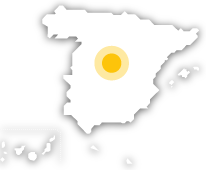
With a traditional seasoning based on aromatic herbs, olives from Campo Real (Madrid) are one of those small pleasures that become giants with a product as humble as this fruit of the olive tree. A tapa that can be found in bars all over Spain. - Where is it typical? It is the jewel in the crown of Madrid's aperitifs. They originate from the town of Campo Real and are very common throughout the central part of the country.- Pairing drink: red vermouth, fino de Jerez sherry wine or a beer.- Bonus: at the Court of Philip II (16th c.) they were already considered a delicacy, which gives an idea of their centuries-old tradition.
-
3. Fideuá and Valencian rice dishes
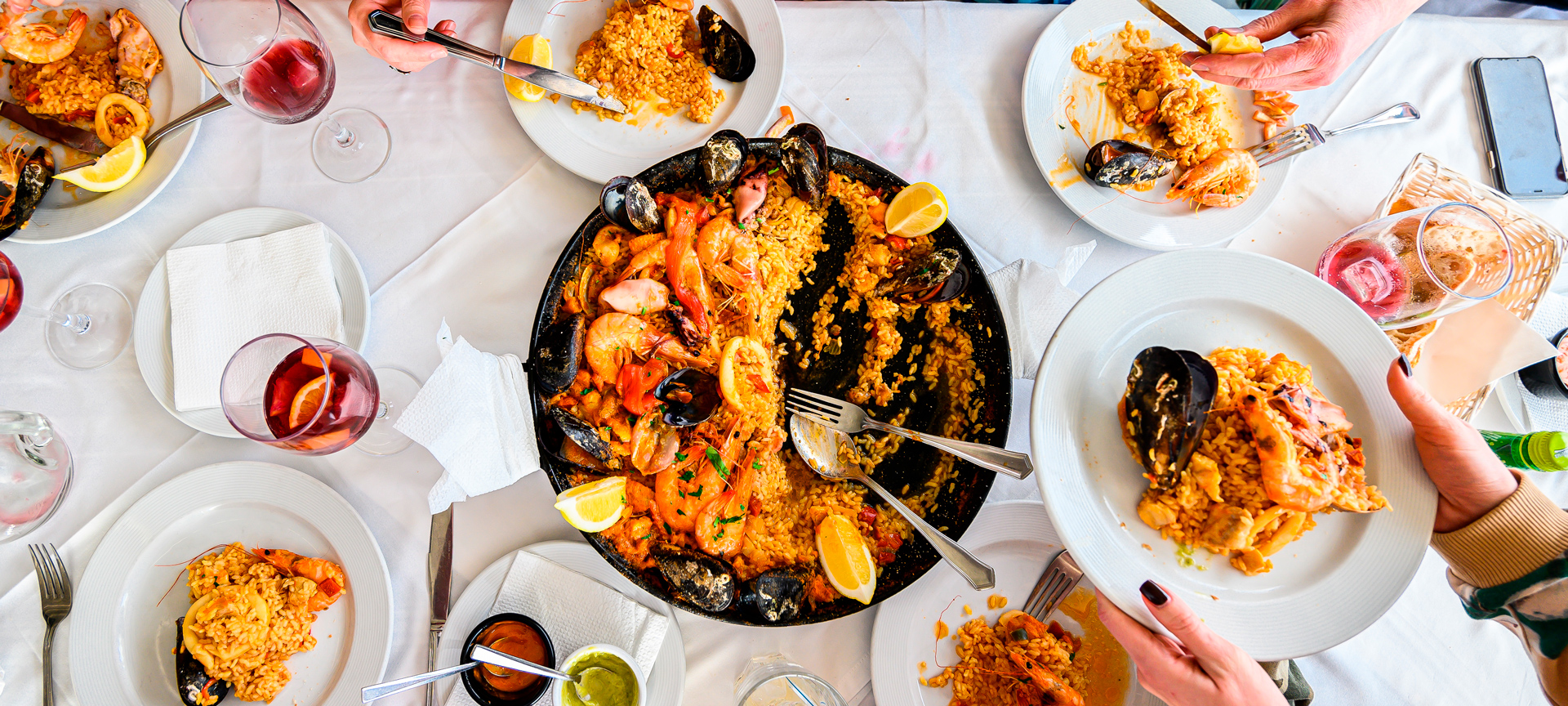
All along the Levante coast fideuá and rice dishes take a leading culinary role with paella being one of the best known and most widely cooked. The products of the sea and the mountains are combined with fresh local vegetables to produce this gastronomic delight, which is simmered and served in a round, shallow metal pan.- Where is it typical? Although the paella is best known in the coastal areas of Valencia, Alicante and Castellón, it can be found on the menu all over Spain. Every place prepares it in a different way, adding its own local touch. The nuances are infinite.- Pairing drink: a crisp, fresh white wine is perfect if seafood is predominant; red wine and lager are better if the dish features chicken or rabbit. And you'll always get it right with sangria.- Bonus: the crust on the bottom of the pan is called socarrat, which offers a unique contrast of textures.
-
4. Gazpacho
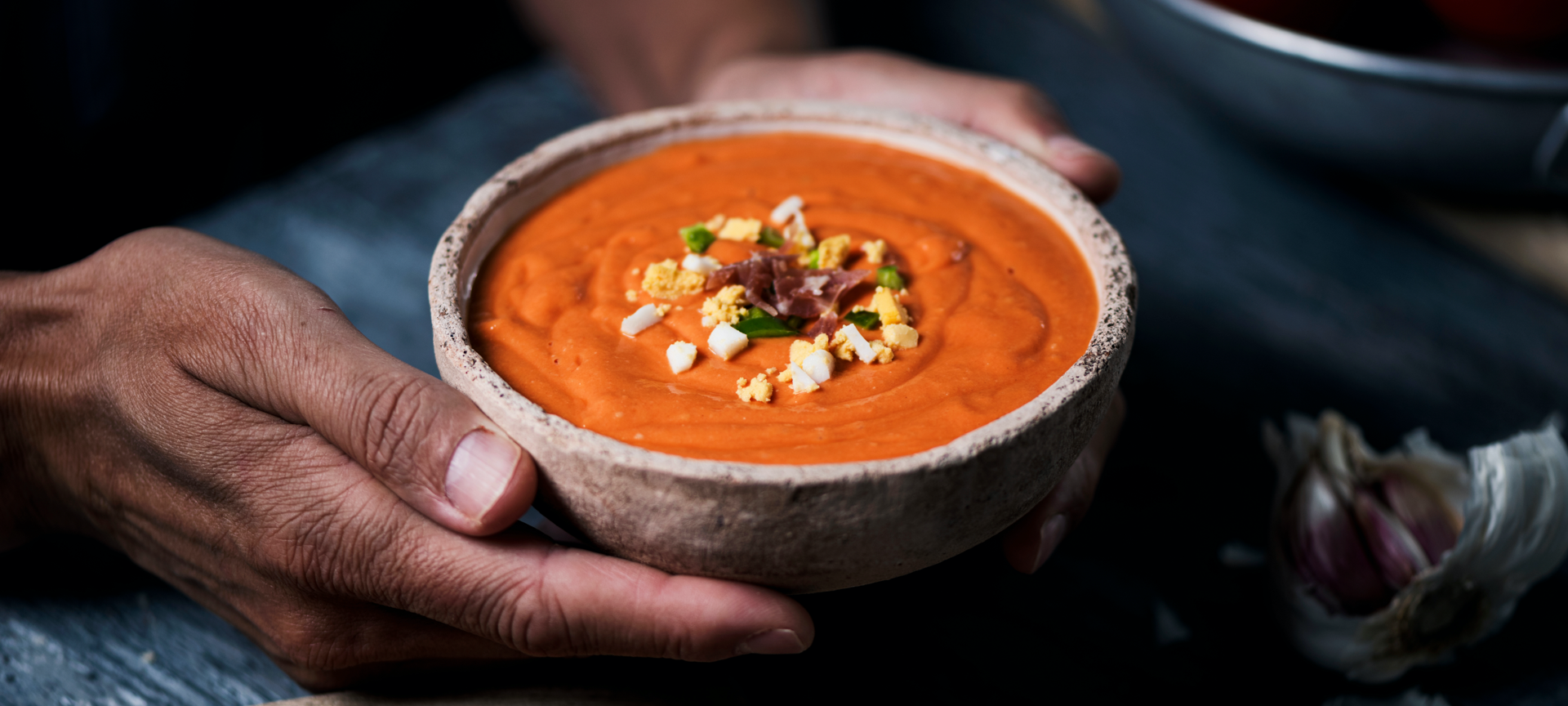
The gazpacho is a chilled soup made mainly with tomato, pepper, cucumber, garlic, oil and vinegar, although everyone has their own recipe and their own secret touch. It is one of the healthiest and most refreshing dishes of the Spanish summer. Its simplicity and flavour represent the essence of the Mediterranean diet.- Where is it typical? In Andalusia, especially Cordoba and Seville, but you will find it on menus all over the country.- Pairing drink: very cold Fino wine or Manzanilla de Jerez.- Bonus: Gazpacho is often served in a glass and drunk as a beverage, or, as some users suggest, as a "liquid salad" garnished with 'tropezones' (bits of bread, boiled egg or finely chopped ham).
-
5. Asturian Pote
It is a hearty spoon dish that is especially comforting on cold days. In essence, it is composed of Asturian beans, chorizo, black pudding, potato, tocino de cerdo (cured pork fat or belly), and cabbage, cooked slowly with a lot of "love".- Where is it typical?Principality of Asturias.- Pairing drink:Asturian cider or a PDO Cangas red crianza wine. It also pairs well with a dark or toasted beer.- Bonus: between November and December, the gastronomic event Jornadas Gastronómicas del Pote is held in the town of Turón.
-
6. Gildas
It is a delicacy consisting of a pickled Guindilla pepper, a green olive and a salt-cured anchovy skewered on a cocktail stick. It’s best to eat it all in one bite. Enjoy this simple but delicious tapa in a tavern in San Sebastian's Old Town after a stroll along La Concha beach.- Where is it typical?Basque Country. It is known to have originated in the Casa Vallés bar in San Sebastián in the 1940s.- Pairing drink: white wine, txakoli or a cold craft beer.- Bonus: this Spanish tapa is named after the film Gilda (1946), starring Rita Hayworth.
-
7. Zamorano cheese
It is a PDO. sheep's cheese with a firm texture and intense flavour, made from the milk of the native breeds (Churra and Castilian).- Where is it typical?Province of Zamora (Castile and León).- Pairing drink: it goes perfectly with a local PDO Toro crianza or reserva red wine from Zamora, or a Ribera del Duero tempranillo wine.- Bonus: there are several cheese dairies in Zamora that you can visit to find out how this product is made, with tastings and pairings with local wines. Seize the opportunity!
-
8. Spanish omelette
Another of those simple and wonderful recipes that represents a whole nation and sparks a friendly debate among those who prefer it with or without onions. What is certain is that it contains egg, potato, salt and olive oil. Which do you prefer, with or without onions?- Where is it typical? All over Spain, although the one in Betanzos (A Coruña) is very well known. You can sample it during its famous Spanish Omelette Week, around 12 October.- Pairing drink: it is most commonly accompanied with a lager, any wine, vermouth or mosto (a non-alcoholic grape-based drink). It goes with everything.- Bonus: many people are in the habit of having breakfast or lunch with a skewer of Spanish omelette with their mid-morning coffee. The combination may seem strange, but it tastes very good. Have you tried it?
-
9. Turrón de Guirlache
It is a typical Christmas sweet made with toasted almonds and caramel, whose origin dates back to the Middle Ages during the Arab period in the area of Aragon.- Where is it typical? It is mainly typical of Aragon, although it is also found in the Region of Valencia and Catalonia.- Pairing drink: sweet wine such as moscatel or a good cup of coffee.- Bonus: you can sample it at the many Christmas markets that are organised every year all over Spain, where you can also taste other delicious typical sweets such as marzipan and polvorones (crumbly shortbread biscuits).
-
10. Extra virgin olive oil
Extra virgin olive oil (EVOO) is the foundation ingredient of Spanish cuisine and one of the most internationally recognised products for its quality and health benefits. There is an enormous range of taste nuances and aromas depending on the area and the variety of olive used in its production.- Where is it typical? In all of Spain, although Andalusia is the region with the highest production, especially in the province of Jaén.- Bonus: you can get to know this ‘liquid gold’ better through olive oil tourism; learning how it is produced and enjoying tastings and gastronomic experiences in the heart of nature.
If you feel like tasting everything, come and savour the rich Spanish gastronomy and its high quality products.Discover more authentic and original content on Spain.info, the official tourism portal of Spain, and share it on social media.

Book yours
Choose between thousands of activities to live your best life on holiday.