The most traditional customs and food highlighted on our social media channels
In Spain, many traditions continue to mark the daily life of villages and territories. Ancient ways of working the land, travelling and cooking with local products coexist with the modern world. At Spain.info we have dived into our social media profiles to see which ones attract the most attention from users. Are you coming along?
-
The age-old grape harvest
Grape treading is one of the oldest activities in the world of wine and one of the traditions that best connects agricultural work with collective celebration. This ritual remains a vital part of the grape harvest in several Spanish wine-producing regions, where the direct contact with the grapes, the community spirit and festive nature often mark the start of the winemaking process.- Where is it?Beyond the best-known wine producing regions, such as La Rioja, grape growing extends to many other areas of Spain. In some of these places, ancestral traditions are still maintained. In the Priorat region, in Tarragona, or in the interior of the province of Valencia, in places such as Requena, Cheste and Elche, the harvest season signifies going back to the origins of winemaking.- BonusAttending traditional grape-treading ceremonies can be combined with a tasting of the varieties of each region, either in wineries or in the very rows of vineyards where the fruit is grown. Accompany the tasting experience with the local cuisine.
-
Cultivating grapes in unique conditions
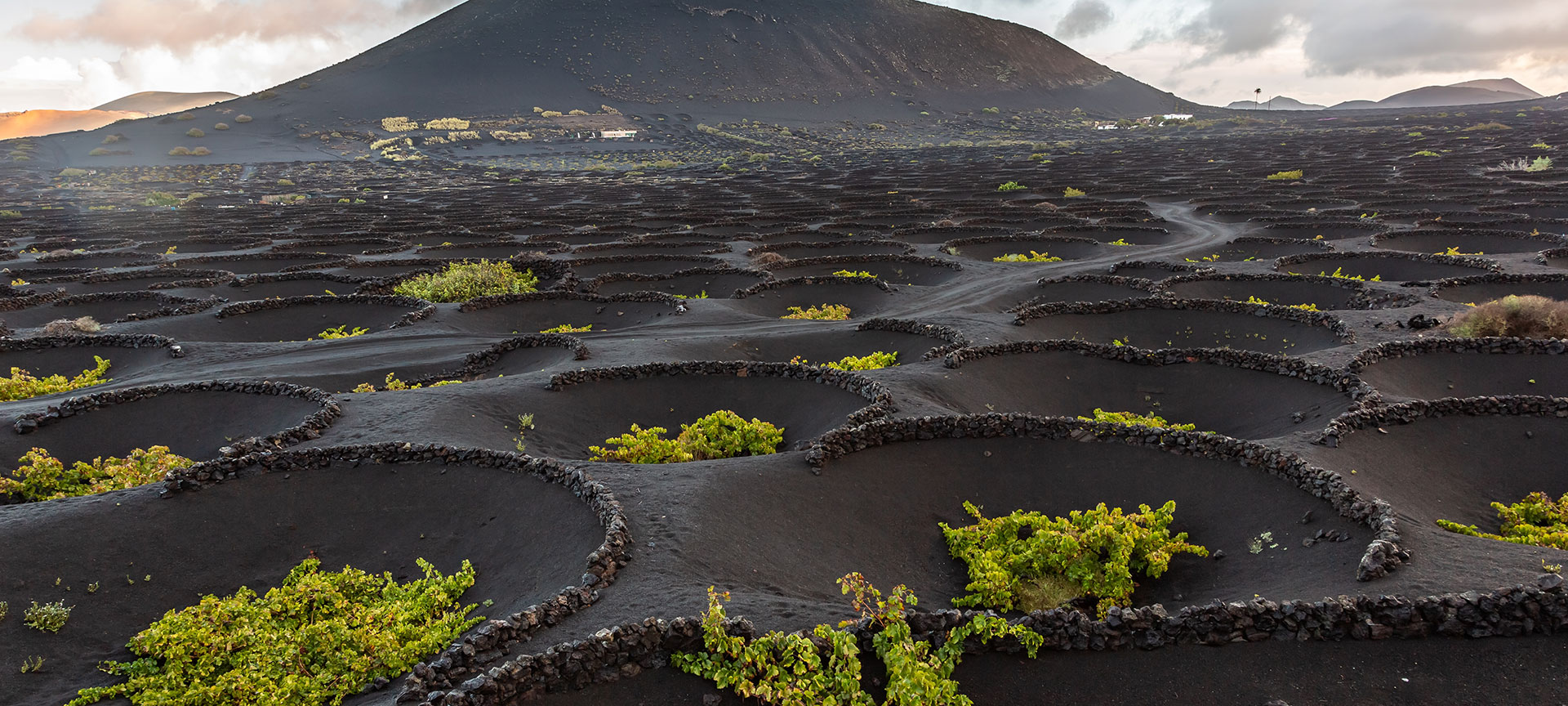
In some places, vines are grown in terrain that is as extreme as it is fascinating. There are several examples, such as the one in the Ribeira Sacra, in Ourense. Spain's official candidate for UNESCO World Heritage status under the denomination "Ribeira Sacra: Waterscape", grape cultivation there is defined as heroic viticulture, characterised by vineyards cultivated on steep slopes. And it’s not the only one. In Lanzarote there is a method that’s unique in the world designed after the volcanic eruptions of the 18th century: in deep volcanic ash pits.- Where is it?La Geria, a Protected Natural Landscape, is located to the east of the Timanfaya National Park on the island of Lanzarote and extends over several municipalities. There, the vines are planted in pits dug in the volcanic ash and protected by stone walls, which retain the moisture from the dew, prevent evaporation and protect them from the wind. A unique landscape where the winemaking tradition adapts to the force of nature and offers wines deeply linked to their origin.- BonusLanzarote has a lot to offer the traveller, from the aforementioned Timanfaya National Park; Art, Culture and Tourism Centres created by César Manrique such as the Jameos del Agua or its spectacular beaches. But you can also immerse yourself in its most deeply-rooted traditions. In any market on the island you will find its characteristic craftwork, made from materials such as clay, ceramics, palm leaves and wicker. Artisan trades that have been handed down from generation to generation.
-
Pasiegos Valleys: traditions among mountains
This region has a strong rural character that has been forged since the first settlements of the Palaeolithic age. Although nowadays there are road connections, up until recently travelling was only possible between the mountains, through the seasonal transhumance of its inhabitants, the Pasiegos. This has forged a way of life and traditions that have been passed down from generation to generation and that transcend any technological advances: tilling the land, manual milking, grazing.- Where is it?The Pasiegos Valleys are those of the Pas, the Miera and the Pisueña. These rivers mark the limits of one of the most visited regions in Cantabria.- BonusThe territory itself is a feast for the eyes, dotted with numerous Pasiega cabins, which were used as dwellings as well as stables and haylofts. Immerse yourself in the way of life of its inhabitants with a stroll through any of the Three Pasiegas Villages: San Pedro del Romeral, Vega de Pas and San Roque de Riomiera. The area also has a rich historical and artistic heritage, with some noteworthy architectural ensembles such as of Vega de Pas and Esles and the palace of Soñanes, in Villacarriedo. The visit ends with a trip to the Puente Viesgo caves, which contain cave paintings dating back as far as 30,000 years. And don’t forget to try the sobaos pasiegos (traditional sponge cake)!
-
Tradition is also cooked: roast chestnuts
The local gastronomy is one of the best ways to get to know a place. Recipes that were born out of necessity, of using what was available and the environment, and which have become authentic cultural symbols. Spain boasts dishes that are familiar to everyone, but it is also notable for others that have been prepared for many years. One of these culinary customs is roasted chestnuts; an aroma which fills the streets in autumn. This tradition was originally associated with All Saints' Day on 31 October.- Where is it?Roasting chestnuts is typical throughout the country, although there are several popular chestnut celebrations. Some examples include the Magosto in Galicia, the Amagüestu in Asturias, the Castañada in Catalonia and the Chaquetía in Extremadura.- BonusPair the flavour of chestnuts with a sweet wine, such as Moscatel, a young red wine or sweet cider. See how it enhances the flavour!

Book yours
Choose between thousands of activities to live your best life on holiday.