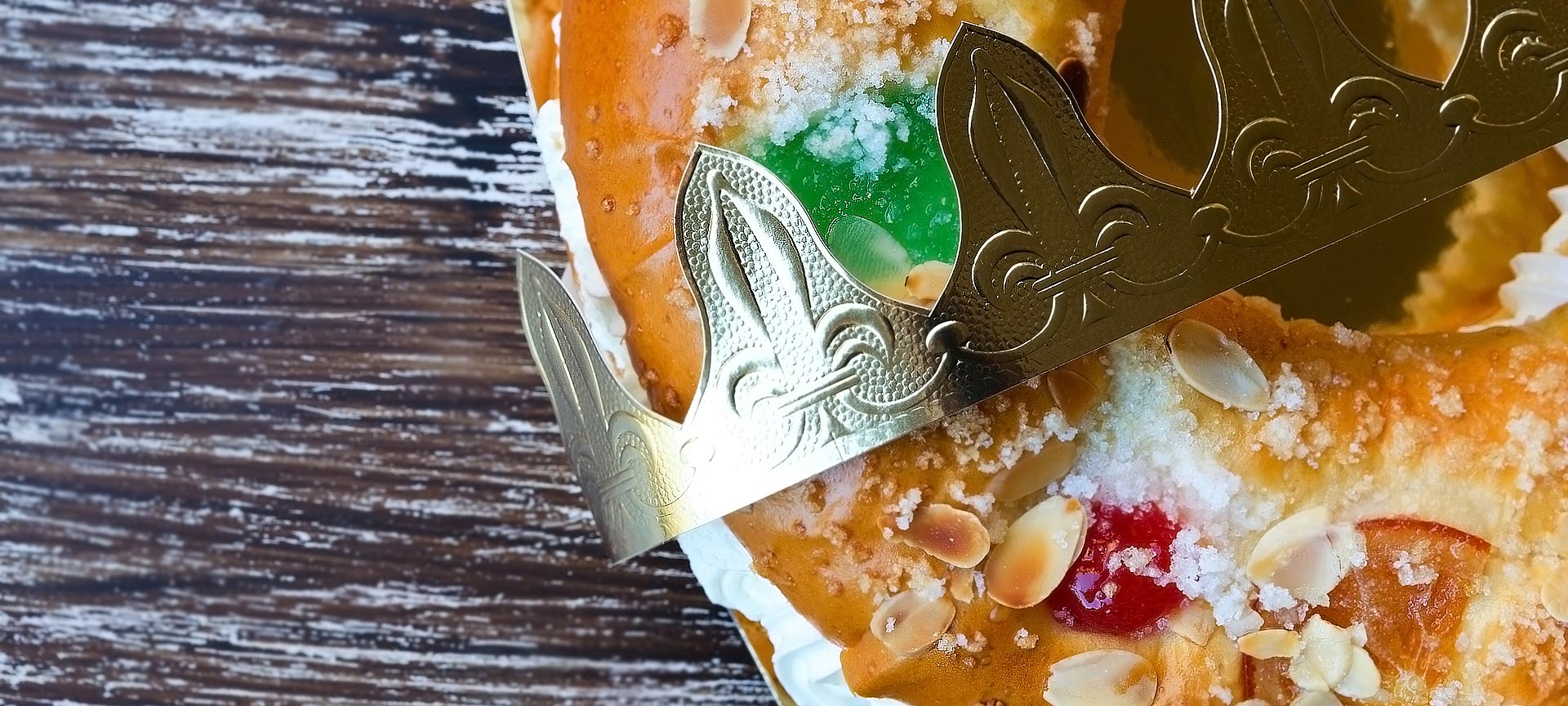
Epiphany Cake, a typical Christmas sweet treat in Spain

Five very Christmassy culinary experiences in Spain

none

The lights, the presents, the decorations, the great food... Christmas is a holiday full of traditions and we want to help you discover some of the most delicious ones during your holidays in Spain. It will also be very easy for you to find special menus in restaurants and hotels and the bakeries will be overflowing with Christmas confectionery.

A really tasty way to warm up whilst sightseeing

It’s Christmas, it’s cold, and there’s so much to see… Here’s a tip to warm you up while you’re touring the sights: treat yourself to a paper cone of roasted chestnuts from one of the many stalls you’ll find in almost any tourist area and in many other places around the cities and in towns and villages. I’m sure the smell of roasted chestnuts and sweet potatoes – both cooked over charcoal – will be enough to help you spot them as you walk along. 
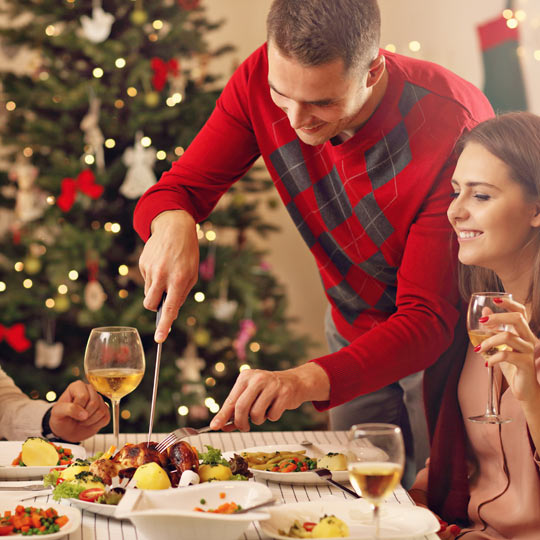
What is a Christmas dinner like in Spain?

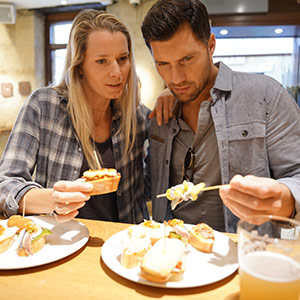
Have you ever gone for tapas in Spain? Have you seen those bars in pubs packed with small portions? Well, in Spain it is customary for the main Christmas meals to begin with a selection of appetisers, which may well be reminiscent of those succulent platters. Iberian ham, all sorts of delicious cheeses, seafood, tinned foods, pickles, and tasty specialities prepared just for these occasions… You’ll hardly believe these are just the starters.  Next come the starters, and it’s very common for this to be a spoon dish such as a soup or broth. Andalusian puchero, Catalan escudella, garlic soup (for example, in Castile-La Mancha), almond cream soup in the Balearic Islands, and even trout soup (common in Castile and León) are among the most popular.Main courses consist of roast meats (particularly lamb, suckling pig or young lamb, and, if possible, cooked in a wood-fired oven) and fish, such as sea bream or sea bass, baked in the oven, are some of the most common.

Christmas dinner

Christmas sweets in Spain

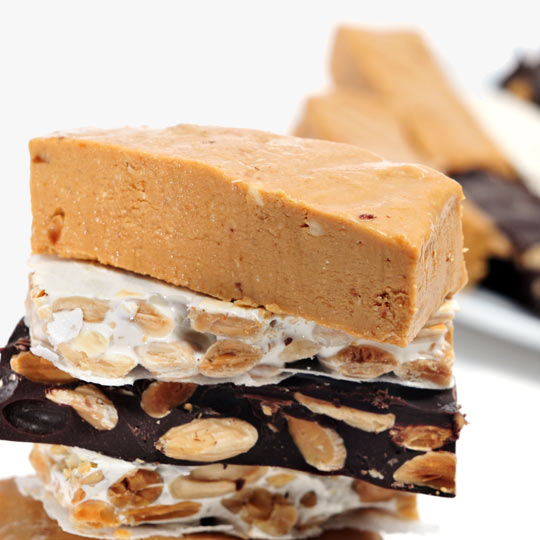
We did tell you that the meal was endless, didn’t we? Well, it’s hardly an exaggeration. At Christmas, once the meal is over, the table is laden with all sorts of Christmas sweets for the customary long after-dinner chat. Perhaps for this reason, or because it is a celebration designed with children in mind, sweetness is the flavour that defines Christmas in Spain. The list of treats for those with a sweet tooth this festive season is endless, and every region has its own specialities. Our recommendation is that you make afternoon tea a fixed part of your day and take the opportunity to participate in tasting turrón, polvorones, marzipan, mantecados and, of course, the Epiphany Cake. Although you’ll be able to enjoy it in bakeries and restaurants throughout the festive season, the most traditional way to eat it is on the afternoon of 5 January (whilst the Three Kings parade is taking place) or on 6 January, after the Three Kings have left presents for all the children.Its fun surprise is hidden inside, where a small figurine is tucked away to bring good luck to the lucky person who finds it in their slice.

Christmas nougat

How and with what is Christmas toasted?

We’re talking about the one we make with cava. It is a dry, sparkling white wine produced in Spain and is perfect for special occasions. Do you want to make it sound even more Spanish? So, when it’s time for the toast, you have to say: “¡Salud!” (cheers!) Another, less formal version might be ‘chinchín’, although you’re likely to hear many people make a toast in a more informal way by shouting: “Up, down, to the centre and in!”

Discover the New Year tradition: the 12 lucky grapes

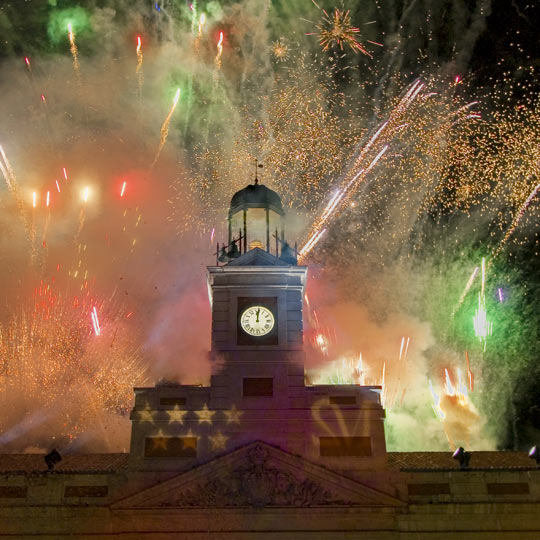
Do you want next year to be fantastic? So, you have to eat the 12 lucky grapes on the night of 31 December at the stroke of midnight. You’ll see how the whole country comes to a standstill in front of the telly to eat grapes as the clock strikes midnight. According to tradition, if you finish the grapes in time, you’ll have a year full of good luck. If you want to make the most of the experience, we encourage you to see it for yourself at the Puerta del Sol in Madrid (remember that you’ll need to arrive at the square a few hours beforehand). If you’re in another city, don’t worry – in almost every city, people eat the grapes at some iconic spot.  

Puerta del Sol square, Madrid, on New Year's Eve

In short, Christmas essentials in Spain- Warm up with a cone of roasted chestnuts and, of course, enjoy them whilst out and about.- At main meals, marvel at the variety, quantity and quality of the appetisers and small dishes served as starters.- Savour the flavours of the most popular festive dishes, such as Andalusian puchero, escudella and St Stephen’s Day cannelloni – typical of Catalonia – Balearic almond cream, Castilian garlic and trout soups, roast lamb and kid, baked sea bream and sea bass, and many more.- Round off your meal with a selection of traditional Christmas sweets, such as turrón, mantecados, polvorones and marquesitas…- Around Three Kings’ Day (6 January), try the sweet roscones and test your luck by searching for the surprise hidden inside.- Toast the New Year, whenever possible and if you fancy it, with a glass of cava.