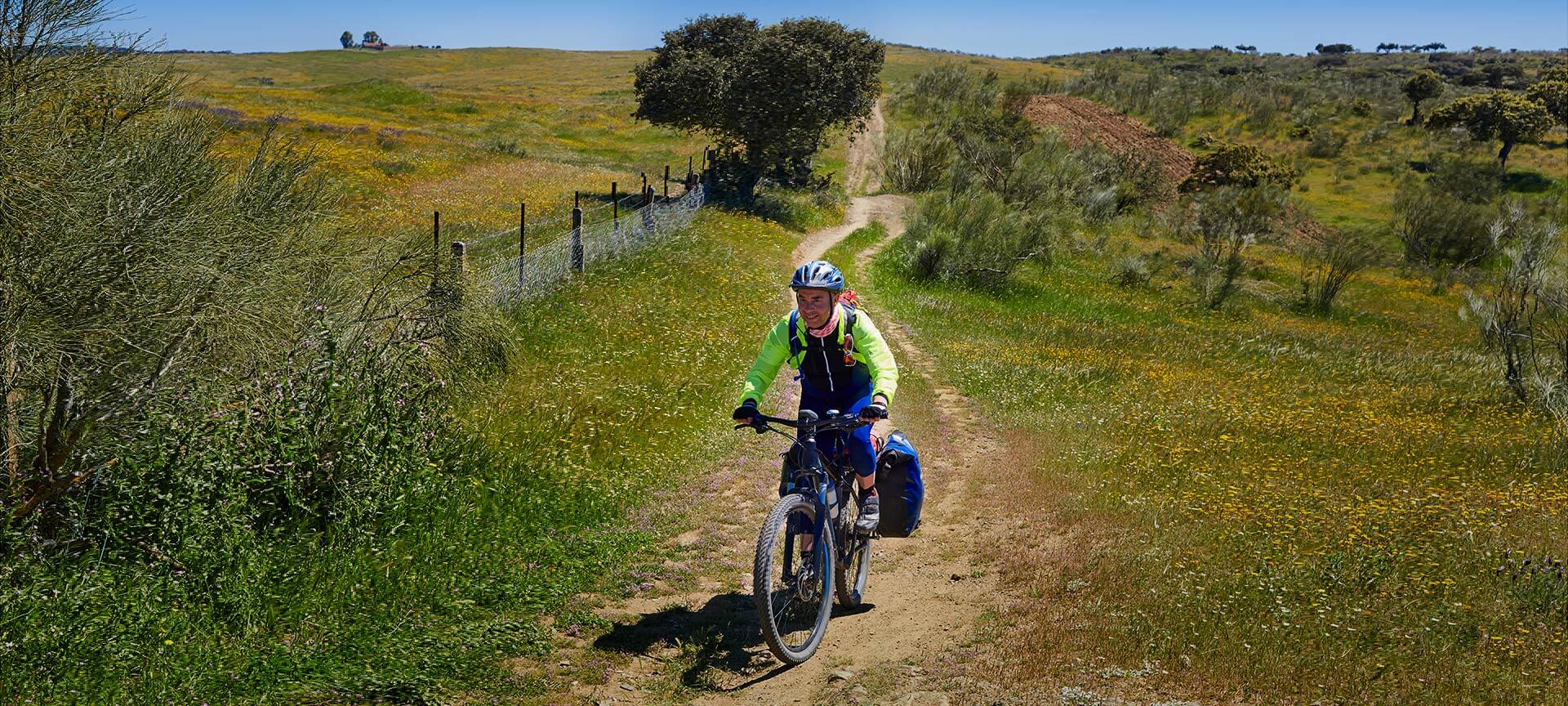

A cyclist on the Silver Route as it passes through Extremadura

The Silver Route by bike

none

The Silver Route is a fascinating route running from south to north across the peninsula for true mountain biking enthusiasts. From Seville to Gijón, it’s quite an adventure that takes you through four different regions: Andalusia, Extremadura, Castille and León and AsturiasThe route covers nearly 900 kilometres, offering a journey filled with dramatic landscape changes and cultural diversity. You’ll be able to admire the olive groves of the south, the pastures of Extremadura, the Central Plateau and the stunning valleys of the north.

Stages

The route consists of 49 stages, with sections ranging from approximately 10 to 20 kilometres, to make the route more accessible. On the Silver Route website, you’ll find information on the various sections, including maps and tracks, as well as details of the available services (cycle shops, accommodation, hire companies, etc.) along the route.Although the stages follow the original historical and tourist route as closely as possible, the layout was designed with cyclist safety as the top priority. For this reason, there are certain points where the route is diverted to make use of other, safer alternative routes.
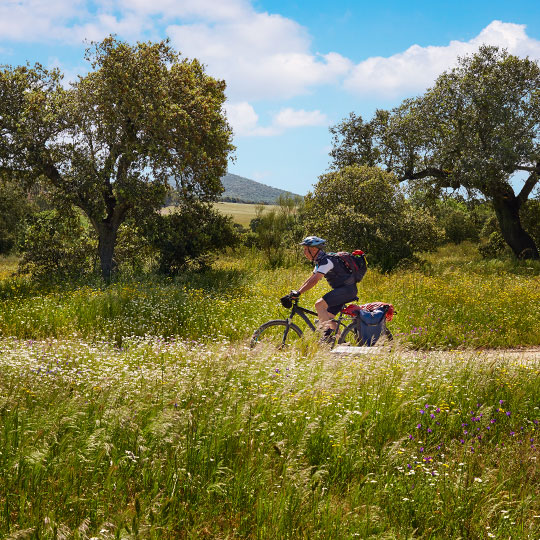
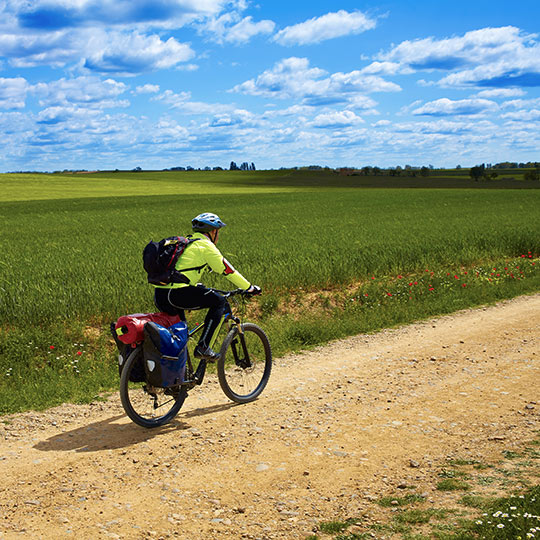
A cyclist on the Silver Route as it passes through Extremadura

Get your bike ready, plan your stages however you like, and travel with peace of mind; you will find bike repair stations along the route to handle any unexpected issues, as well as charging stations for e-bikes. You will also enjoy special benefits with the Route's cycling passport. By the way, did you know that, although it isn’t a Way of St James route, some people also walk the Silver Route as an alternative way of doing the Way of St James? Consequently, when the route reaches Zamora, they take an alternative route to link up with the French Way or the Sanabrés Way until they reach Santiago de Compostela

A cyclist travelling along the Silver Route

Tips

Training. If you are undertaking an adventure of this magnitude, you need to prepare well in advance, keeping in mind that your panniers will be heavier than usual. Luggage. Your gear must include a helmet, cycling clothes, a water bottle, a raincoat and appropriate shoes. Also, don’t forget to bring the necessary tools in case of a breakdown.Food. A hearty breakfast is always best. If possible, include sweets and nuts to start the day with plenty of energy. Staying hydrated is also essential; always carry a full water bottle, as there may be stretches where it’s harder to find water.Accommodation. If you’re staying in public hostels, you should bear in mind that the vast majority of them close at 10.00 pm. If, on the other hand, you’d rather enjoy the nightlife, it’s best to opt for guesthouses or private hostels.Time of year.  Although you can do it at any time of year, spring is the best time to cycle this route. You’ll avoid the stifling summer heat, especially in the south, and you’ll be able to enjoy greener, more flower-filled landscapes.

Cyclists in Spain
Find out more about...