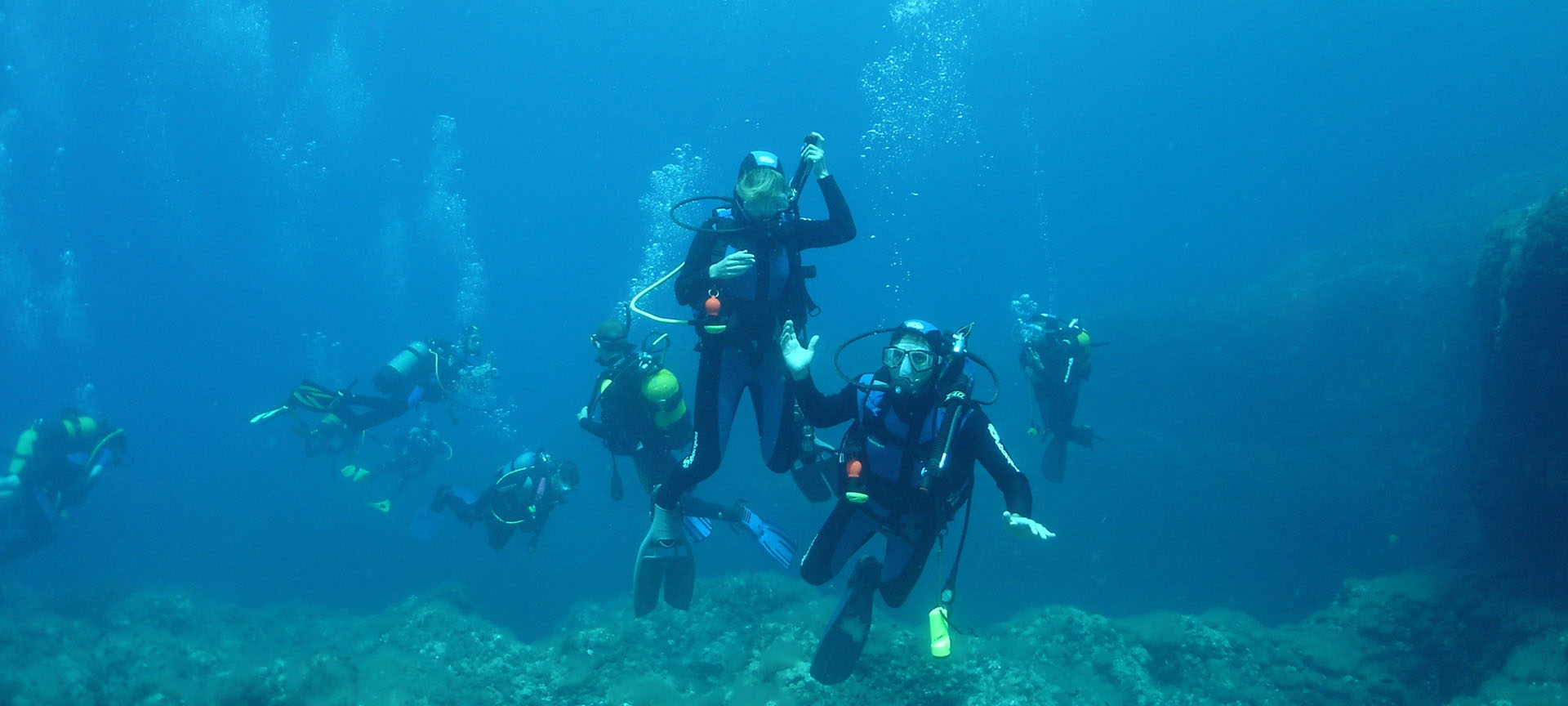
Diving in Ibiza

Diving in Spain

none

In Spain, you can find all kinds of recreational diving specialities: ice diving, night diving, wreck diving, cave diving, snorkelling, etc. The possibilities are so numerous and the marine life so spectacular that any diving enthusiast should explore its waters. There are options for beginners and experienced divers alike.

WHY SPAIN

Located in Southern Europe, Spain is practically surrounded by water: its coasts are bathed by the Mediterranean Sea (with warmer waters), the Cantabrian Sea, and the Atlantic Ocean (with colder waters), but all are characterised by their exceptionally clean waters.The climate is very pleasant and allows for diving all year round.It boasts more than a dozen marine reserves.There are numerous dive centres that offer courses for different levels and specialities and manage permits and boat transfers to the coast.For their part, diving clubs organise activities such as seminars on underwater archaeology, underwater photography...You can also experience a scuba diving baptism, practice other water sports or take a whale-watching excursion.
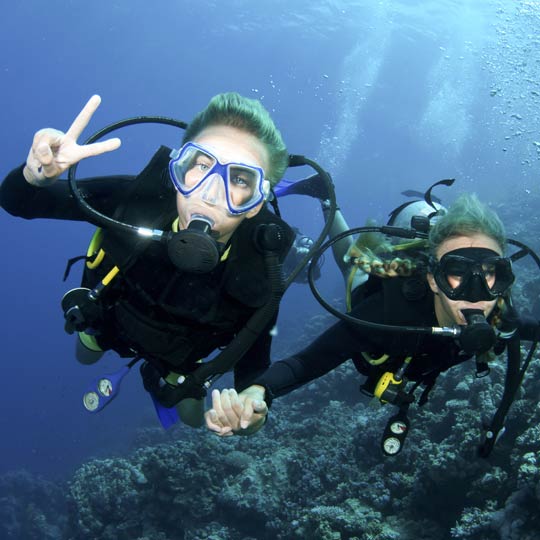
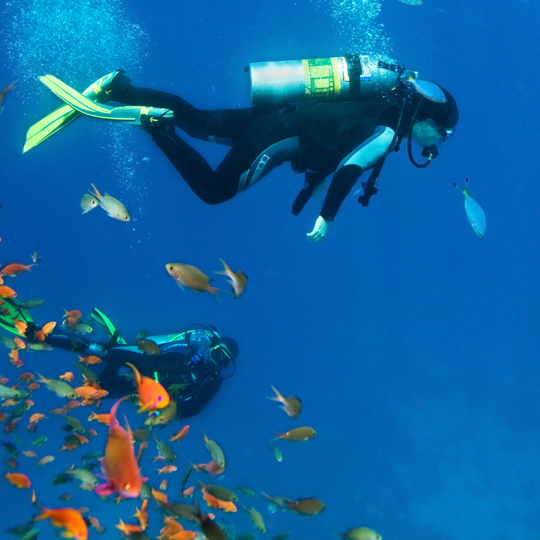
Scuba divers

HOW RECREATIONAL DIVING WORKS IN SPAIN

If you want to start practising this activity while you're in Spain, you'll want to know a few things:You must have a certificate that proves you have the necessary training to dive safely. In Spain, in addition to the official federations, a large number of companies issue these certificates: ACUC, CMAS, IAC, IDA, IDEA, PADI, SSI... (which can also help you plan your diving trips).While membership in a federation is not required for recreational diving, insurance is mandatory. This can be obtained through diving centres and training organisations. In other words, it must be included in the course you take.You must submit a sworn statement regarding your health status through a questionnaire provided by the centre organising the activity.In any case, the various diving centres along the coast will provide you with the necessary information, handle the paperwork and lend you the required diving equipment. You will be in the hands of qualified instructors.

WHAT IF YOU ALREADY HAVE A DIVING CERTIFICATE?

If you already have an internationally recognised qualification, you can use it to go diving in Spain. We advise you to bring your certificate, dive logbook, medical certificate and diving insurance.Always keep in mind Spanish regulations regarding diving, which cover aspects such as the following:The minimum age for diving in Spain varies depending on the region. However, at the national level, it is 8 years old.The maximum depth for diving in Spain is limited for those under 18 years of age to between 6 and 40 metres, depending on age.

BEST TIMES

Although it is possible to practice diving all year round, most courses take place from March to November.

Diving in the Medes Islands, Girona (Catalonia)

DIVING AREAS

All areas of Spain are attractive for diving for one reason or another (water visibility, pleasant temperatures, etc.). To help you choose, here is a description of its 11 State Marine Reserves, perfect for diving:Cabo de Gata-Níjar. In Almería (Andalusia). It is home to the southernmost Posidonia oceanica seagrass meadows, coral formations and striking colourful fish. There are boat trips that take you to coves such as Cala Chica or San Pedro.Island of Alborán. This also belongs to Almeria. Did you know that it is believed to be named after the Almerian pirate Al-Borani? Legend has it that he used to take refuge on the island and hide his treasures there.

Cabo de Palos – Hormigas Islands. We are still in the Mediterranean, but now in Murcia. Besides its Posidonia oceanica seagrass meadows and underwater mountains, you can find enormous groupers and barracuda, and occasionally sunfish or eagle rays. And for the more adventurous, there are shipwrecks, like the legendary ocean liner Sirio.Cabo Tiñoso. Without leaving Murcia, you'll be impressed by its almost vertical cliffs, which in some sections drop to 70 metres and provide habitat for a wide variety of flora and fauna typical of the Mediterranean, most notably the seagrass meadows. Furthermore, the underwater landscape of this area is characterised by its submerged caves and artificial reefs.Levante de Mallorca – Cala Ratjada. Off the eastern coast of the island of Majorca, we find underwater caves and Posidonia oceanica seagrass meadows. The presence of groupers and red spiny lobsters is noteworthy. Among the points of interest for diving are the one known as "Queso", La Catedral, La Mula...

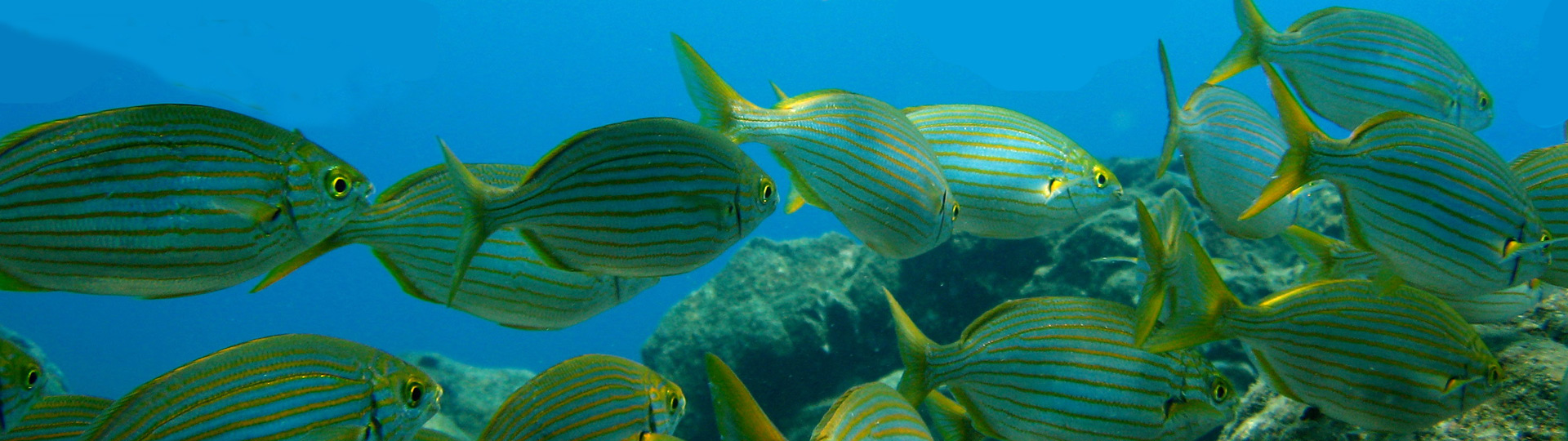
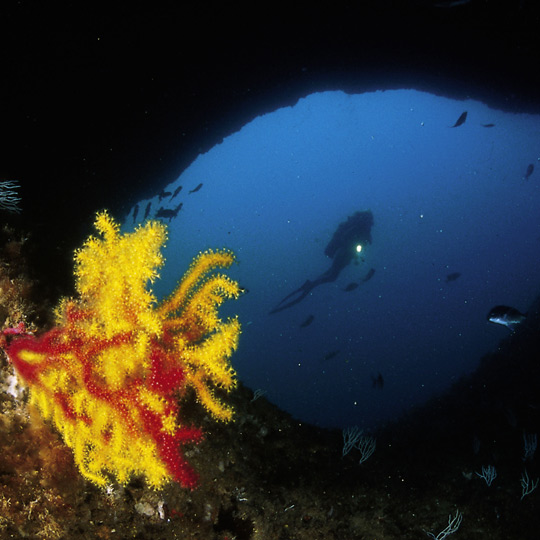
Seabed

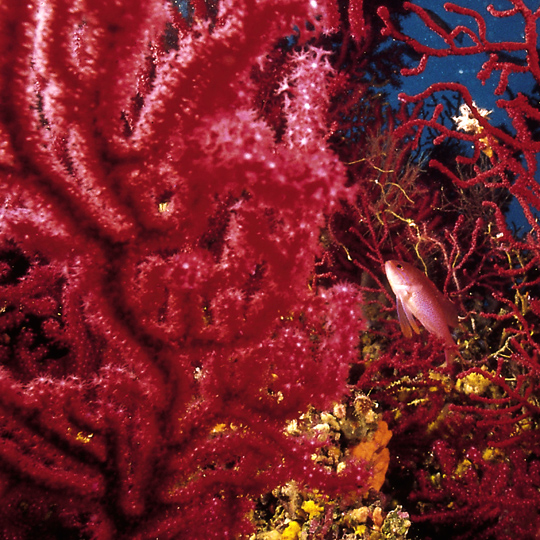
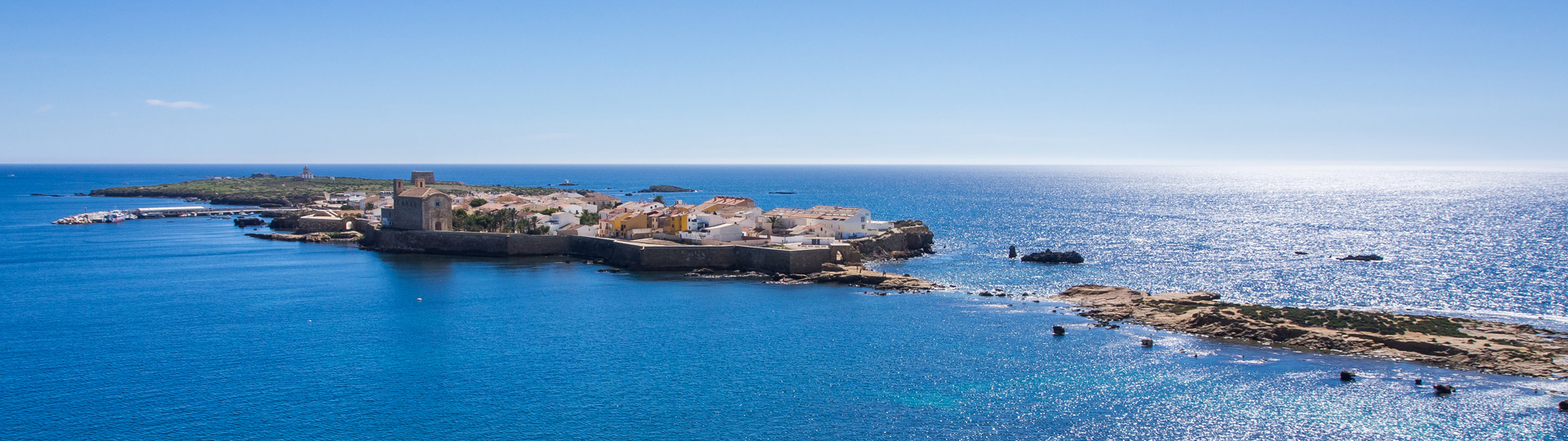
Columbretes Islands. Also in the Mediterranean but in Castellón, there are four groups of volcanic islets. They are surrounded by steep underwater walls and have species such as red coral. Find out about the boats that travel to them from the ports of Castellón and Valencia. Once there, there are companies that organise diving activities and offer dinner on a boat under the stars.Tabarca Island. It is located in the province of Alicante. Its seabed is also home to Posidonia oceanica seagrass meadows. It can be reached by boat from Alicante, Santa Pola or Benidorm. You'll be able to see reefs with large groupers and schools of barracuda and even shipwrecks.

Tabarca Island, in Alicante (Region of Valencia)

Masía Blanca. It is about 50 kilometres north of the city of Tarragona. The Posidonia oceanica seagrass meadows form a labyrinth rich in species: octopuses, cuttlefish, groupers, sea bream, sea bass...Isla Graciosa. The north of the Canary Island of Lanzarote, La Graciosa, and islets of the Chinijo Archipelago make up this marine reserve. The colourful seabed is spectacular thanks to the red and yellow sponges and gorgonians. You can find pufferfish, trumpetfish or triggerfish. Its waters in winter never fall below 18º C.La Palma. This is another Canary Island where depths reach 1,000 metres. Tropical anemones can be found there. Bottlenose dolphins and loggerhead turtles are among the notable species. Can you imagine being able to enter a cave and explore the depths by following the lava flows? This is because the Canary Islands are of volcanic origin. 

La Restinga – Mar de las Calmas. On the Canary Island of El Hierro. Their waters are frequented by deep-sea species such as whale sharks and manta rays. Sea turtles and dolphins can also be observed. The water temperature ranges between 18 and 25 degrees. For photography enthusiasts, the Open Fotosub Isla de El Hierro is held every year.Other areas. Beyond the state Marine Reserves, there are other reserves and areas in Spain that are famous for diving. In Catalonia, the highlights include Los Ullastres, the Formigues Islands, Cap de Creus, Ses Negres and especially the Medes Islands, an archipelago that was a hideout for pirates for centuries and where you can dive next to large groupers or pass through the corridor known as the "Cow Tunnel".In Galicia, you can dive in the Atlantic Islands of Galicia National Park, home to the famous Cíes Islands. Would you like to see giant octopuses and turbot?

Diving

All the Canary Islands and the Balearic Islands are perfect for scuba diving. For example, have you heard about the sea turtles that arrive in Formentera, having travelled hundreds of thousands of kilometres from the Gulf of Mexico?The list extends to practically the entire coast of Spain: Why not try diving in the waters of the Basque Country, Asturias, Cantabria or the rest of Andalusia?

Seabed in La Palma de Mallorca, Canary Islands

Tips and recommendations

TIPS

- Marine Reserves (and other areas, too) have access conditions for underwater activities and usually require prior authorisation. You can get more detailed information on the Spanish State Marine Reserves website and the Ibero-American Network of Marine Reserves website.- Do not dive if you are going to be travelling by plane in the next 24 hours (due to the risk of decompression sickness).- Although you can bring compressed air tanks into Spain, it is neither recommended (due to the difficulty of transporting them) nor necessary, as they can be rented at dive centres.- Remember that the diving equipment you need depends on the area where you will be diving and the time of year. Keep in mind that the water temperature can vary between approximately 10 and 26 degrees Celsius.- For any questions or if you need guidance on which centre to attend for a course, we recommend contacting the Spanish Federation of Underwater Activities (FEDAS) or the Spanish Recreational Diving Association (ABRE).- You can also consult our practical information section on Health and Safety to learn more about healthcare in Spain.- Since the recommendations and regulations offered may change, we advise you to always check the requirements before starting your trip.

Find out more about...