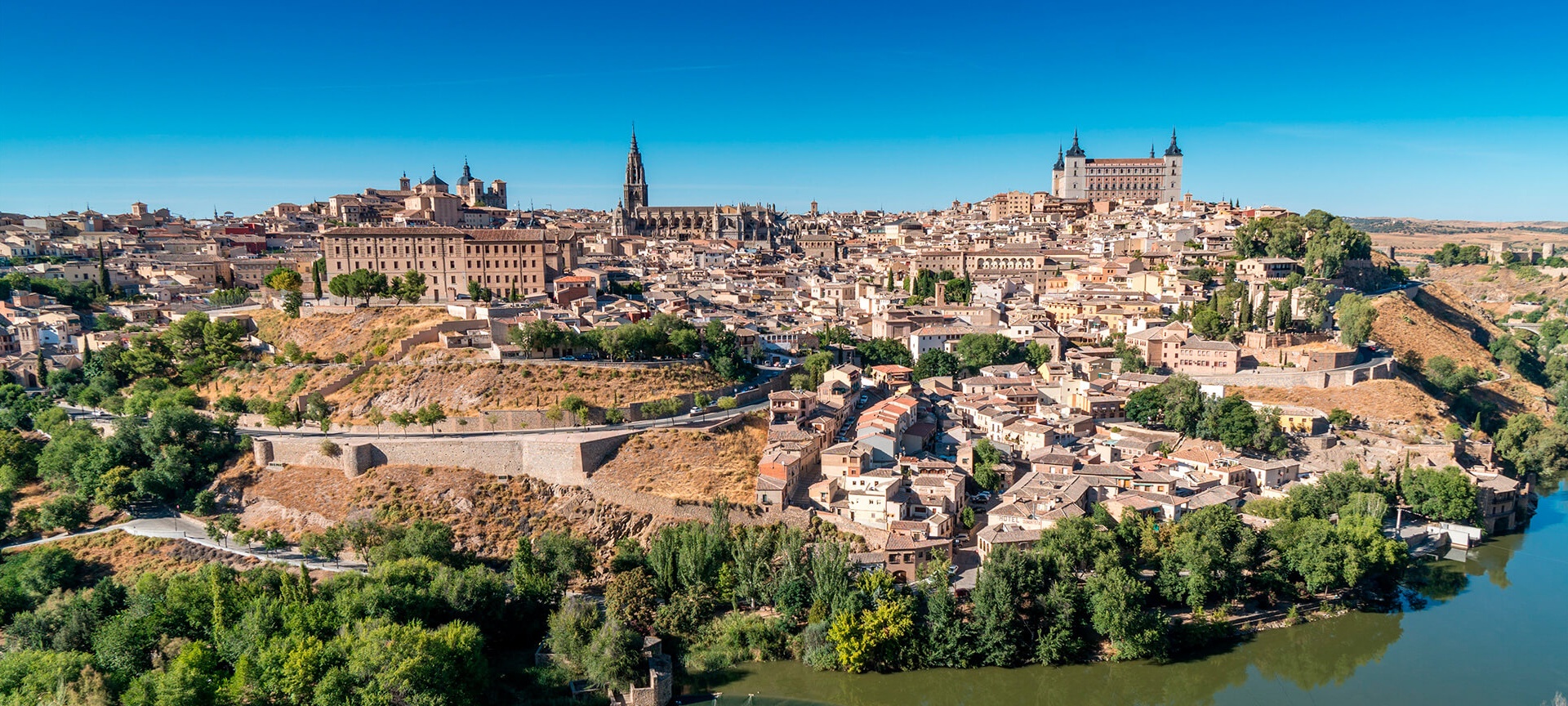

Panoramic view of the city of Toledo

One day in Toledo

Toledo

Mix of cultures


A day in Toledo is never long enough. The famous ‘city of three cultures’ lies very close to the capital of Spain, a mere 70 kilometres from Madrid and connected by high-speed train in a journey of around half an hour. Its historic quarter, designated a UNESCO World Heritage Site, is fascinating, not least because it preserves the exact layout it had during the Middle Ages. A walk through its narrow streets reveals an incredible monumental ensemble that is truly vibrant, both inside and out.

MORNING

The first part of the day can be spent exploring two of the city's most famous monuments: the Cathedral and the Alcázar. You'll be amazed by them.

A convent converted into a museum

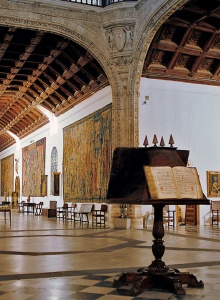
You can then head to the Santa Cruz Museum, located to one side of Plaza de Zocodover. This site consists of the old Hospital de Santa Cruz and the Santa Fe Convent, which have been refurbished and converted into a cultural venue hosting major temporary exhibitions. We entered the convent building via Calle de Santa Fe. Right from the start, it is striking to see how the most modern elements and materials have been integrated into the structure of the old convent. Inside, there is a huge glass window offering views over the Paseo del Miradero avenue, the gardens of the new Conference Centre and the River Tagus. Exit the building onto Calle Santa Fe, and if you turn left, you will come to the Santa Cruz Hospital building. It is well worth a visit, if only to see the courtyard, the marble staircase of Covarrubias and the enormous arches in its interior.

Refreshments at the Alcázar fortress

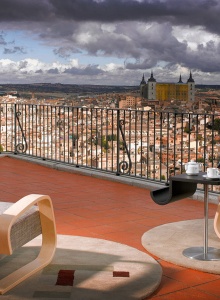
This is a good time to stop for a cup of coffee or a snack. There are several cafés and outdoor terraces in the area, but as we’re very close to the Alcázar, we can take the opportunity to climb up to one of its fortified towers and enjoy the spectacular panoramic view from the café at the Castilla-La Mancha Library. Looking out the window, we are greeted by a spectacular panoramic view of Toledo from above. 
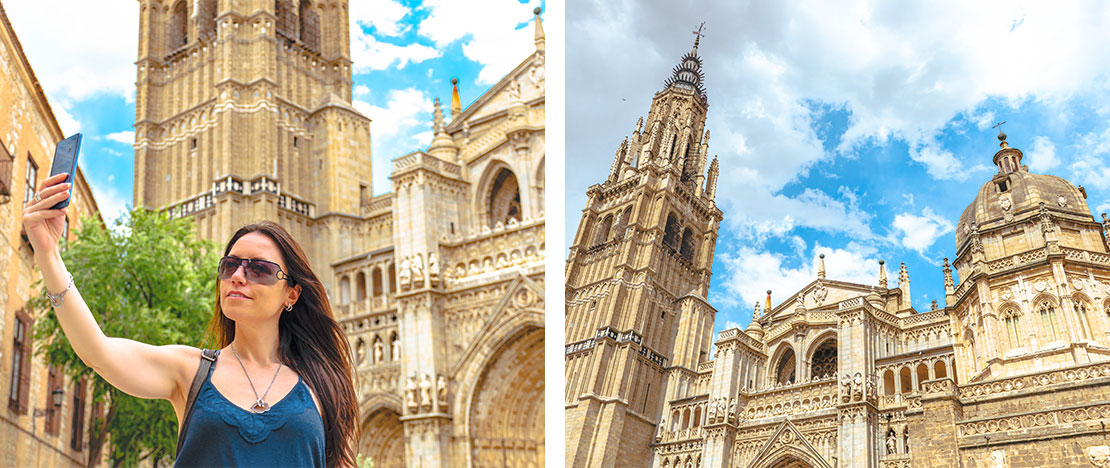
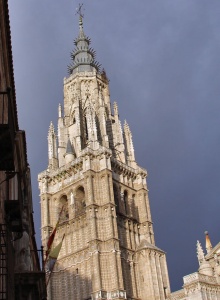
Images of the Santa María Cathedral in Toledo, Castile-La Mancha

The grandiose Cathedral

We left the alcázar and, after wandering around for barely five minutes, we reached the cathedral via Calle Cardenal Cisneros. It is so magnificent and there is so much to see that we could spend hours and hours there: the Chapel of the Kings, the famous golden Monstrance, the magnificent paintings in the Sacristy, the choir… We learnt about the curious tradition celebrated every 15 August, to mark the feast of Our Lady of the Tabernacle. On that day, it is customary at the Cathedral to drink from earthenware pots, jugs and glasses filled with water from the Cloister well, as the water is said to be miraculous. You’d better make a note for future visits.

A bird’s eye view of Toledo

Leave the Cathedral and head towards the Plaza del Ayuntamiento, where you will find the two Renaissance buildings of the Episcopal Palace and the Town Hall. Along the street on the left, you’ll come to the alley of the Cuesta de la Ciudad (the city hill) which you can climb to reach the Jesuit church (also known as the church of San Ildefonso) in the Plaza Padre Juan de Mariana. It is located at the highest point of the city, so this is a perfect opportunity to once again enjoy the panoramic views over the tightly packed rooftops of Toledo from its towers.
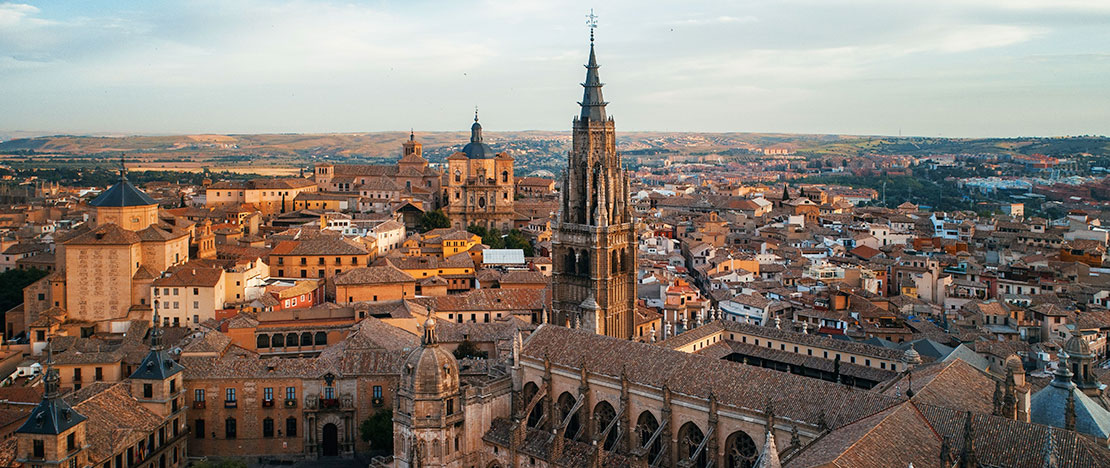
Aerial view of Toledo, Castile-La Mancha

Looking towards the south, on the upper banks of the Tagus River, you can see the Cigarrales mansions, the old recreational estates of Toledo's bourgeoisie, many of which have been transformed into luxury accommodation.

Food in an old Toledo mansion house

Now it's time for lunch, and nearby lies Calle Alfileritos, a street lined with bars and restaurants where we can sit and relax. The atmosphere in many of them is particularly warm and charming, as they are often housed in old Toledo town houses or multi-story mansions that have been renovated while preserving their most distinctive decorative features. Menu suggestions include, for example, cocido (chickpea stew), carcamusas (stewed pork with tomatoes and peas), partridge, venison, or any game dish. To accompany the meal, one of the local wines with designation of origin, of course.On the way to Alfileritos, we pass the convent of San Pedro Mártir on our left, which now belongs to the University of Castilla-La Mancha. The two interior cloisters are perfect for stopping and enjoying a moment of calm.
AFTERNOON

It’s time to discover why Toledo is known as ‘the city of the three cultures’ with a visit to the Jewish quarter and the district of the convents. You can do this by taking a relaxed stroll around the area.

A tour through the Jewish quarter

After a good meal, head towards the city’s Jewish quarter. It is about a 15-minute to walk to Plaza del Salvador, where we see the Municipal Archive - a contemporary-style building resulting from the renovation of the former Church of San Marcos. The building is particularly unusual, among other reasons because the archaeological remains discovered during the building works are integrated into its structure.

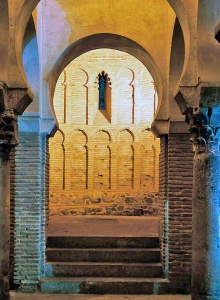
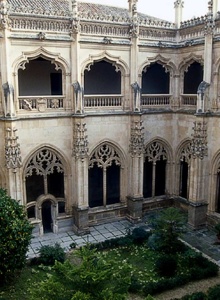
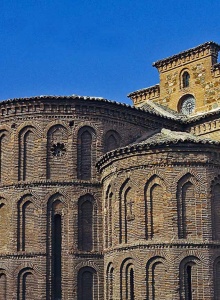
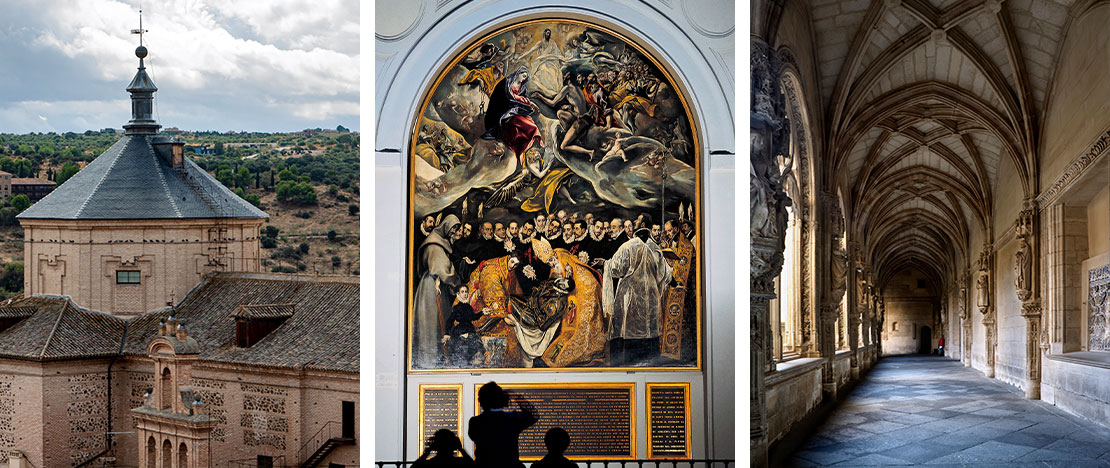
Left: Church of San Marcos / Centre: “The Burial of the Count of Orgaz” by El Greco / Right: Monastery of San Juan de los Reyes, Toledo, Castile-La Mancha

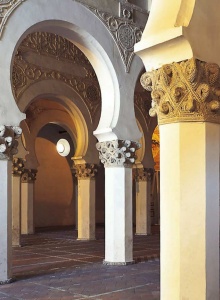
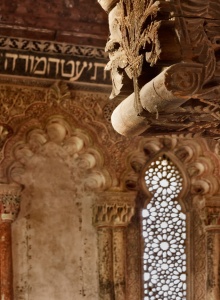
Heading out of this square along Calle de Santo Tomé, you will come to the Church of Santo Tomé. Inside the church you can see the painting, “The Burial of the Count of Orgaz”, one of the masterpieces by the famous painter, El Greco. We continue along Calle San Juan de Dios to visit the Synagogue of El Tránsito, which also houses the Sephardic Museum. After marvelling at the beauty of its decorative plasterwork, you can head into the museum to learn more about the Jewish tradition in Spain. The next stop is another synagogue, Santa María la Blanca, which we reach via Calle Reyes Católicos. The intricate carvings and details of its capitals are a sight to behold.Continuing down the street, we come to the imposing Monastery of San Juan de los Reyes, commissioned by the Catholic Monarchs. Having explored it, we can’t help but be surprised to learn that, according to reports, the monarchs thought it was “small”. There are plenty of craft and souvenir shops throughout this area. Some of these shops also have a workshop where visitors can see the craftspeople at work. Damascene ware, ceramics, leather goods and embroidery are particularly characteristic of Toledo. Not to mention, of course, the famous swords.

Through the convent district

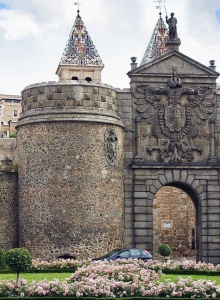
Heading up the Paseo de la Virgen de Gracia, we enter the convent district. Of course, if you fancy a peaceful stroll, this is the perfect area, as these streets are characterised by calm and silence.In some of the convents, you can also buy sweets handmade by the nuns. The Convent of San Antonio, the Convent of San Clemente and the Convent of the Agustinas Calzadas are just a few examples.Every now and then, when we look up, we spot some elevated passageways: these were used by the religious orders to move from one building to another without being seen in public. Continuing our walk, we reach the Mosque of Cristo de la Luz and the Puerta del Sol, from where we can see the Church of Santiago del Arrabal and the inner side of the Puerta de Bisagra.

A great panoramic spot for watching the sunset

At this point, we were very close to Zocodover Square, so we didn’t hesitate: we took a taxi from the rank next to the square to take us to the Parador de Turismo, situated on one of the hills on the outskirts of the city.

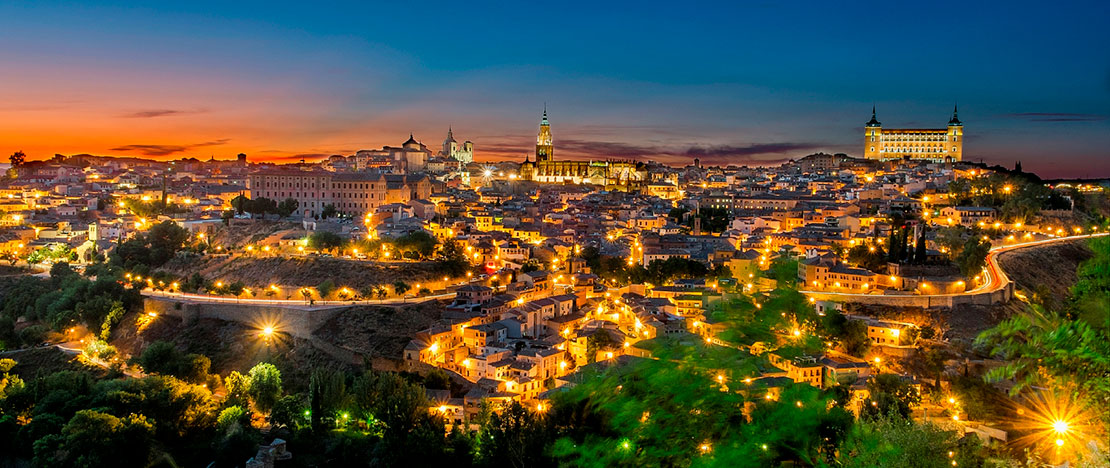
Toledo at dusk in Castile-La Mancha

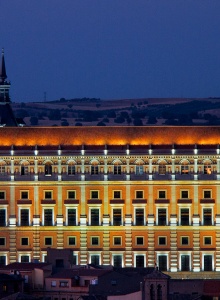
The idea is to have a drink on the café terrace while enjoying the magnificent panoramic view of Toledo at sunset. It is the perfect reward after a day of sightseeing.

Places not to be missed

What to see


Tips and recommendations

Visit to the Cathedral

Tickets to the Cathedral can be bought at the ticket office located opposite the Puerta Llana gate in Calle Cardenal Cisneros, or online. On Sundays during High Mass you can listen to the majestic cathedral organ. Also, every day (from 9 am on working days and 9.45 am on weekends and public holidays), there is a mass in the Mozarabic Rite in the Mozarabic Chapel.

How to get there

Toledo is very easy to get to from Madrid by train, coach or car. We opted for the train, as it’s quick and comfortable: the journey only takes about 30 minutes and there’s one every hour from Atocha station. Turn right on leaving the station, and head to the historic centre by bus. Lines 5, 511, 61 and 62 stop in Plaza de Zocodover, where there is a Tourist Information Office. The route can also be covered on foot: it is an uphill walk of about 15 to 20 minutes. The escalators at Safont (in Plaza del Granadal) make the task easier. 

When to do the route

Corpus Christi. A very special time to admire the Cathedral is during the feast of Corpus Christi, between the months of May and June, when the walls are adorned with majestic tapestries. Easter. Most of the convents are enclosed order convents and are not open to the general public. However, they can be visited during Easter thanks to the guided tours organised by the Tourist Board.

Recommended excursion

And if you have more than one day, take the opportunity to visit the Puy du Fou España park, just 12 kilometres from Toledo. An immersive space for the whole family, where history comes to life through impressive recreations, shows and special effects.

Healthy walk

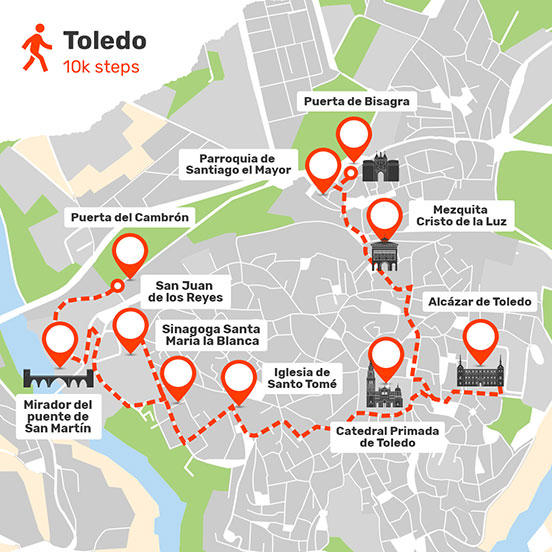
If you want to keep fit, you can complete this 10,000-step walk, taking in the city’s most iconic sights.

Healthy walk
What to do

Travel plans for inspiring you