What are the wines like?
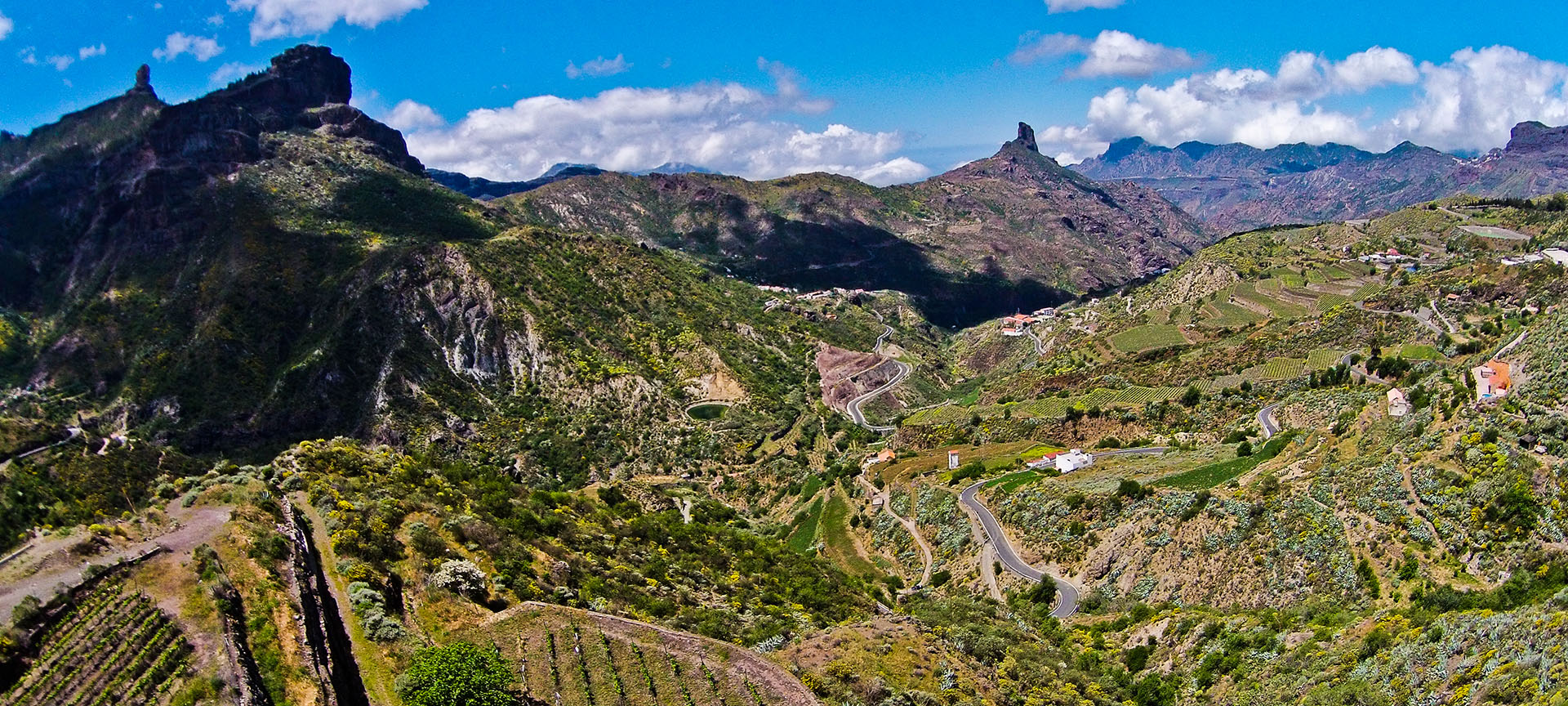
Its unique character stems from the climate, soil, and altitude of the vineyards, ranging from 95 to 1450 metres above sea level, and from the extensive varietal heritage comprised of 24 local varieties. Limited production and distinctive character give these wines significant value for wine tourism.The vineyards of Gran Canaria are cultivated on their own rootstock, allowing the vines to take full advantage of the soil's mineral content. This practice is unique to the archipelago's viticulture, as the Canary Islands are one of only four regions in the world that escaped the devastating effects of phylloxera, ensuring the survival and preservation of this heritage. Furthermore, in recent years, native grape varieties are being revived. In these wines, you can experience the Atlantic and volcanic character. On the one hand, there are wines made with grapes from vineyards benefiting from the trade winds and located on steep slopes with geologically younger volcanic soils. On the other hand, there are wines from vineyards on the southwest slope, on the leeward side, in the hard, arid, basaltic soils of the oldest part of the island. The white wines feature prominent aromas of flowers and white fruits, citrus and tropical fruits, with aniseed notes, making them fresh and light wines, almost always young and with good aromatic intensity. They are made with Malvasia, Muscat of Alexandria, Verdello, Vijariego Blanco, Marmajuelo, and Listán Blanco grapes. Red wines are characterised by aromas of red and black fruits, blue flowers such as lavender and violet, and spices. Those made with Listán Negro, Negramoll, Tintilla, and Baboso Negro grapes are particularly noteworthy.
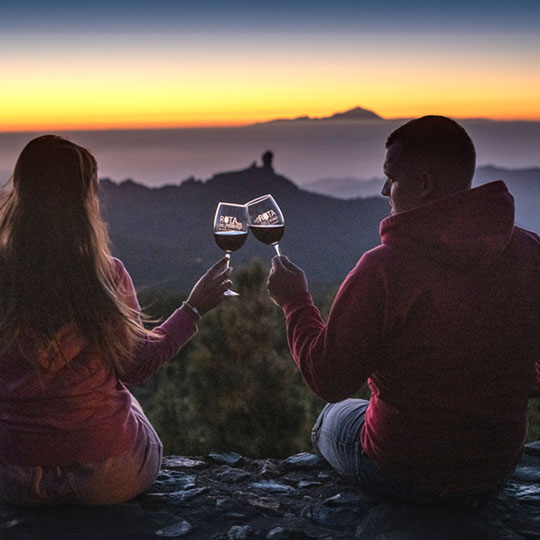
Couple enjoying a glass of wine in Gran Canaria
©
ACEVIN
What I can find
This Wine Route connects you with the land, culture, and people of Gran Canaria. Most of the wineries are located in Protected Natural Areas and unique rural settings. On the way from one winery to another, it is recommended to stop at the Gran Canaria Viewpoint Network. The value of this area has led to its declaration as a World Heritage Site by UNESCO. Amidst a landscape of ravines, cliffs, and volcanic formations, the connection between humankind, the environment they inhabited, and astrology is evident. Gran Canaria boasts over 1,000 archaeological sites and a network of archaeological sites encompassing both pre-Hispanic locations and those dating from after the island's colonisation. Some must-sees include the Cueva Pintada Archaeological Park-Museum in Gáldar, Risco Caído, and the Sacred Mountains. The incorporation of the islands into the Crown of Castile led to the emergence of cities, towns, and villages whose history, location, and relationship with the environment make them another major attraction of this route. Not to be forgotten are the bochinches (popular and traditional establishments, often rustic or temporary, serving locally produced wine and typical homemade food at affordable prices) and the local cuisine (featuring products like cheeses and coffee), which can be enjoyed in markets and both traditional and avant-garde restaurants.
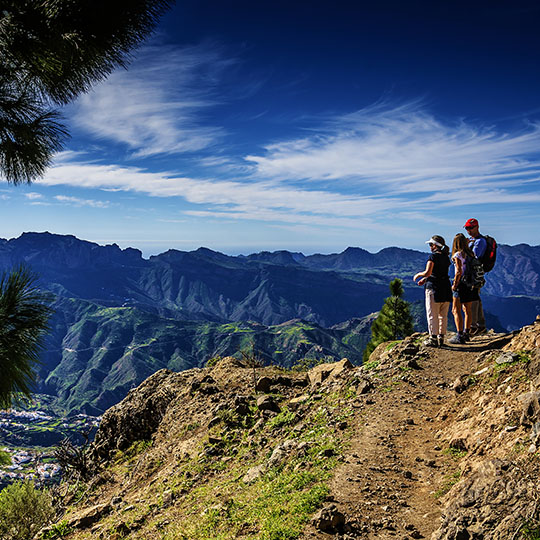
Hiking in Gran Canaria
©
Turismo de Gran Canaria
How to get here
Gran Canaria Airport, on the east coast, is the gateway for most tourists visiting this destination. It is located 18 km from the capital, Las Palmas de Gran Canaria. Airlines such as Iberia, Vueling, Air Europa, Ryanair, Jet2, easyJet, and TUI fly are some of those that offer flights.It is also possible to get there by boat. The Port of Las Palmas is one of the most important commercial, recreational, and passenger ports in the archipelago, the fourth largest in Spain, and a connection point between Africa, America, and Europe. The companies Fred Olsen, Naviera Armas, and Transmediterránea offer connections from the Spanish mainland and from other Canary Islands. The Wine Route, like the Gran Canaria Designation of Origin itself, extends across the entire island. The best way to explore it and visit its establishments is to rent a car.In addition, the Wine Route offers visitors a network of specialised companies that provide personalised tours, carefully organised to explore this Wine Route in a way that is completely tailored to each individual's tastes. These options range from guided winery experiences to themed excursions that combine the world of wine with gastronomy and the landscape, as well as active and cultural tourism. More information: https://rutadelvinodegrancanaria.net/tours-personalizados/
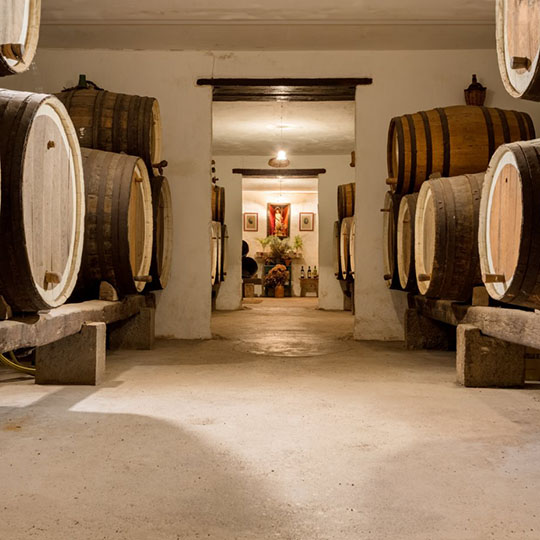
Winery in Gran Canaria
©
ACEVIN