A route to discover the windmills of Spain
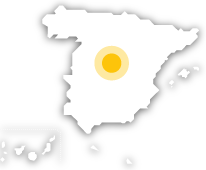
The region of Castile-La Mancha is home to the most historic windmills in Spain – and perhaps even in the world: the windmills that feature in *Don Quixote*.The story of ingenious nobleman Don Quixote of La Mancha and the legend woven around him has always aroused a great deal of interest. And many have been inspired to follow in his footsteps, backpacks on their shoulders, by bicycle, motorbike, or even on horseback (like our hero), bringing the story to life by visiting the windmills that Don Quixote mistook for giants.If you're looking for a different way to discover Castile-La Mancha, you can do so with these three circular routes full of stories, adventures and, above all, spectacular landscapes to enjoy alone, with family or with friends.
-

The El Romeral - Tembleque route
This is a very easy route, and as long as you take a good supply of sunscreen and water with you in the hottest months, it’s perfect - even for doing with small children.Before leaving from the village of El Romeral you’ll be able to admire the spectacular Don Quixote graffiti that decorates the streets, as well as pay a visit to the historic church of La Asunción. Right by the village, you’ll find two of its four windmills, called Crítica and Pechuga, which can be reached by climbing some steps. From this point we will have wonderful views of both El Romeral and another of its mills, Gorrinos.From El Romeral you can take the well-signposted Don Quixote Route until reaching the impressive Plaza Mayor square in Tembleque. A village where it seems as if time has stood still, and whose doors and windows will have you reaching for your camera. But do make sure you leave enough space for some shots of its windmills. The Molino Gaspar Torres (with no sails), and two other recently restored windmills.
-

The Consuegra - Madridejos route
If you’re looking to see lots of mills without having to travel long distances, this circular route is ideal, with more than 10 mills to visit and a whole history to discover.The town of Consuegra is known for having preserved 12 mills over hundreds of years, most of which are still open to the public. They are all situated on Cerro Calderico, next to a castle of Arab origin linked to another famous knight, this one a historical figure: El Cid Campeador.Clavileño, Espartero, Rucio, Caballero del Verde Gabán, Chispas, Alcancía, Cardeño, Vista Alegre, Sancho, Mochilas, Mambrino and Bolero. These are the names of those 12 windmills that are sure to impress. There’s even one known as the Caballero del Verde Gabán, which is today the Iberian peninsula’s first “gastro-windmill”.And if you're lucky enough to visit Consuegra during the last weekend of October, you can enjoy a unique event: the Fiesta de la Rosa del Azafrán (Saffron Rose Festival).This celebration takes place at the height of the flower harvest, and the stamens from these flowers are used to produce this seasoning, which is protected under the Azafrán de La Mancha Protected Designation of Origin (PDO).Madridejos is the stop that rounds off this route, and that has a closely-guarded treasure: the Molino del Tío Genaro. A windmill that is more than 400 years old and in perfect condition.Before heading back to Consuegra, we recommend visiting the Tío Colorao silo and the Saffron Museum of Madridejos.
-

The Mota del Cuervo - Belmonte route
Mountain biking enthusiasts have a date with a circular route that winds through a landscape quintessential to La Mancha - a region steeped in history.The province of Cuenca also features windmills that stand imposingly atop the hills of the La Mancha landscape. In this case, the route begins in Mota del Cuervo, a town also known as 'El Balcón de la Mancha'. From the hill overlooking the town, you can enjoy views of the seven windmills located in this town. El Zurdo (this one’s famous because its sails turn anti-clockwise - ‘zurdo’ means left in Spanish) stands apart from the other six. There’s a demonstration of how the mill machinery works, just as it did in the time of Cervantes, each Saturday at the El Gigante mill.On the other side of our route lies the impressive and monumental town of Belmonte, known chiefly for its Gothic-Mudéjar castle and its well-preserved historic quarter. But we mustn’t forget that it also boasts three magnificent mills, one of which is still open to visitors. The path leading up to them requires some effort, but this is rewarded by the views from the top.Before returning to Mota del Cuervo, we recommend stopping at El Pedernoso. A small, idyllic town that will make our route a truly fulfilling experience.


Travel plans for inspiring you



Book yours
Choose between thousands of activities to live your best life on holiday.