Pazo de Oca, A Estrada

The Camellia Route

camellia-route-historic-gardens-galicia

A sensory journey through Galicia’s historic gardens


“Through the evergreen foliage / which lets strange murmurs be heard, / and amidst a sea of undulating greenery, / the birds’ loving abode…”.These lines by Rosalía de Castro, from her poem On the banks of the River Sar, help to illustrate the deep connection between Galicia and the camellia, a flower that has become one of the great symbols of this region. The humid climate of north-western Spain, the mild temperatures and the rich soil provide the perfect setting for these flowers to bring a splash of colour to historic gardens, centuries-old manor houses and landscapes inspired by the Atlantic. Fancy a trip to discover them?

Native to Asia, the camellia reached Galicia in the late 18th century via overseas trade routes. It was not long before it began to be grown in the gardens of the pazos, the traditional stately homes of rural Galicia. From there, it spread to parks and public spaces, eventually becoming a source of pride. Today, around 8,000 varieties are grown there.The Camellia Route invites you to discover 13 spectacular manor houses and gardens open to visitors in the provinces of A Coruña and Pontevedra. A botanical and cultural tour that you can organise at your own pace, choosing the places that interest you most.
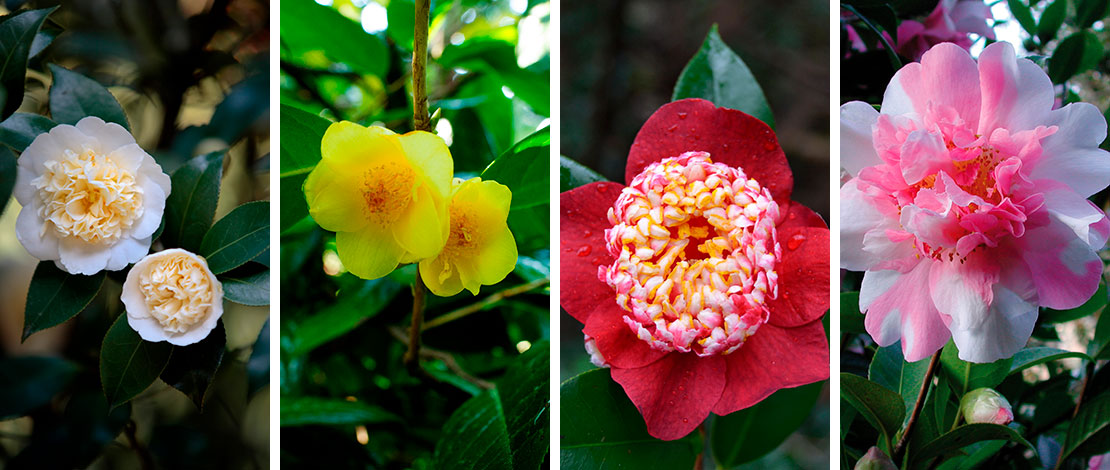
Camellias

It is best to set aside at least a week for the route and stop off at Santiago de Compostela, Vilagarcía de Arousa and Vigo. You can stay at the Paradores along the route, in Santiago, Cambados and Pontevedra, or choose one of the many charming country houses in the area.To make your journey even easier, below are three possible suggested routes, each lasting around four days. You can choose the option that best suits your trip, or combine them to enjoy a more complete experience.Whatever you choose, get ready to stroll amongst the flowers, discover the elegance of Galician stately architecture and savour cuisine renowned for its quality.
Route 1. From Santiago de Compostela to Cambados: the end of the Way of St James, the start of the route

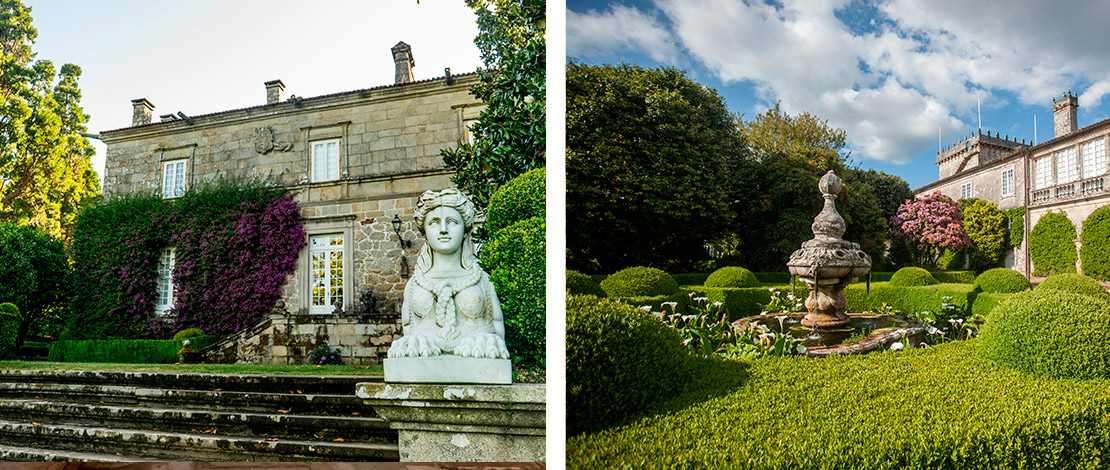
The capital of Galicia, the destination for pilgrims on the Way of St James is the main landmark on the Camellia Route. In the city itself and its surrounding area, you’ll find parks and gardens that reflect the culture that has grown up around this plant. Among them are the gardens of Pazo de San Lorenzo, where you can admire camellias and over 300 species of plants.You can also explore the Alameda and the adjoining oak grove at Santa Susana, home to trees that are around 300 years old. From there, you can enjoy one of the best panoramic views of the old town, including the Plaza del Obradoiro and the famous Santiago de Compostela cathedral.Beyond the Galician capital, in the municipality of Vedra, lies the Pazo de Santa Cruz de Ribadulla (or de Ortigueira). In its gardens, you can stroll leisurely along paths flanked by huge Japanese camellias, such as the Carrera de las Novias, or ‘Brides Path’.

Left: Pazo de San Lorenzo. Right: Pazo de Santa Cruz de Ribadulla

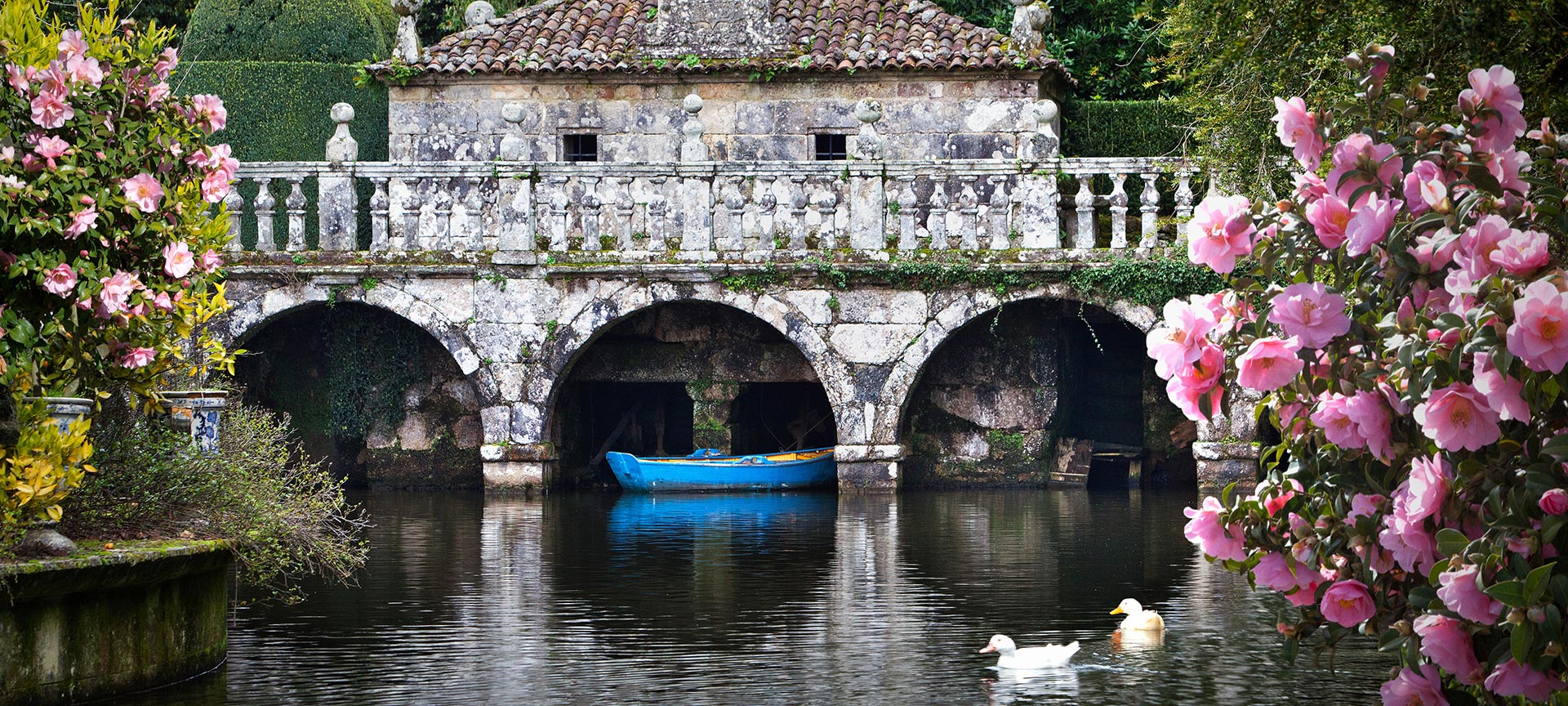
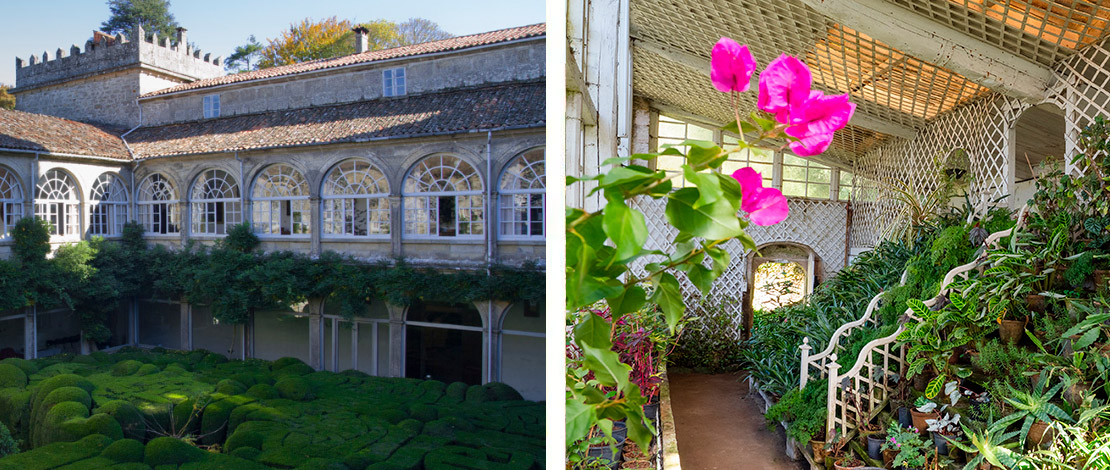
Nearby, in A Estrada, is the Pazo de Oca, known as ‘the Galician Versailles’. In its Baroque garden, you’ll find yourself captivated by the charm of its large pond, in whose waters the first camellias are reflected at the end of winter.After spending at least two days in Santiago and the surrounding area, the itinerary continues through the Rías Baixas, along the coastline of the province of Pontevedra. The first manor house you’ll come across is the Pazo de Rubiáns, in Vilagarcía de Arousa. Take a stroll around the estate amongst the vineyards and thousands of flowers, some dating back to the first half of the 19th century, and admire the huge eucalyptus trees.

Left: Pazo de Rubiáns in Vilagarcía de Arousa. Right: Pazo de Oca, A Estrada

On the final day, you’ll arrive in Cambados, home to the imposing Pazo de Fefiñáns and its winery, which we’ll tell you more about later.And don’t miss out on... Santiago’s nightlife, brought to life by university students and featuring venues with a vibrant cultural atmosphere.

Route 2. From Cambados to Soutomaior: amongst camellias and wineries

The wealth generated by the thousands of vineyards planted in that area explains why there are so many spectacular manor houses, with large gardens full of flowers. Here you will explore a region bordered by vast estuaries, which extend tens of kilometres inland. And on the slopes of its hills you will see the vineyards of Albariño grapes from which the wines of the Rías Baixas Designation of Origin are produced. Around the wineries where the wine is produced, the vineyards share the space with colourful camellias.Among the most impressive wineries in terms of size and architecture is the one situated in the Pazo de Fefiñáns, right in the heart of the historic quarter of Cambados. Within its walls, the estate is home to a historic vineyard and the ‘magical forest’, where there is a vault ‘drawn’ from boxwood and surrounded by dozens of native trees.

After visiting Vilagarcía de Arousa and its Pazo de Rubiáns, your next stop is the Pazo Quinteiro Da Cruz manor house. Why not treat yourself to its exclusive tea, brewed from the leaves of Camellia sinensis, one of the varieties amongst the more than 1,000 grown on the estate. There are also vineyards planted on the estate, from which the family who own it produce their highly regarded wines.Next time, do pop along to the A Saleta farm, in the municipal district of Meis. There you will see an authentic Galician-style farmhouse, surrounded by trees of various species and featuring a lovely English-style garden. The route then continues on to the city of Pontevedra, stopping off in the picturesque fishing village of Combarro.At the end of this route you will find the Soutomaior Castle, an ancient defensive fortress surrounded by a beautifully maintained botanical garden, designated a “Garden of International Excellence” by the International Camellia Society.

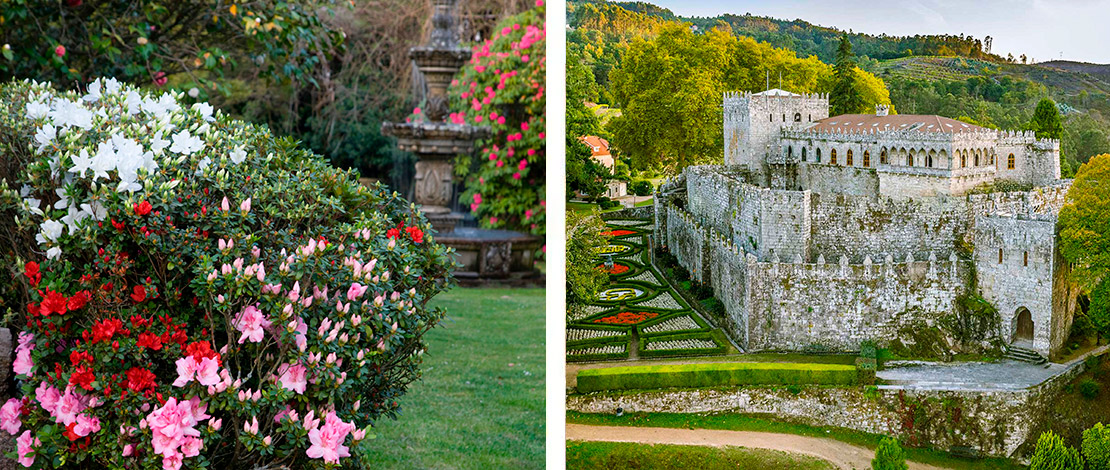
Left: Pazo Quinteiro da Cruz © Galicia Tourist Board. Right: Soutomaior Castle © Rías Baixas

And don’t miss out on… a spa treatment on the island of La Toja (A Toxa). It’s best to do this after a boat trip along the Ría de Arousa estuary from the port of O Grove.

Route 3. From Padrón to Soutomaior: scenic landscapes and unique flowers

In Padrón, the parks and gardens are notable for their high-quality landscaping. You'll see this in the town’s Botanical and Artistic Garden, which, apart from its variety of camellias, features a red sequoia and some 300 other plant species.This town is also home to the Rosalía de Castro House Museum, dedicated to one of the most important writers in Galician literature. In the gardens of her home, you can admire the camellias planted after her death, whose beauty echoes the poetic world created by the author.Spend the next two days visiting the most spectacular monuments and green spaces in Santiago and the surrounding area, including the gardens of the manor houses in San Lorenzo, Santa Cruz de Ribadulla (Ortigueira) and Oca, mentioned above.

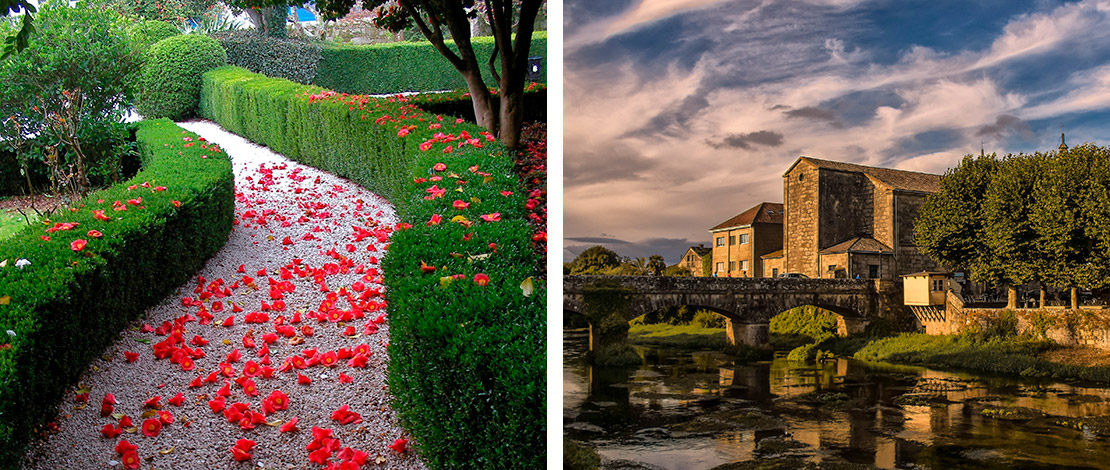
Left: Rosalía de Castro House Museum © Galicia Tourist Board. Right: View of the town of Padrón

The route then continues towards the Rías Baixas, passing through Vilagarcía de Arousa and its Pazo de Rubiáns, before reaching the A Saleta estate. Further on, as you head towards Pontevedra, you’ll come across the Pazo de Lourizán, a majestic Modernist building. During your visit to its park, you’ll discover hundreds of camellias amongst rock-cut grottoes and fountains.Near Vigo, almost at the end of the road, visit the Quiñones de León Manor House and Museum and its French-style park. There, a monumental camellia, known as ‘Methuselah’ due to its longevity, defies the passage of time: it was planted way back in 1860.

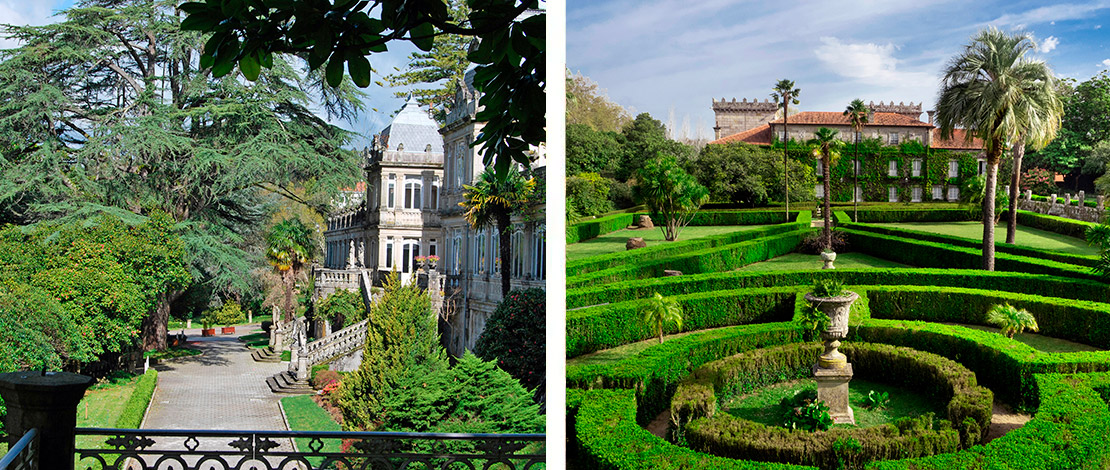
Left: Pazo de Lourizán. Right: Quiñones de León Manor House and Museum

Just like the previous route, the highlight of this itinerary is Soutomaior Castle, where you can admire over 500 camellias of 25 different species.And don’t miss out on... local dishes, examples of which include the succulent Carril clams and a wide variety of seafood, including the iconic pulpo a feira, Galician-style octopus.

Tips and recommendations

A bonus. The Camellia in Bloom Train: beauty and comfort on the rails

Every year, coinciding with the time of year when the species is at its most spectacular, Renfe organises the tourist train Camellia in Bloom Trail. It’s a convenient way to get to some of the most interesting places on the route. The trips take place over several weekends in March, departing from Santiago and arriving in Vilagarcía de Arousa. The train passes through some of the most breathtaking landscapes along the Atlantic coastline and in the inland valleys.The price of the return ticket includes admission to manor houses such as Quinteiro da Cruz, Lourizán and Rubiáns, as well as wine tastings and tastings of local specialities.Find more ideas and inspiration at www.spain.info.