What are the wines like?
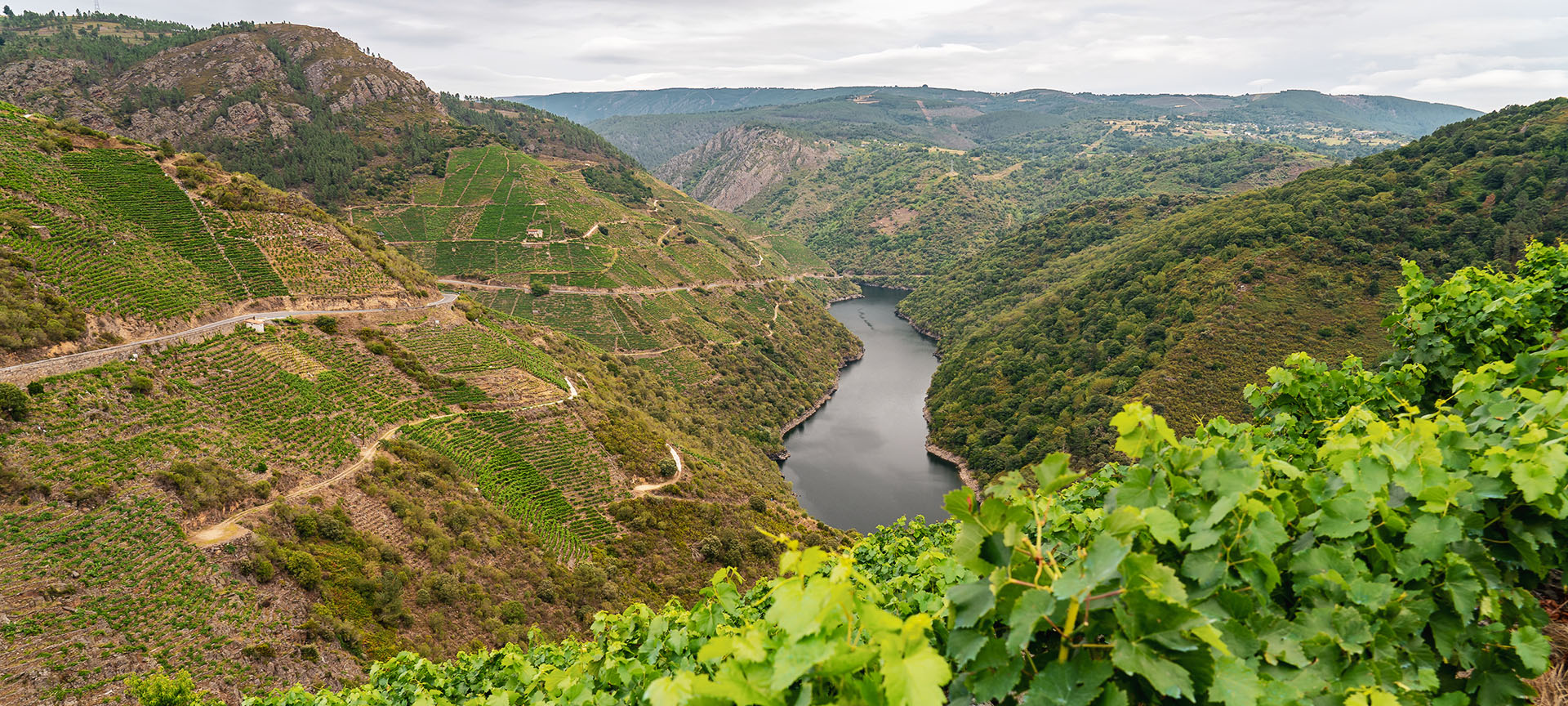
The Ribeira Sacra Designation of Origin comprises 5 sub-areas: Amandi, Chantada, Quiroga-Bibei, Ribeiras do Miño and Ribeiras do Sil.The Atlantic climate with Mediterranean tendencies, the thermo-regulating function of the rivers, the slatey-schistose and granitic soil, the terraced layout that favours soil drainage and the sun-drenched slopes are the keys that determine the quality of the grapes and the personality of the Ribeira Sacra wines. The wines protected under this denomination are made exclusively with grapes of varieties such as Mencía, Brancellao, Merenzao, Sousón, Caíño, Tinto and Tempranillo, among the reds, and Godello, Albariño, Loureira, Treixadura, Dona Branca and Torrontés, among the whites.These wines have a marked Atlantic profile. They are fresh and light. They have high acidity, intense fruity aromas, soft tannins and an outstanding minerality from the slate soils.
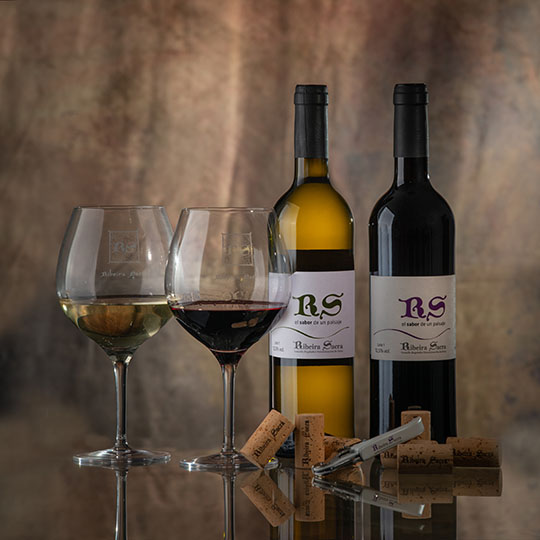
Wines of the Ribeira Sacra
©
ACEVIN
What I can find
The character of Ribeira Sacra comes from the riverbanks, the wineries and the grape harvest. In addition, there is a whole world to discover: remote villages, charming wineries with the latest technology, traditional and experimental wine tastings, nights in dream accommodation or gastronomic experiences in restaurants and always in contact with nature.It is perfect to visit at any time of the year. The environment changes with the seasons, but what makes it unique, the landscape of 'heroic viticulture' - viticulture under complex conditions - remains the same. The slope of the land is more than 30% and the distribution in terraces or steps are some of its characteristics, all created in times gone by taking advantage of the territory and the ability of those who lived there to overcome. This situation prevents the mechanisation of the work and makes winegrowers and winemakers defy vertigo.Forests and rivers, with many navigable stretches, are the other star attractions. It is also home to the largest concentration of rural Romanesque architecture in Europe. And the history of these monuments goes hand in hand with the area's winemaking tradition and culture.
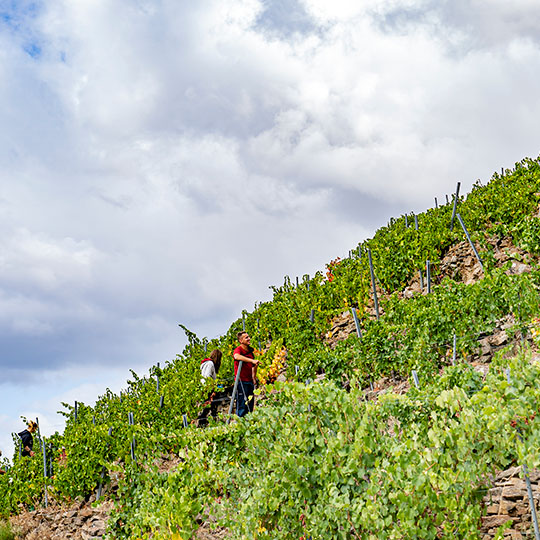
Grape harvest in the Ribeira Sacra
©
ACEVIN
How to get here
The Ribeira Sacra Wine Route reference point is in Monforte de Lemos (Lugo), in the same building as the headquarters of the Regulatory Council of the Ribera del Duero Designation of Origin (Calle Comercio 6/8).The territory is vast and can be accessed in several ways:By road, via the Rías Baixas motorway (A-52), the Noroeste motorway (A-6) and the N-120.By rail, through the stations of Ourense and Monforte de Lemos.By air, through the airports of Santiago de Compostela, Vigo, A Coruña and Oporto.The best way to travel around the area is by car. The terrain and the location of many of the wineries and attractions, such as catamaran tours, viewpoints and sanctuaries, make it essential to travel by catamaran.
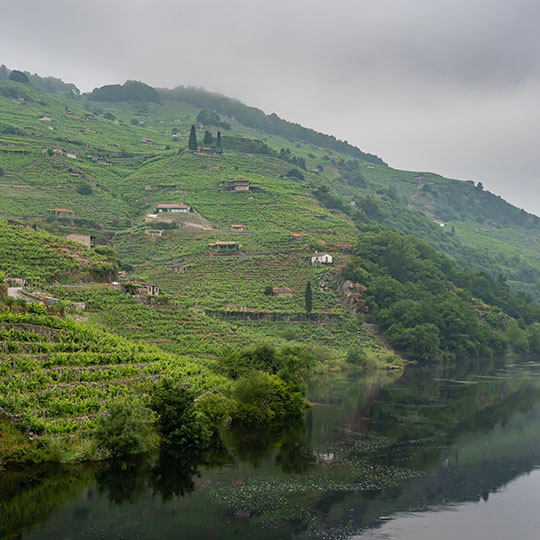
Vineyards on the Ribeira Sacra wine route
©
ACEVIN