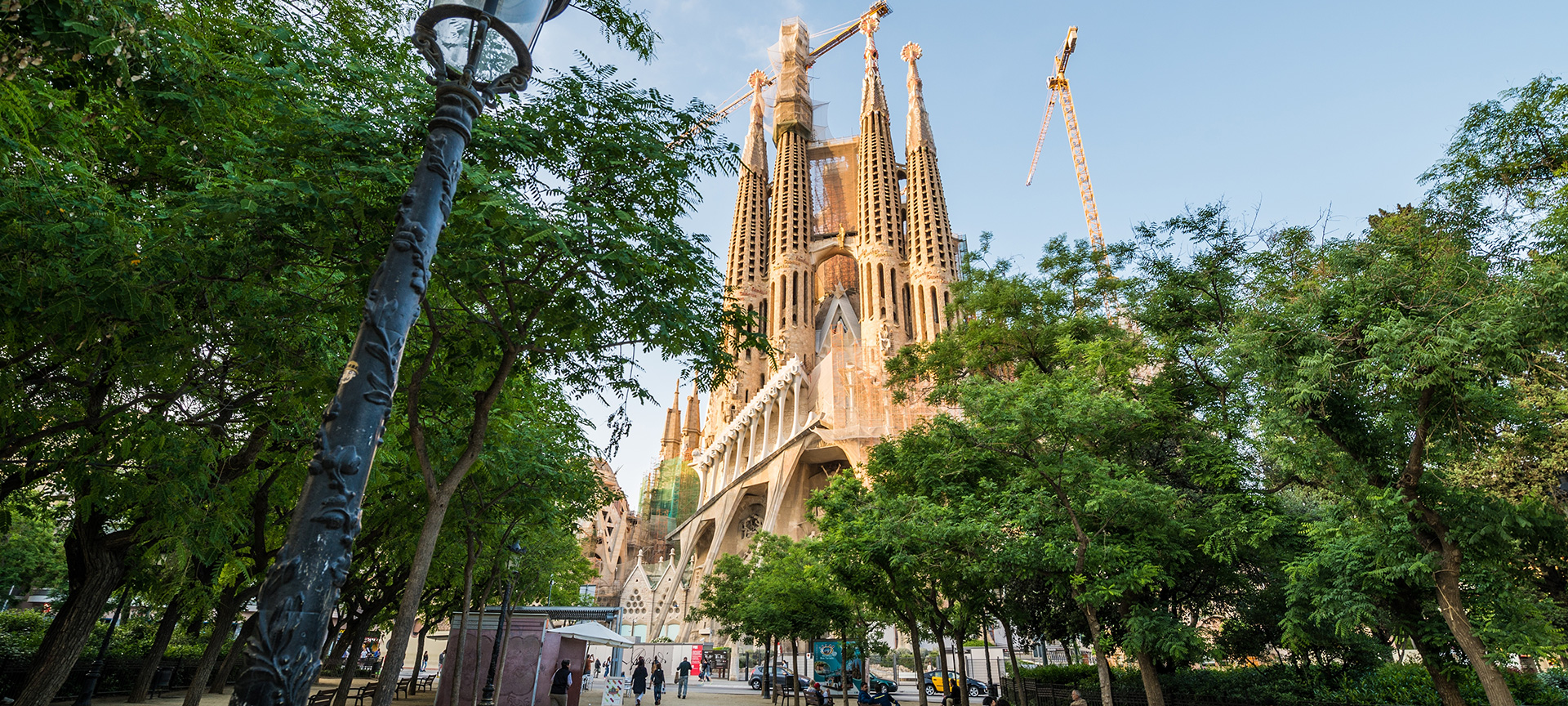
Sagrada Familia, Barcelona

Gaudí Year 2026: A journey through the universal legacy of the brilliant modernist architect

none

As well as being a master of modernism, Antoni Gaudí is one of the most influential figures in the history of world architecture. Gaudí Year 2026 commemorates the centenary of his death and invites the world to rediscover the innovation behind his masterpieces, many of which have been declared World Heritage Sites.This occasion will see exhibitions, cultural activities and one-of-a-kind experiences in the places that marked his life and work, with Catalonia as the epicentre, with other territories also preserving key works from his career. Reus and Riudoms, which had a great influence on the architect's childhood and youth, and their visitor centre Gaudí Centre, are highly recommended starting points to begin this exciting journey through his legacy. Are you coming along?

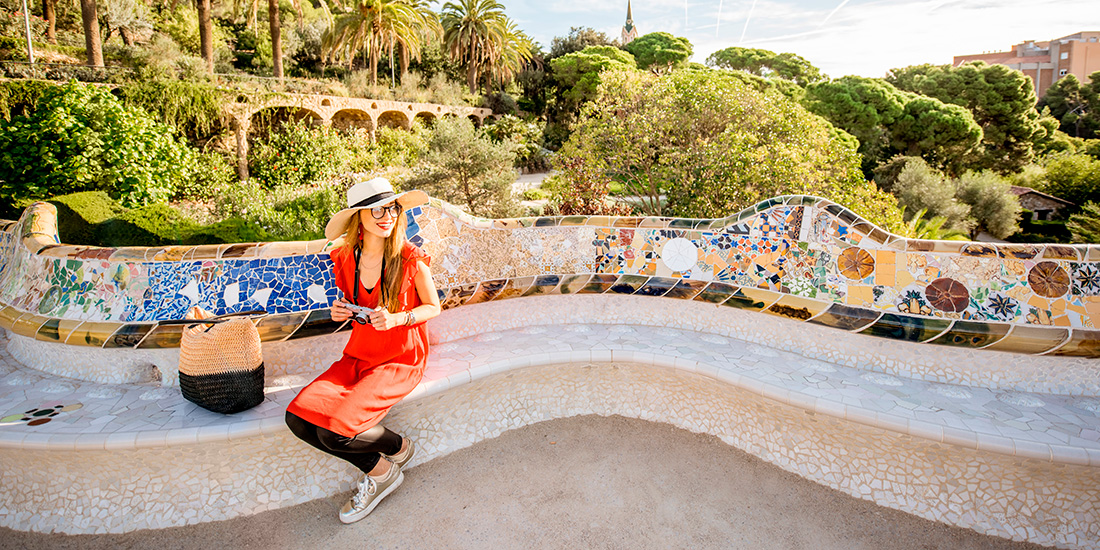
Parc Güell, Barcelona

Catalonia, the nerve centre of Gaudí's work

This is where most of his creations are concentrated and where the celebration takes on a special dimension. Mainly in Barcelona, also named the World Capital of Architecture by UNESCO, a multitude of activities will be organised across more than 75 museums, markets, libraries, squares and streets to reflect on the city of the future. You will certainly have a full agenda during your visit!Works: Gaudí left an unmistakable architectural legacy across Catalonia. His most famous buildings are in Barcelona, such as the Sagrada Familia, and Casa Batlló, La Pedrera, Parc Güell, Casa Vicens, Casa Calvet and Palau Güell. But they are not the only ones. Further afield, there are also notable examples, such as the Crypt of the Colonia Güell in Santa Coloma de Cervelló or the Artigas Gardens in La Pobla de Lillet.Programmed activities: The Jesus Tower will be inaugurated on 10 June. At 172.5 metres high, this structure crowned by a four-armed cross will make the Sagrada Família the tallest building in Barcelona.Parc Güell is organising a community dinner on 26 April inspired by the old garden parties of the early 20th century. It is one of the events planned to commemorate its centenary as a public park and is designed to strengthen the link between Gaudí and the people of Barcelona.
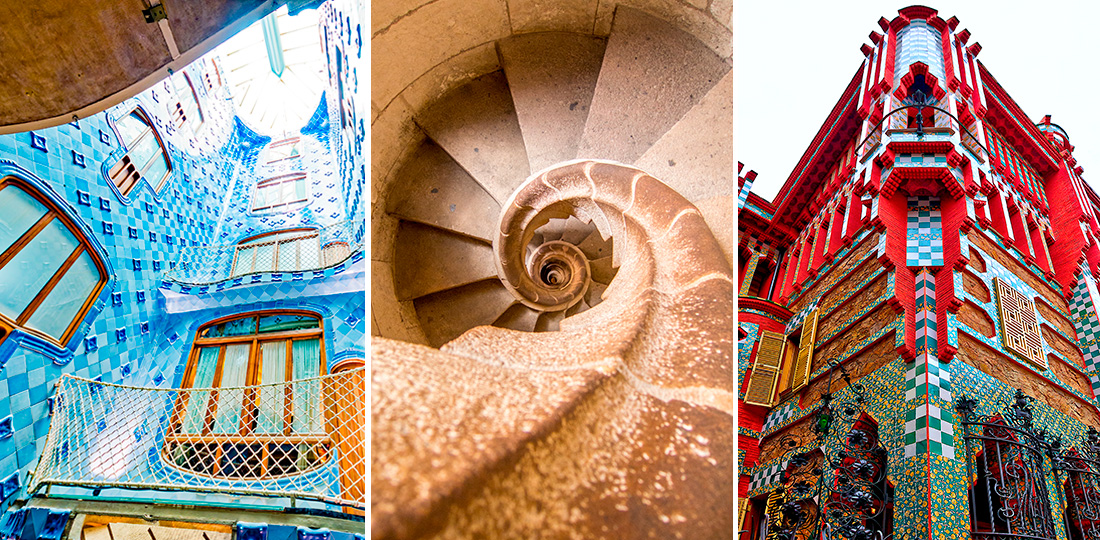
Left: Casa Batlló. Center: Sagrada Familia. Left: Casa Vicens (c) Marco Fine/Shutterstock.com

 Naturally, Casa Batlló also joins in the celebrations with a extensive programme. The emblematic building has opened a new space dedicated to contemporary art, which will host, among other exhibitions, “Beyond the Façade”, an exhibition that reinterprets Gaudí's work through light and immersive technology. In addition, “Gaudí, el despertar del geni”, a musical theatre show, will immerse you in the architect's childhood, his struggle with illness, his connection with nature and the discovery of his talent. Casa Batlló will also dedicate its acclaimed video-mapping to Gaudí, using the impressive modernist façade of the building as a three-dimensional canvas on which lights and animations are projected. The show “Hidden order“ is inspired by the genius architect's belief that nature follows divine geometric principles.For fans of classical music, the Palau de la Música Catalana hosts the June world premiere of ”Set Somnis de Gaudí“, a symphonic-choral performance conceived in honour of the architect and which, through seven movements, will recount key episodes in his life.Modernist Festival of the Colonia Güell, in Santa Coloma de Cervelló, will also focus this year on the figure of the architect.

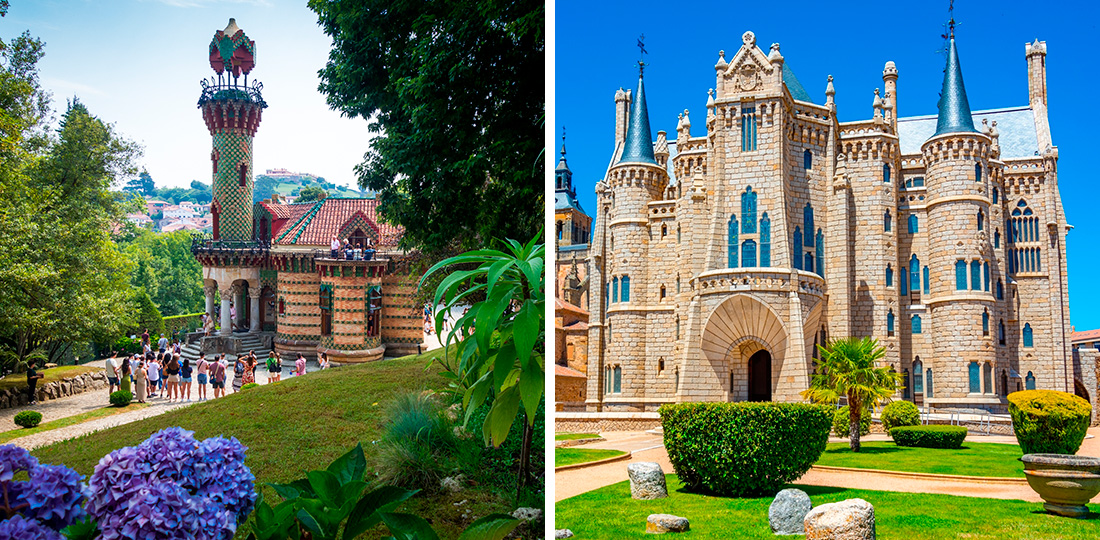
Left: El Capricho, Comillas. Right: Episcopal Palace, Astorga

The Gaudí Way, his works beyond Catalonia

Camino de Gaudí is a cultural and tourist project that connects the three unique buildings that Antoni Gaudí constructed outside Catalonia.Works: in Comillas (Cantabria) is home to El Capricho, a stately home in whose mysterious decoration the reliefs of sunflowers, music and nature stand out. In the city of León, the artist constructed his first apartment building, the stately Casa Botines. And just 50 kilometres away, Astorga, he designed the Episcopal Palace, an imposing neo-Gothic building reminiscent of a medieval castle.Programmed activities: in the historic Casa Botines has prepared an extensive programme of activities, with guided tours, concerts and the exhibition “Gaudí and the modern city”, in addition to other events. Meanwhile, in the gardens of the Astorga Episcopal Palace, a Gaudí sculpture, created by local artist Amancio González, will be unveiled. El Capricho will host cultural activities, concerts, special visits and workshops for all audiences. 

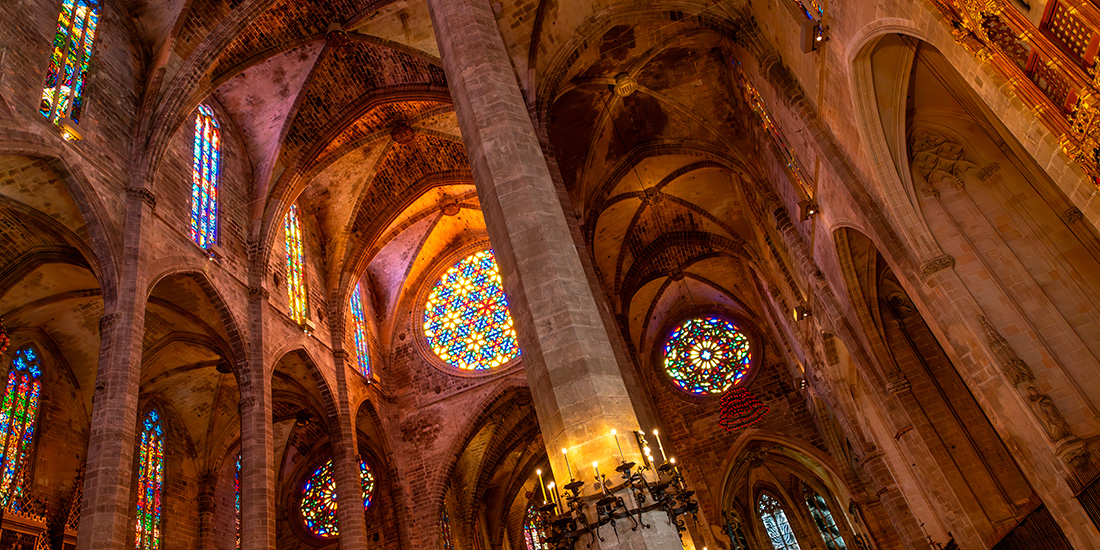
Interior of the Cathedral of Mallorca

The restoration of Mallorca Cathedral

Work: Palma de Mallorca bears the mark of the Catalan architect in the restoration of its majestic cathedral. Gaudí's intervention turned the church into a brighter space by opening up walled Gothic windows that reduced natural light and installing stained-glass windows to filter the sun's rays.Programmed activities: Visitors will be able to enjoy an exceptional exhibition inside the cathedral that will explore the role of the Catalan architect in the renovation of the monument.

Find out more about...