Accessible travel by public transport and taxi

Getting around a city is an essential part of the travel experience. And doing so by public transport is one of the most economical and environmentally friendly ways to travel.Spanish public transport is moving towards an increasingly accessible model, allowing visitors to travel in comfort, safety and autonomy, from modern metro and bus networks to high-speed trains and adapted taxis. Travellers with visual, hearing, motor or cognitive disabilities have real autonomy to explore the country without limits or worries. Furthermore, in Spain, people with assistance dogs can travel without restrictions on any means of public transport.Discover below the public transport options suitable for everyone and other services available to help you organise your journey with ease.
-
Metro
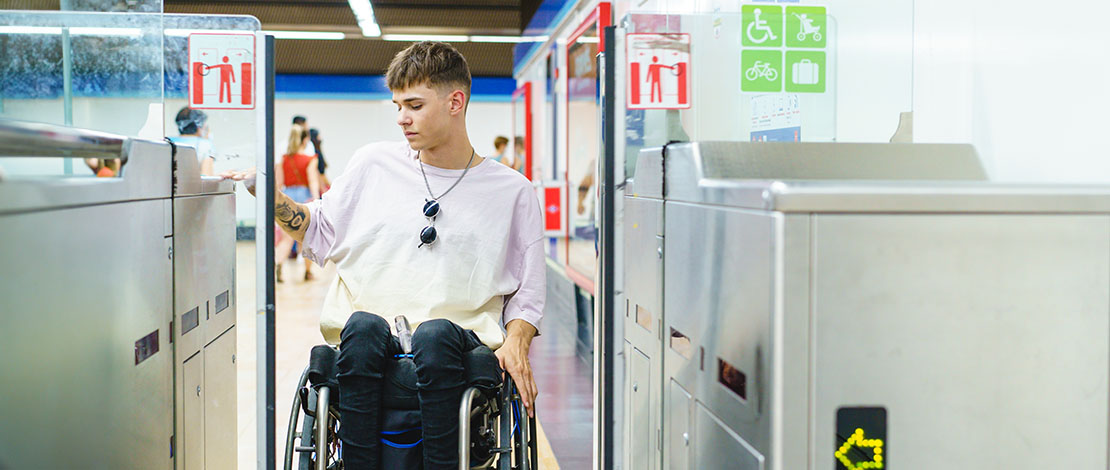
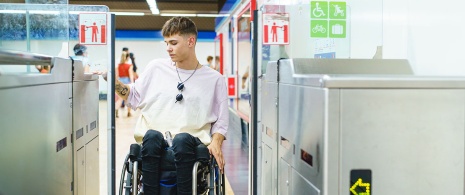
Are Spanish metros accessible?Yes, and work is continuing to improve accessibility, with ambitious plans to adapt both carriages and stations to make them safe and comfortable spaces for everyone.How are your carriages adapted?In general, metro carriages are adapted with spaces reserved for people with mobility problems and spaces for wheelchairs, visual and acoustic signals for opening and closing doors, and colour contrasts between the doors and the rest of the carriage. However, the degree of accessibility of the different metro lines also depends on the accessibility of each station.How easy is it to get around the metro stations?Most metro stations include lifts, ramps, escalators, walkways and platforms to allow access and easy movement for people with reduced mobility. They also have acoustic signage and surfaces with specific reliefs and textures for visual guidance.However, as this depends on each city and even each station, it is advisable to check the accessibility of the metro station to be used before starting a journey. There are tools, such as the TMB App in Barcelona or the official Metro de Madrid app, which indicate the number of lifts, ramps and services available in real time. Another option is the Citymapper app, which covers all public transport, figures out the shortest route, and gives different options, indicating how accessible they are.Which cities have metro systems and how accessible are they?Seven major Spanish cities have a metro network. Click here to consult the accessibility conditions of each of them: Madrid, Barcelona, Valencia, Bilbao, Palma, Málaga, and Seville.How can I request help?All metro networks have a customer helpline, where users with special needs can request information and personalised assistance. Such services can range from an escort to portable ramps or priority on platforms.In the Madrid and Seville metros, for example, citizens can find out about the status of stations in advance, whether by telephone, by email or in person at their customer service offices, while in Palma de Mallorca they have a customer service helpline.Also, once in the station, users can always go to the supervisor or contact metro staff via an intercom.
-
City buses
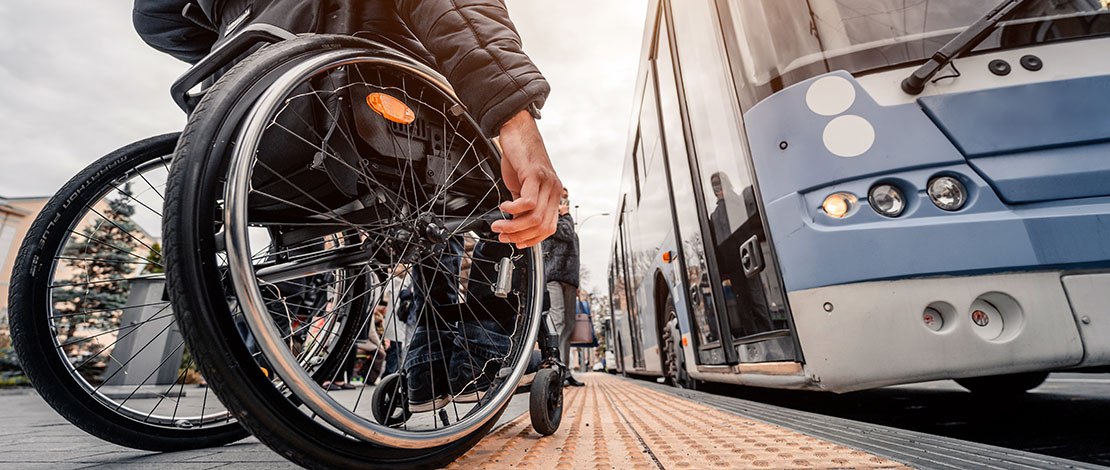
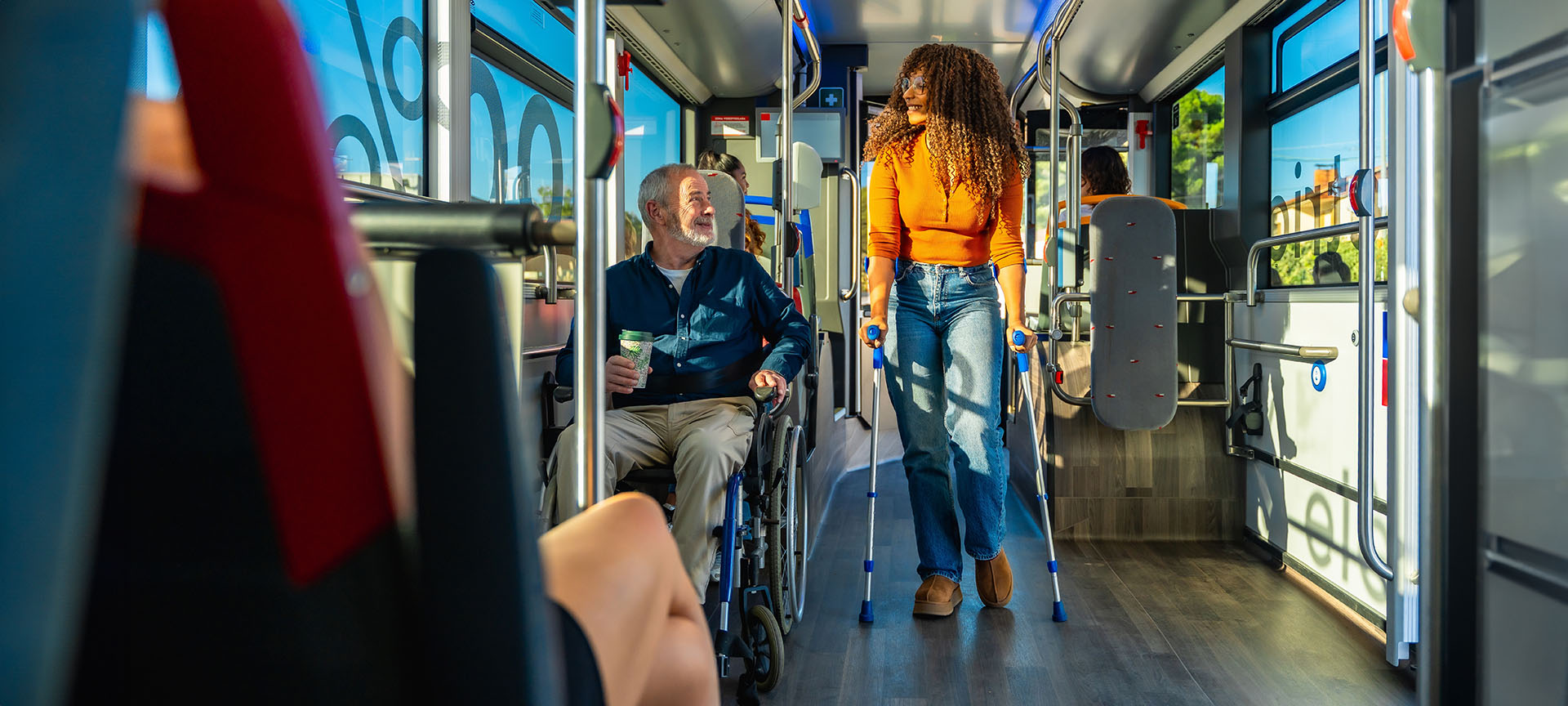
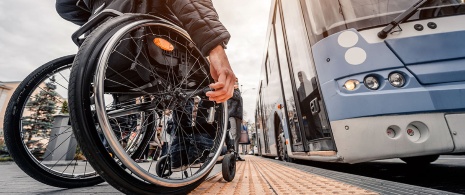
Are city buses in Spain accessible?City buses in Spain are designed to be accessible and allow any user to travel, regardless of their needs. As in the case of the metro, it depends on the consortium of each city, but most of them have ramps for getting on and off and have spaces reserved for wheelchairs, support bars accessible from the wheelchair, and non-slip floors that minimise the risk of falls. Likewise, the pushbuttons are also at a wheelchair/friendly height, as well as having Braille signage. The next stop is also announced by audio.What are bus shelters like?These spaces are also designed to ensure all types of travellers can use them. They are wide enough for a wheelchair to pass, and in most cases, they are equipped with a voice announcer to indicate how long you will wait for the next bus. Many others also have a special floor with buttons and colour coding defining the waiting area, making it easier for visually impaired people to recognise the waiting area.Practical tips for accessing the bus- Get into position. The user must stand visibly in the area marked with the SIA pictogram on the ground or on the bus shelter.- Make a visual signal. Raise your arm with open hand as the bus approaches to alert the driver.- When the driver stops, he or she will deploy the ramp or platform lift so that the disabled passenger can access the vehicle safely.- Before arriving at your destination stop, press the accessible button for the driver to prepare the ramp so that you can get off the bus safely and without rushing.
-
Taxis
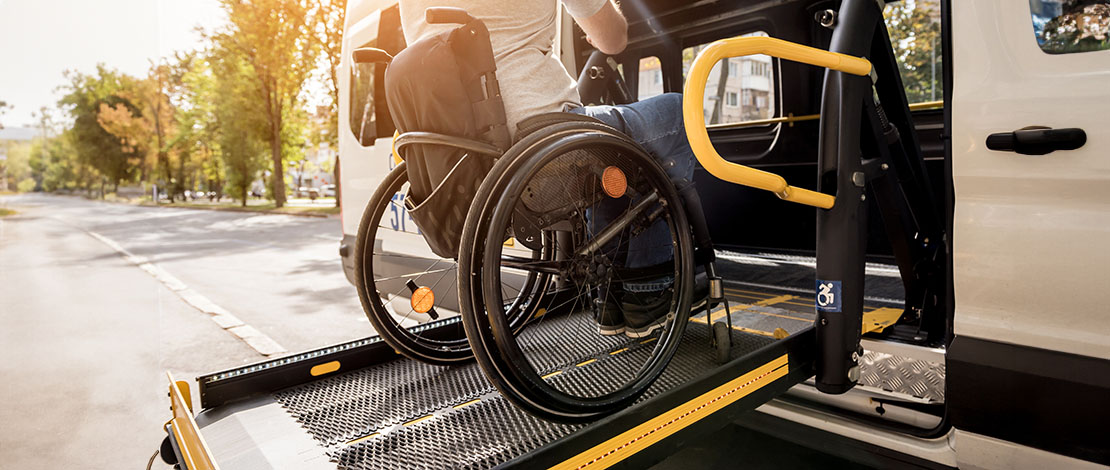
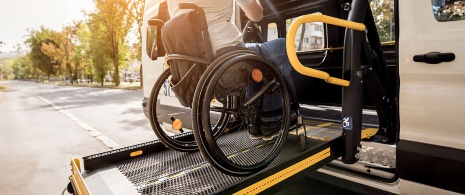
Are there adapted taxis?Yes, in Spain there are taxis adapted to ensure the mobility of all passengers. When booking your vehicle, simply indicate whether you will be taking a wheelchair or if you need a ramp, platform lift or extra luggage space.How can I book my adapted taxi?To book an adapted taxi, you can use local radio taxi apps or check the website of the city council of the city you are going to visit for the phone numbers of Eurotaxis (special vehicles for transporting people with disabilities or reduced mobility). It is advisable to do so well in advance to ensure availability at the desired date and time.What are the alternatives to adapted taxis?In addition to adapted taxis, you can also opt for accessible VTCs.