What are the wines like?
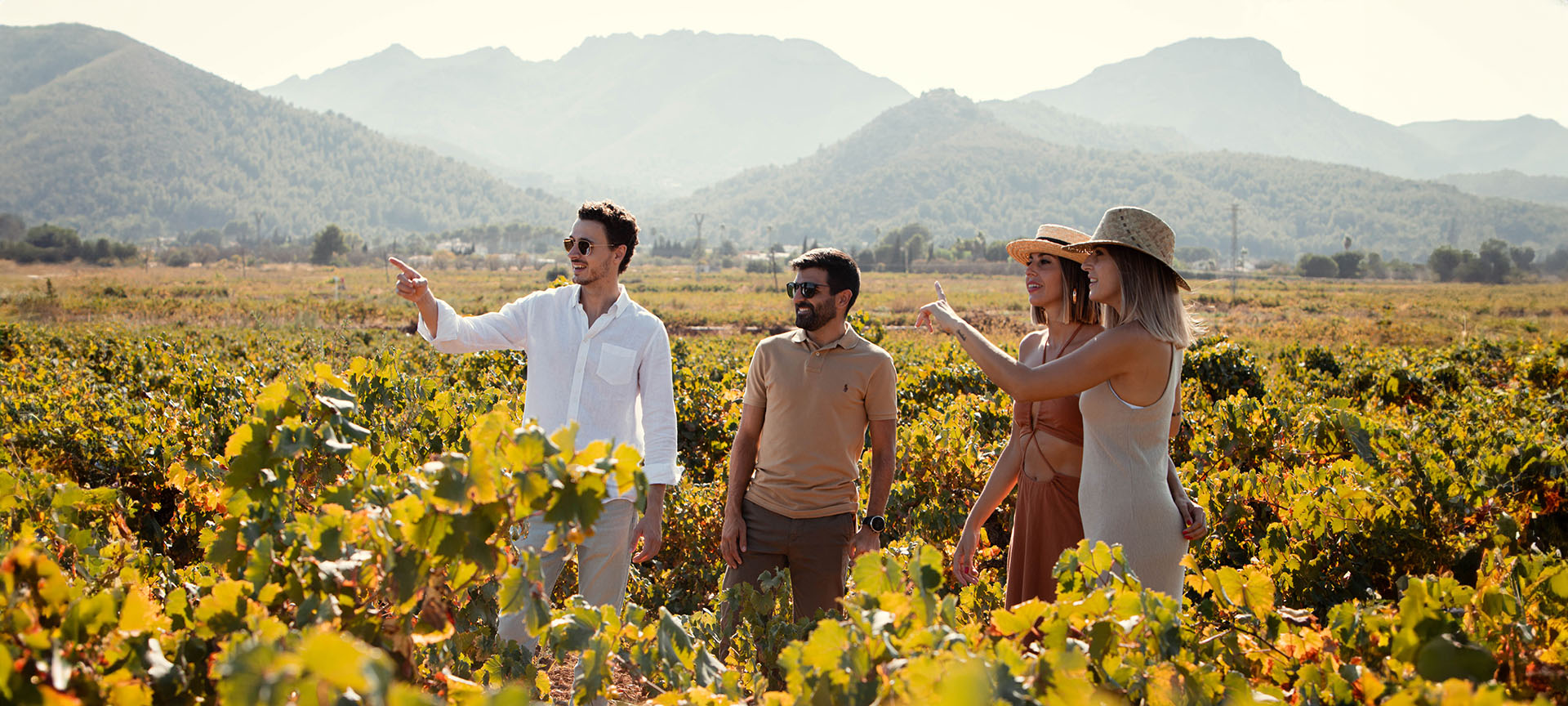
Monastrell is the area’s predominant grape variety, with Moscatel de Alejandría, a very versatile and aromatic variety, also standing out. In addition, a historic wine that has been esteemed by royal houses and papacies is Fondillón, produced from late-harvest Monastrell grapes.
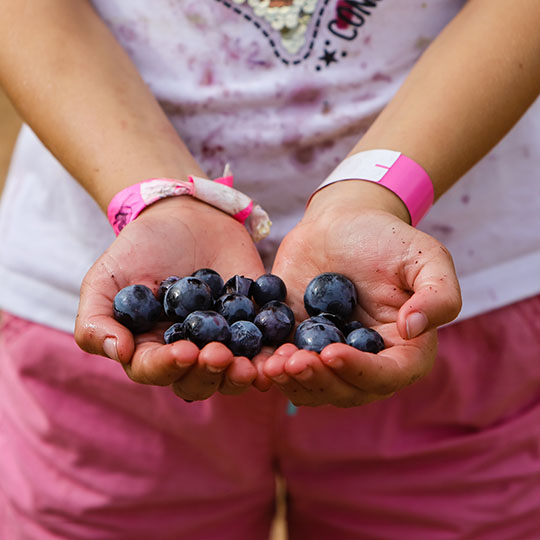
Hands holding grapes
©
ACEVIN
What I can find
Enjoy unique food and wine experiences. Discover the identity of each territory linked to its cuisine, tasting the most typical dishes of each locality and paired, naturally, with the whites and reds of our Alicante PDO.Once you get to know our celebrations you won't want to leave. In particular the Moors and Christians festivities, which fill the streets with music and colour, but also with gunpowder and emotions that will make your visit an unforgettable memory.
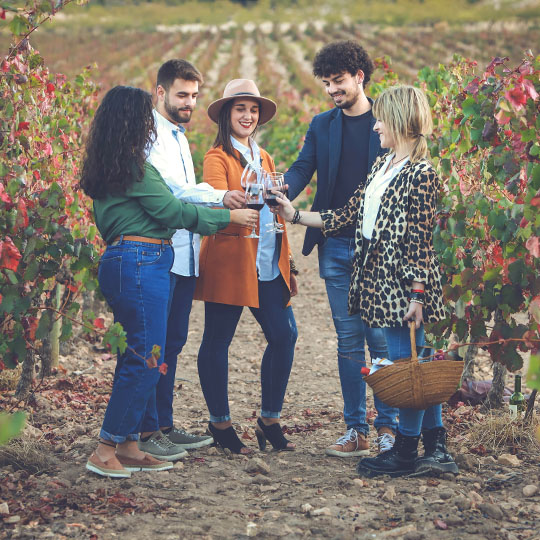
Tourists in a vineyard on the Alicante Wine Route
©
ACEVIN
How to get here
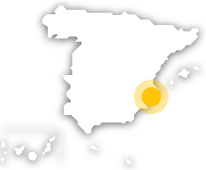
Alicante is bordered to the north by the province of Valencia, to the northwest by Albacete and to the southwest by the Region of Murcia. Any of the wine-producing municipalities can be reached via the A-3 motorway (Madrid-Alicante), as well as national, regional and local roads. If you prefer to fly, you have the modern airport of Alicante-Miguel Hernández. In addition, the province is connected by the high-speed train network, with stations in the city of Villena and Alicante.The Alicante designation of origin is present in almost all municipalities, but the most deeply rooted producing areas with the greatest significance in excellent wine production are to be found in the municipalities of the Marina Alta (Alcalalí, Benigembla, Benissa, Xaló, Llíber,Murla, Parcent and Sénija), of the Marina Baja (Alfás del Pi) and of the Vinalopó region (Algueña, Elche, Monóvar, Novelda, Petrer, Pinoso, Salinas and Villena).
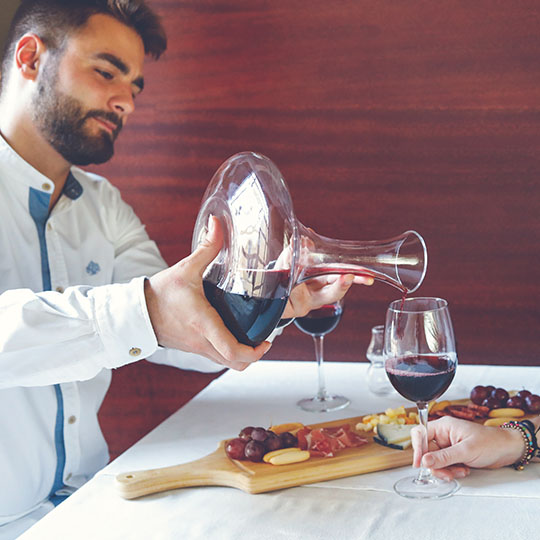
Tourist on the Alicante Wine Route.
©
ACEVIN