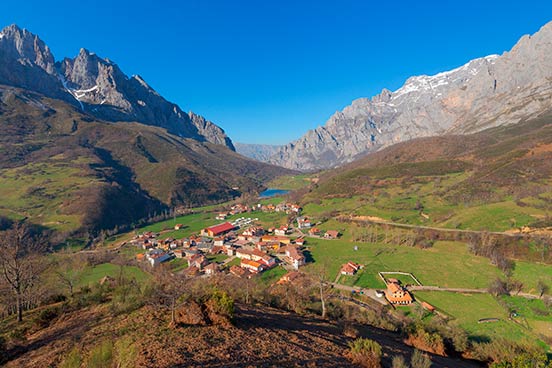


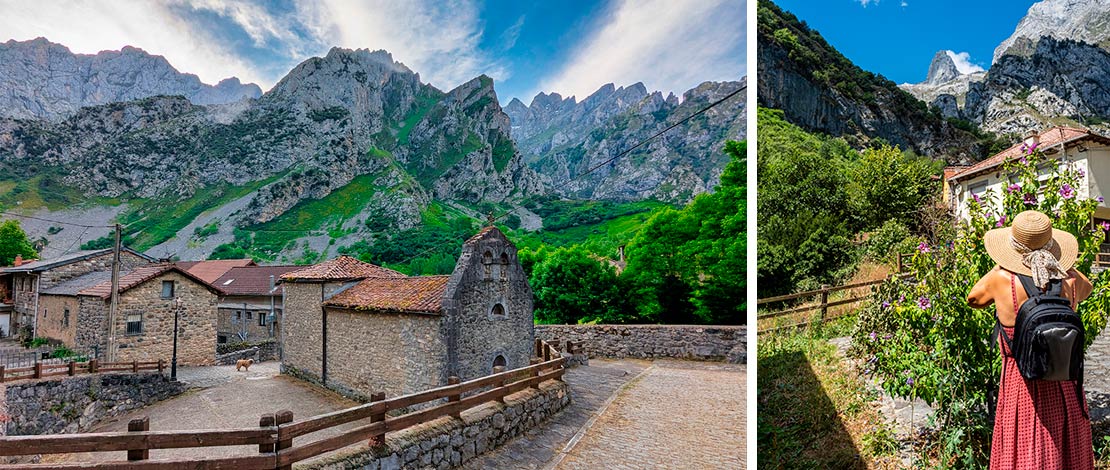
View of Caín de Valdeón

Santibañas Cave Trail: a route among caves and viewpoints in the Picos de Europa

León

León

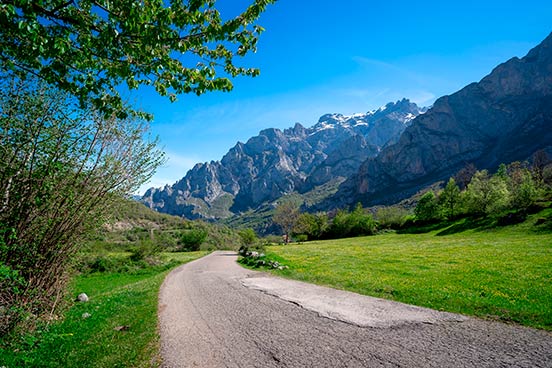
In the heart of the Valdeón valley, within the Picos de Europa National Park, in the province of León, is one of those routes that invite you to take a leisurely stroll and discover the essence of the Cantabrian mountains. The Senda de la Cueva de Santibañas is a circular route of approximately 4 kilometres that starts in the small village of Caín. This route will allow you to enjoy one of the most spectacular landscapes in the area, walking among rock formations, ancient mountain passes and viewpoints with unforgettable views.Along the way you will discover some of the most attractive places in this enclave, with panoramic views of iconic peaks such as Torrecerredo (2,650 metres), the highest peak in the Cantabrian Mountains, and Llambrión (2,642 metres). A perfect experience for those seeking nature tourism and hiking in the north of Spain, in an environment of great ecological and cultural value.

What you will find along the route

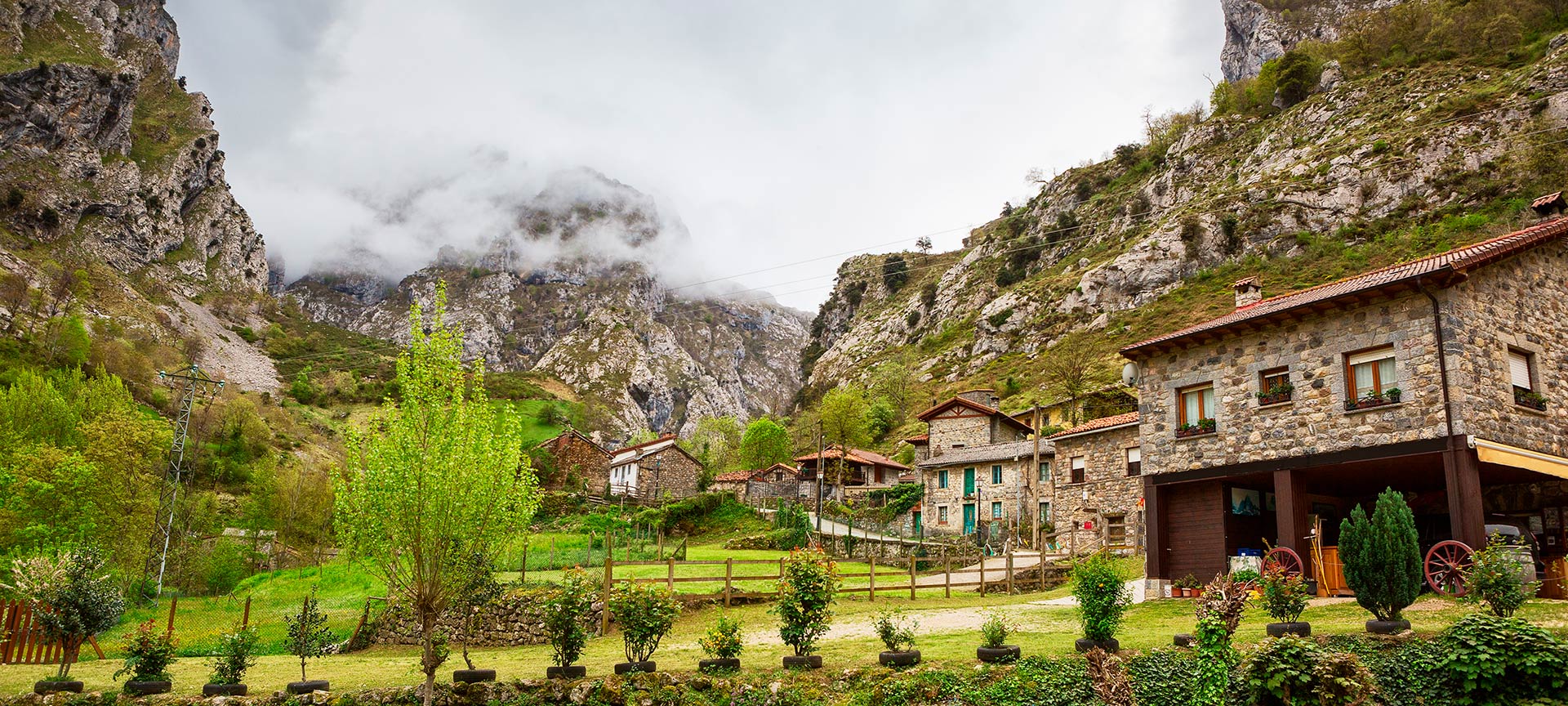
The route starts in Caín, a small mountain village located at the entrance of the Cares Gorge, known as the Divine Gorge. Its stone and wooden houses reflect the traditional architecture of the valley. From here the circular route starts, climbing gently along ancient paths used for centuries by shepherds and farmers.One of the most unique points of the route is the passage through the Llego caves, traditionally used as a refuge for livestock during the winter, when the herds descend from the high mountain pastures. These spaces give a sense of the traditional way of life, so closely linked to livestock farming in this territory.The path continues along a narrow pass carved into the rock, which leads to Caín de Arriba. From this point you can enjoy one of the best viewpoints in the valley, with impressive views of the rocky outcrops and the peaks.The walk takes you through an environment of great ecological value, where the silence of the mountain and the spectacular scenery give you a unique experience.
Views of Caín

A landscape marked by nature and traditional life

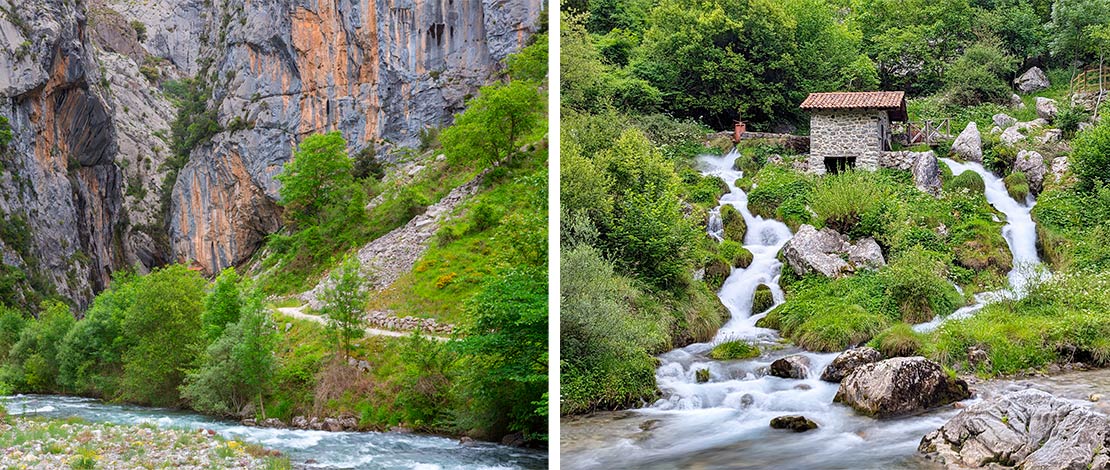
Water, ice and time have shaped a series of deep gorges, vertical cliffs and valleys of great beauty. Caín itself, at the bottom of the valley, is an excellent example of a mountain village perfectly integrated into its surroundings. Its relative isolation in this rugged landscape has helped preserve livestock farming traditions, popular architecture and ways of life closely linked to nature. Today, as well as an entry point to well-known routes such as the Cares, it is also the starting point for less travelled itineraries, such as this path, ideal if you are looking for something quiet and authentic.
Views of Caín

History and tradition in the Santibañas Cave

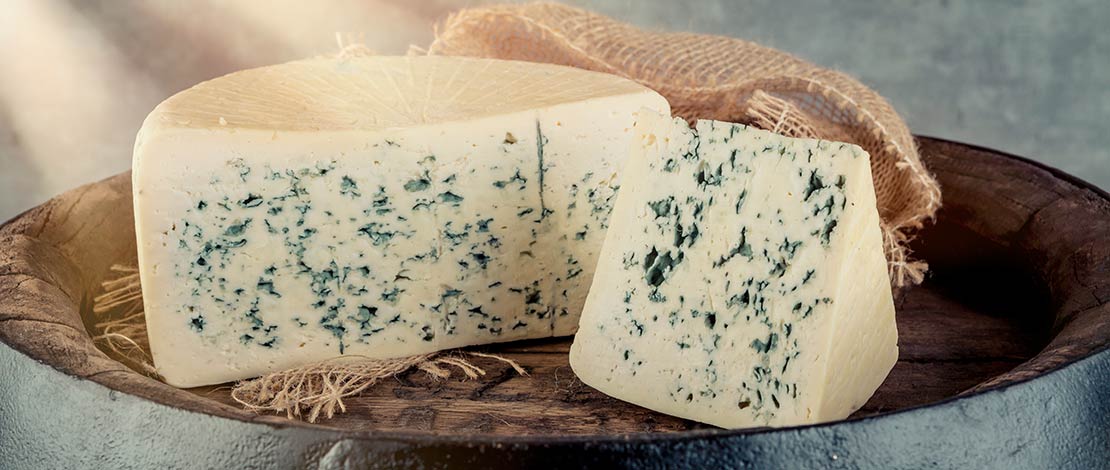
This grotto is closely linked to the customs of the inhabitants of Caín. Although it is no longer in use, for generations it was used for preserving and maturing food, especially cheese, taking advantage of its temperature and humidity conditions. A visit to this cave illustrates traditional practices and how mountain communities use their environment.
Blue cheese

Tips and recommendations

How to get to the Santibáñez Cave Trail by car

From León you can follow the N-621 road towards Santander. Then continue along the CL-624 and CL-626 until the exit to the N-621/N-625 road in Cistierna. Continue along the N-621/N-625 to the LE-2711 to reach this destination. There are several parking areas in Caín. The journey takes approximately two and a half hours.

Views of Caín

Things to bear in mind

Although this is a route with a low average difficulty and a distance of just 4 kilometres, it is worth bearing in mind that it has a considerable gradient. It is easy to descend, but care must be taken as the ground is slippery. Bring enough water, some food and wear appropriate clothing and footwear. We also recommend you have a torch for going into the cave, preferably a headlamp. Don't forget to check the weather conditions to avoid unforeseen events.

When to go on the route

The route can be done all year round, but the best times are:Spring, when the meadows are green and the scenery is particularly spectacular.Early autumn, with mild temperatures and intense colours in the mountains.These seasons are ideal to enjoy hiking in the Picos de Europa with fewer visitors.

What to see nearby

A few kilometres away is Posada de Valdeón, a municipality of which Caín forms part and the tourist centre of the valley. This small village is of great cultural interest, with historic buildings such as the church of Santa Eulalia and the unique Casa de Humo, one of the oldest houses in the area, with more than 250 years of history. Here you will also find the Information Office of the Picos de Europa National Park.

General view of Posada de Valdeón

Traditional local dishes

The high mountains and traditions have left their mark on the local cuisine. The most important products are wild game and meat from the sheep, goats and cattle that graze in the meadows of the valley. You can also try delicious sausages, such as androja caineja, similar to chorizo, and Valdeón blue cheese, one of the area's most iconic gastronomic products.