Chinchón's beautiful medieval square is the most emblematic feature of Chinchón. With its irregular ground plan and consisting of two- and three-storey houses with balconies, it has long been – and still is – the scene of many activities and shows.
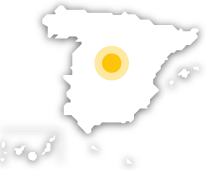
Located 45 km from Madrid, Chinchón can be seen from a distance because of its houses built into the hills. In addition to its characteristic main square, Plaza Mayor, with its wooden balconies and lintelled galleries, the Church of Nuestra Señora de la Asunción (1534-1626), which was sacked and set ablaze by Napoleon's troops in 1808, is particularly worth a visit. The present-day church was completed in 1828 and is a mixture of Gothic, Plateresque, Renaissance and Baroque styles. The magnificent painting of Goya's Assumption of the Virgin is housed inside.Other buildings of interest include: the 17th-century Convent of the Poor Clares; the Clock Tower, which forms part of the former parish church of Nuestra Señora de Gracia and was restored in 1856; and the ruins of a 15th-century castle. In the centre of the town, you will see noble houses bearing coats of arms and stately homes with beautiful courtyards and galleries supported by Doric, Ionic or Tuscan columns, or with stone bases and straight shafts with footings.

In images


Shows, festivals, sports...
View some of the most relevant events you will be able to enjoy at the destination.


Book yours
Choose between thousands of activities to live your best life on holiday.