Immersive experiences to discover Spain's cultural heritage
Augmented reality and immersive experiences are a fantastic way to immerse yourself in the culture and history of Spanish heritage. From Spain.info we invite you to discover four incredible places where you can go beyond the typical visit. Join us and let yourself be carried away!
-
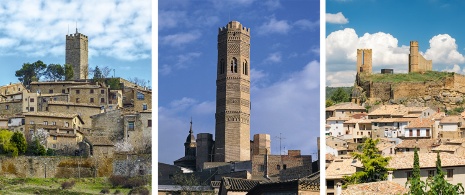
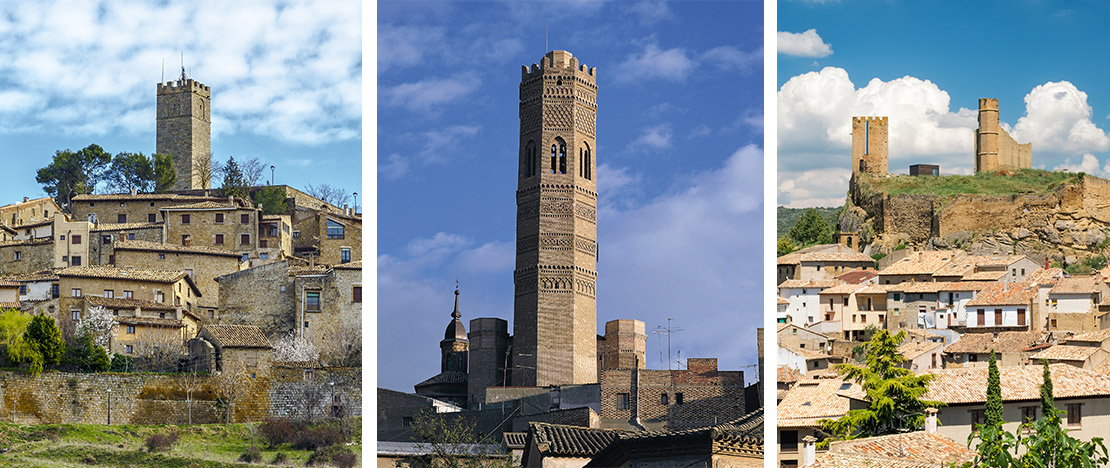
Hyper-experience in Cinco Villas (Zaragoza)
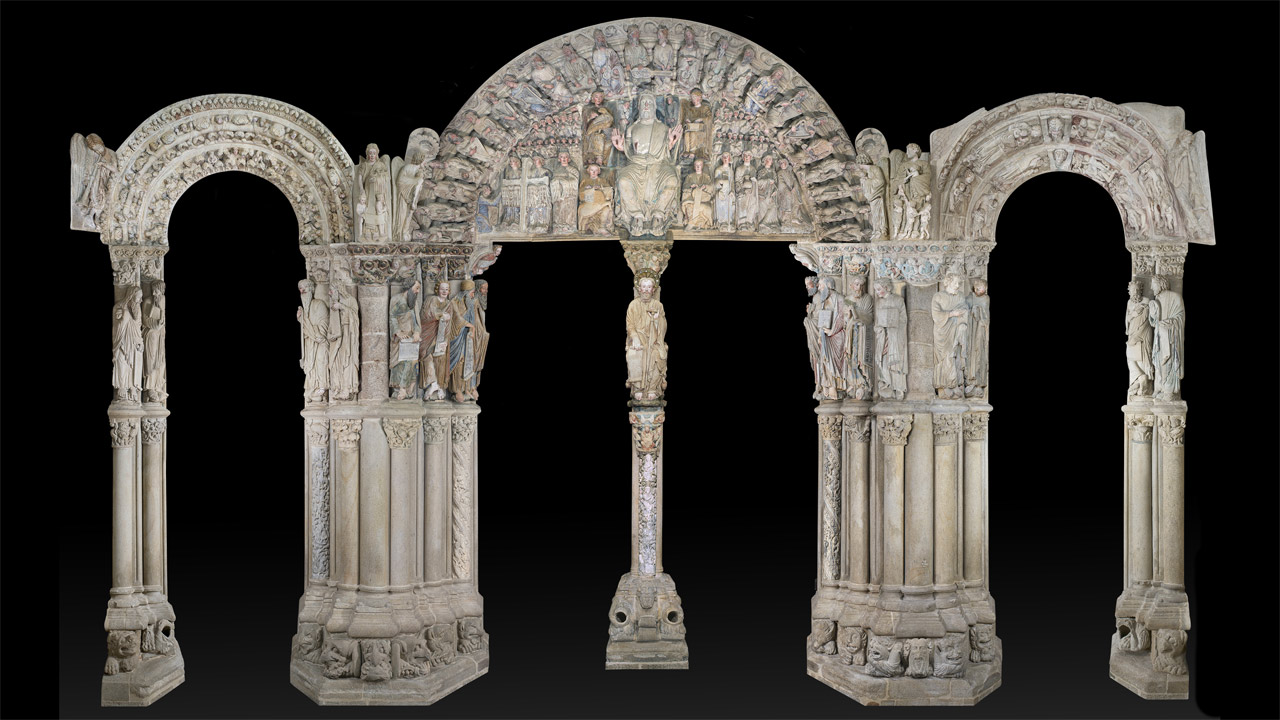
In the north of the province of Zaragoza lies the region of Cinco Villas. The municipalities that comprise it (Ejea de los Caballeros, Sádaba, Uncastillo, Sos del Rey Católico, and Tauste) share a common history that dates back to the 12th century. Its medieval appearance transforms into a multi-sensory discovery space thanks to the Hyper-experience project. Through information points and a mobile app, visitors can view historical holograms or digital reconstructions superimposed on its squares, castles, and cobbled streets.- What makes it special: it uses augmented reality to recover lost heritage, returning to the landscape works that are now in museums or have disappeared. It is an ideal destination for those seeking a form of sustainable cultural tourism.- Recommendations: you can download the app, available for Android and iOS, and plan your visit even before you arrive.- How to get there: in less than an hour and a half you can get to Zaragoza by AVE high-speed train from Madrid or Barcelona, and then connect with the Cinco Villas Buses. By road, the main access routes are via the A-68 and the A-127 from Zaragoza, whose airport offers international flights.-Bonus: an example of lost heritage that has been recreated using augmented reality is the Romanesque portal of the Church of San Miguel in Uncastillo.
-
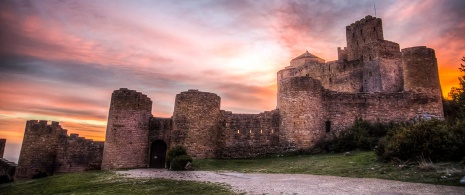
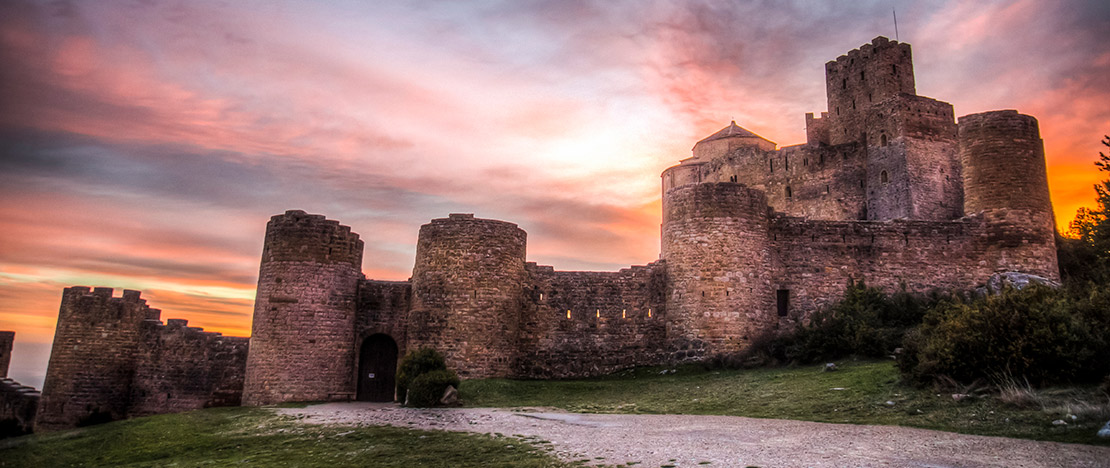
Loarre XR: the immersive adventure of Loarre Castle (Huesca)
Since the end of the 11th century, the imposing Loarre Castle, has stood in the province of Huesca, guarded by a great wall with nine towers and considered the best-preserved Romanesque fortification in Spain. Now, thanks to extended reality technology, you can enjoy a complete recreation of the fortress, hidden places, and its surroundings during its period of greatest splendour.- What makes it special: one of the goals of this project is to make the visit as accessible as possible to people with reduced mobility. Furthermore, the pre-Pyrenean setting enhances the immersive experience.- Recommendations: wear comfortable shoes, as part of the visit takes place outdoors, in the mountains. Take the opportunity to approach the wall and enjoy a panoramic view of the Hoya de Huesca, a fantastic location for outdoor activities.- How to get there: the high-speed train from Madrid gets to Huesca in about two and a half hours when it is direct and in just over three hours from Barcelona, with a change in Zaragoza. You can then take a bus to Loarre (half an hour). Nearby airports are Zaragoza and Huesca-Pyrenees. By road, from Huesca it is about 35 kilometres along the A-1206 or the A-23 if you are coming from Zaragoza. -Bonus: part of "Kingdom of Heaven" (Ridley Scott) was filmed in this castle. You can relive scenes from the film thanks to the virtual world of the Loarre XR project.
-
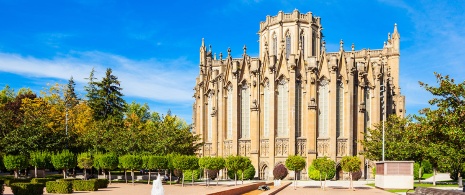
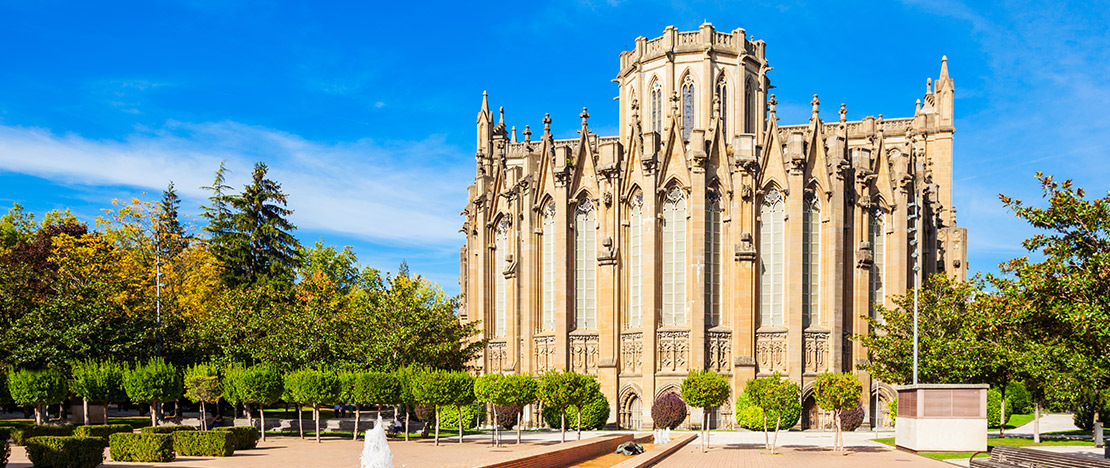
Vitoria's city walls and cathedral in virtual reality (Álava)
The Cathedral of Santa María, built next to the city walls of Vitoria, is considered a marvel of Gothic architecture. The virtual recreation allows you to see what the city was like between the 9th and 16th centuries, reconstructing its urban evolution, the access gates, and the transformations it has undergone.- What makes it special: it combines a guided in-person tour with an immersive virtual reality simulation using VR headsets and 360° videos, allowing access to areas usually restricted, such as the cathedral crypts, the remains of the city wall, and the bell tower, with a fantastic panoramic view.- Recommendations: the Santa María Cathedral Foundation recommends booking in advance to guarantee your visit with this virtual tour.- How to get there: train from Madrid (from three hours) or by bus in about four hours. From Barcelona, high-speed train to Zaragoza and then connection to Vitoria by train or bus. The nearest airports are Vitoria and Bilbao, with international flights. The main access road is the A-1 from Madrid.-Bonus: it's a fantastic opportunity to go out for pintxos in the capital of the Basque Country.
-
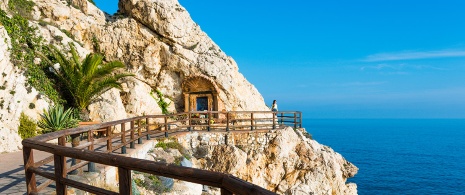
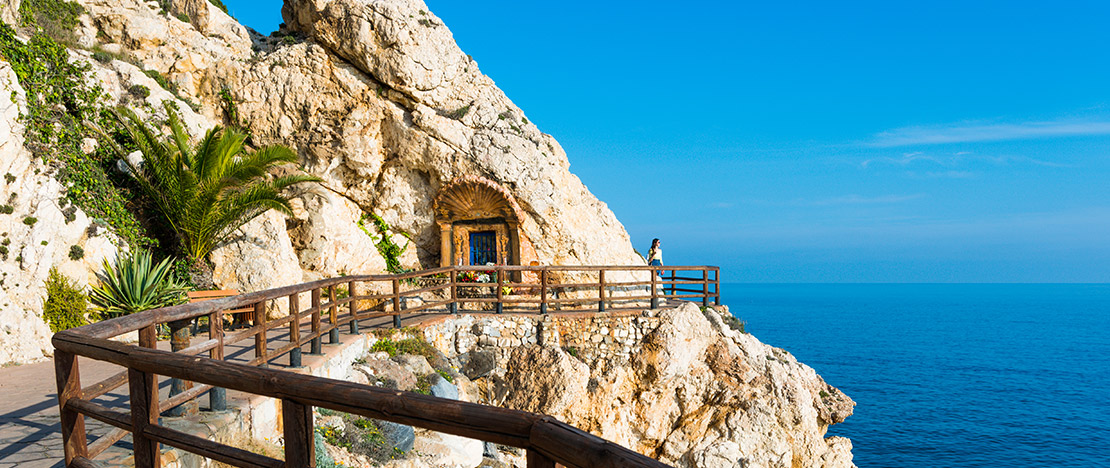
Sensory visit to the Roman villa of Antiopa (Rincón de la Victoria, Malaga).
Antiopa is an ancient Roman maritime villa discovered in 2003, near Rincón de la Victoria, in the province of Málaga and open to the public since 2022. Immersive technology is combined with architectural remains, mosaics, and other archaeological objects (ceramics, glass, and tools), which are experienced through augmented reality audiovisual filters and sensory tours where you can even smell authentic Roman garum, a fish sauce typical of the imperial era.- What makes it special: it's a must-see for lovers of Roman culture if you're taking a holiday on the Costa del Sol. It stands out especially for the excellent preservation of its mosaics. You can enjoy a three-dimensional recreation of what the villa looked like originally.- Recommendations: a stop at the Cueva del Tesoro, just four kilometres away, is a must. Both the Villa Antiopa and the Cueva del Tesoro can be reached by the city's tourist train, which operates in spring and summer.- How to get there: In just over two hours, you can take the high-speed train from Madrid to Málaga, and then a bus (line M-160) to Rincón de la Victoria, just half an hour away. The nearest airport is Malaga-Costa del Sol. By road, access is via the A-7.-Bonus: in 2024 it was awarded the prize for the best digitised tourist experience in Spain for its use of immersive technologies.
These advanced technologies greatly enrich the travel experience to cultural heritage sites and also help in the conservation of these spaces. These are just a few examples of the many projects that already exist in Spain.Discover more plans at www.spain.info.
Book yours
Choose between thousands of activities to live your best life on holiday.