Sierras de Cazorla, Segura y Las Villas Nature Reserve
Spain's largest protected natural area
This area has also been a UNESCO Biosphere Reserve since 1983. There are more than 200,000 hectares of spots and spaces of incomparable beauty where unique species in the world coexist.
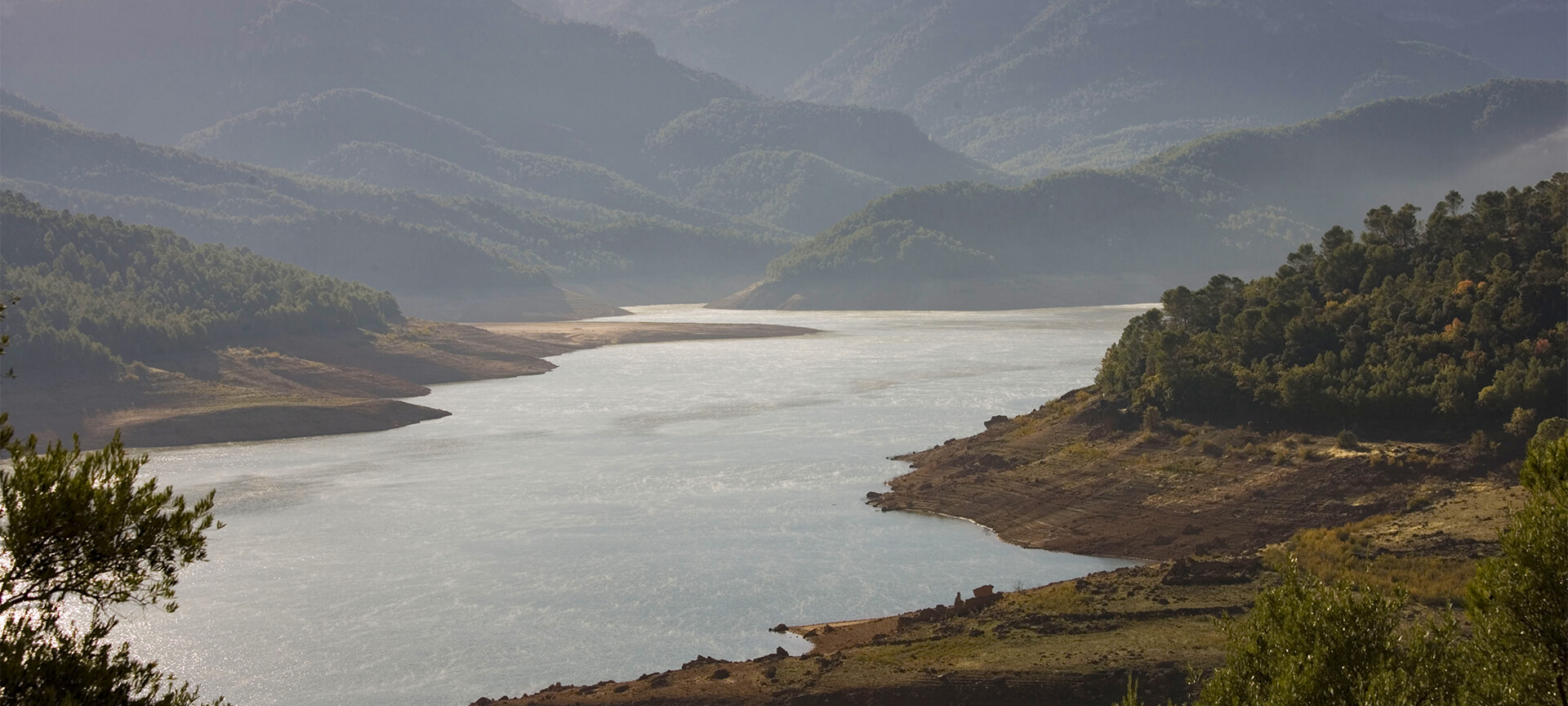
It is the largest protected area in Spain. We are talking about 200,000 hectares of mountains, located in the northwest of Jaén, with lush pine forests with unique species, such as the Cazorla violet, the Valverde lizard, a daffodil that is said to be the smallest in the world and a distinctive carnivorous plant.This is the source of two of the 10 longest rivers in Spain, the Guadalquivir and the Segura. The nature reserve sits on different parts and areas of 23 municipalities and is privileged to have species such as the Spanish ibex, deer and wild boar, as well as mouflon, which can be seen in semi-wild conditions in the “Collado del Almendral” Hunting Park.


Sierras de Cazorla, Segura y Las Villas Nature Reserve
Jaén (Andalusia)
Jaén (Andalusia):
- Beas de Segura
- Benatae
- Cazorla
- Chilluévar
- Génave
- Hinojares
- Hornos
- Huesa
- Iruela, La
- Iznatoraf
- Orcera
- Peal de Becerro
- Pozo Alcón
- Puerta de Segura, La
- Quesada
- Santiago-Pontones
- Santo Tomé
- Segura de la Sierra
- Siles
- Sorihuela del Guadalimar
- Torres de Albánchez
- Villacarrillo
- Villanueva del Arzobispo
Carretera de Cazorla a El Tranco (A-319), km. 47 (1,5 km por el desvío hacia Loma de María Ángela y el Río Borosa)
23478 Santo Tomé, Jaén (Andalusia)
Carretera A-319, km 48,5
23478 Santiago-Pontones, Jaén (Andalusia)
What you need to know
-
Cultural information
You can visit the village of Coto Ríos (municipality of Santiago-Pontones) and, nearby, the Tranco de Beas reservoir. Also worh noting are the historic and artistic buildings of Segura de la Sierra, the Castle of San Miguel de Bujaraiza, the Arab and Christian castles of Cazorla and the castle and watchtower of Tíscar.
-
Environmental information
The park's flora is one of the richest in Spain, with more than 2,200 catalogued species. Of these, at least 35 are exclusive to this territory, including the laricio pine, an autochthonous species found at altitudes of over 1,200 metres.
-
Information for visits
Find out for yourself at the Visitor Centres. There are also two information points for visitors, open during weekends and holidays, one in the town of Cazorla (C/ Martínez Falero, 11) and another in the municipal area, at the start of the Cerrada del Utrero path, in Vadillo Castril district (the Cruce del Valle-Puente de las Herrerías road, km 7).
Travel plans for inspiring you

Book yours
Choose between thousands of activities to live your best life on holiday.