Tips and recommendations
-
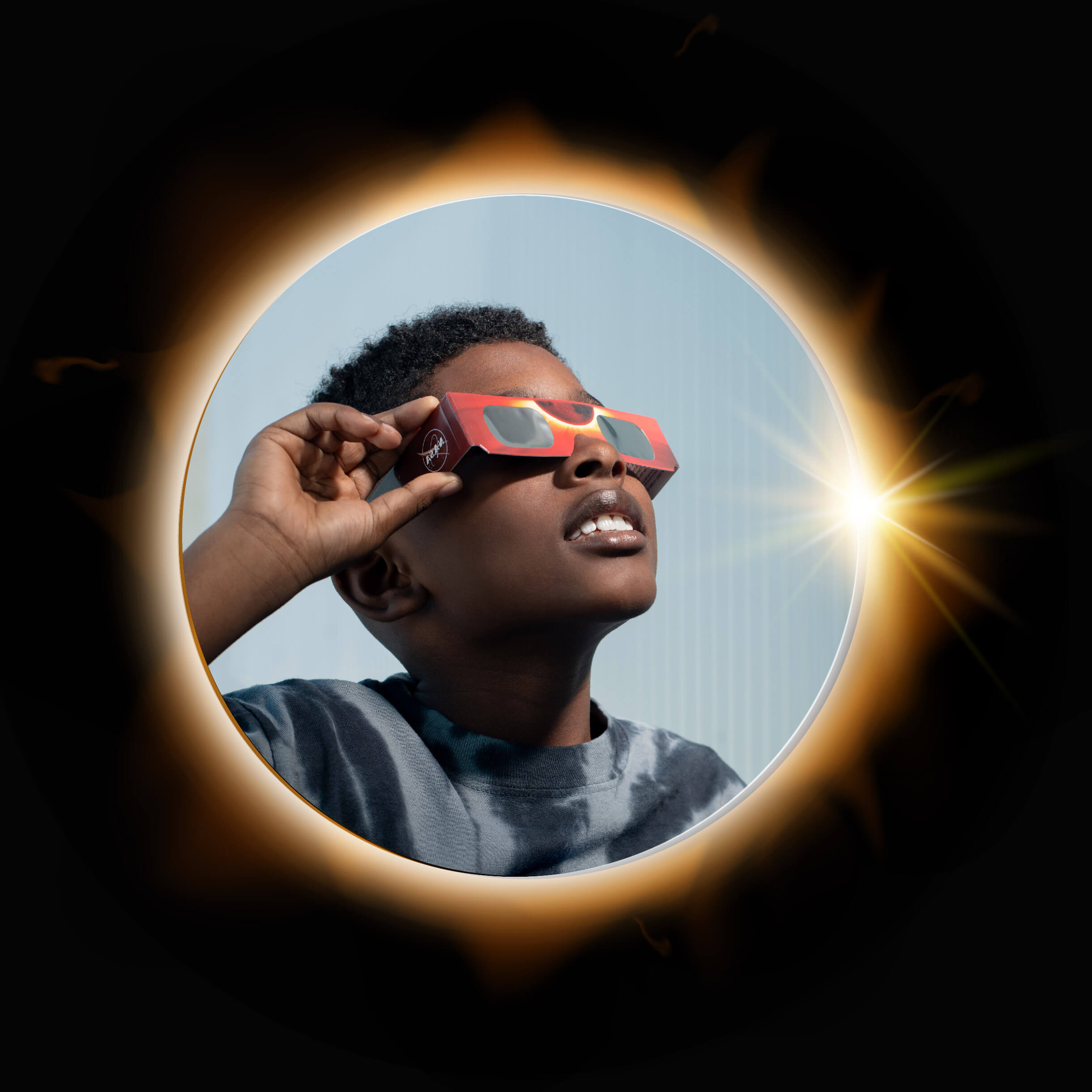
If you want to have the best experience, it’s very important that you always take the necessary precautions to protect your eyes and ensure safe observation. Please note that you should never look directly at the sun or at a partial eclipse, annular eclipse or the partial phases of a total eclipse without proper protection.
-
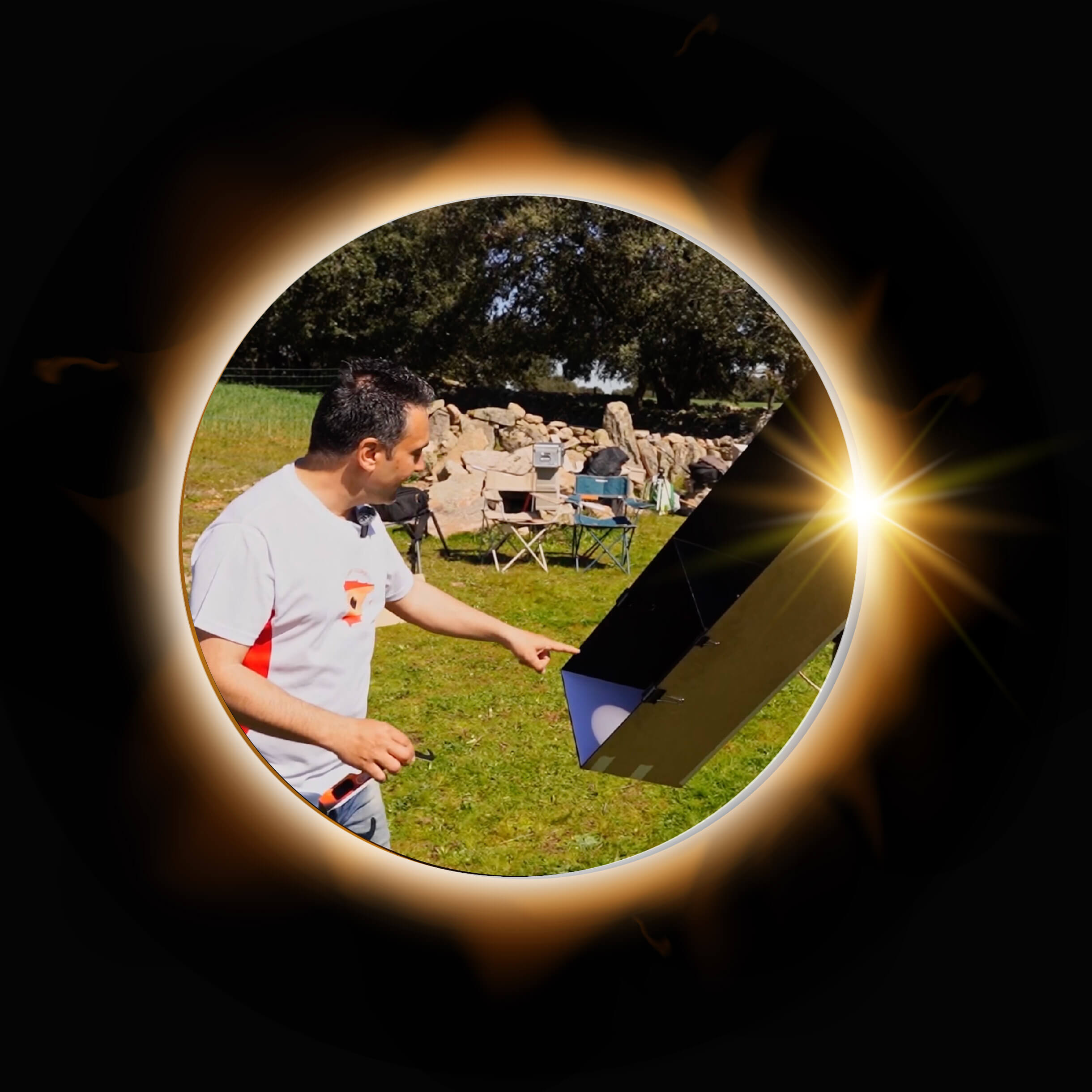
To avoid risks, use certified filters and special glasses that are in perfect condition. Consult reliable sources such as planetariums, astronomical associations and scientific bodies to find out which products and distributors meet the quality requirements.Another option for observing the eclipse is to project the image of the sun onto a piece of paper, a screen, a wall or a ceiling, for example. This alternative is also the safest because a very small fraction of the emitted light is re-emitted.
-
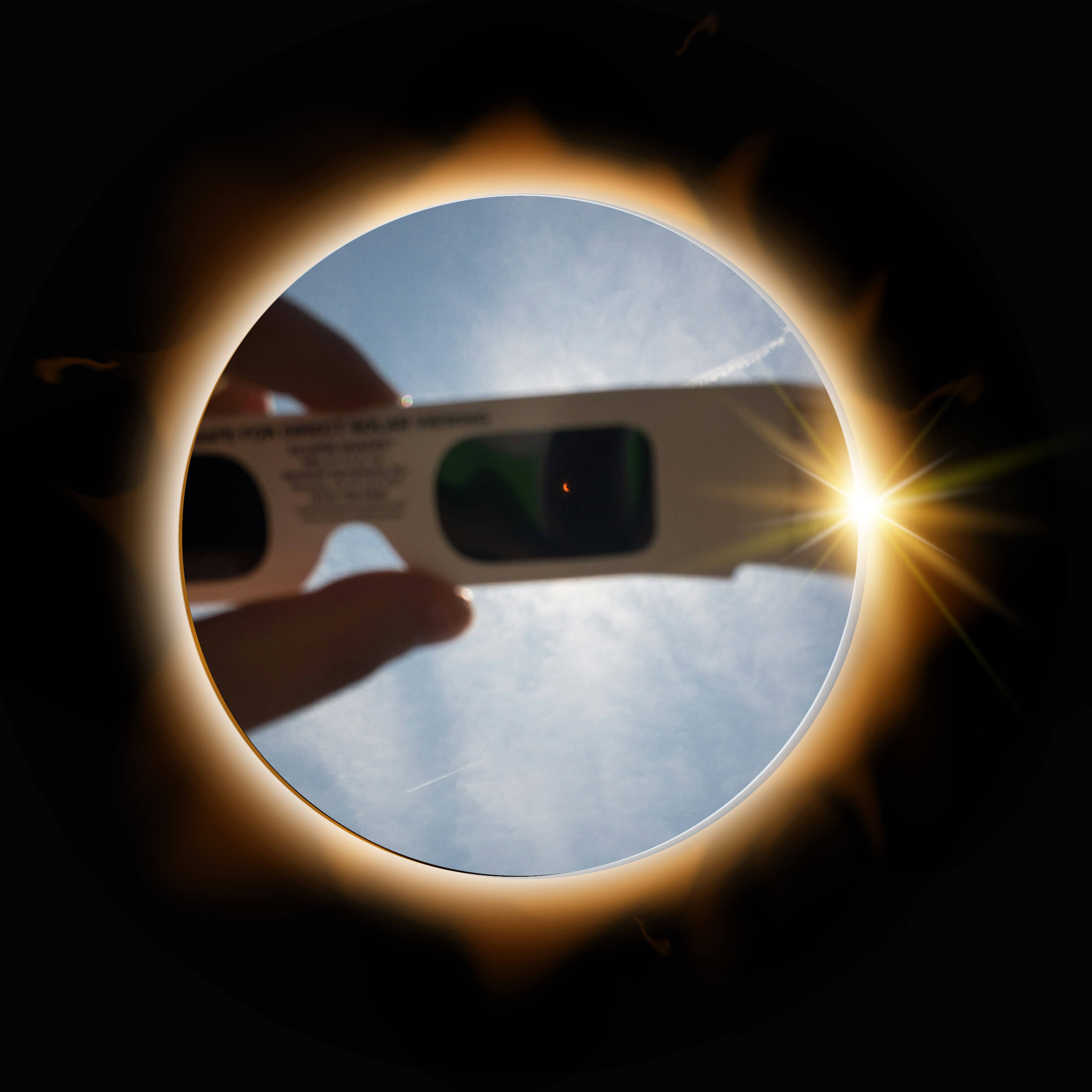
Pay close attention to ISO standards and labelling. Look for the EN ISO 12312-2:2015 standard (if it only says ISO 12312-1, they are not suitable for looking at the sun!), and ensure that the manufacturer's name, safe use warnings, storage instructions, and expiration date (if applicable) are displayed. If you purchased them in the EU, they must bear the authentic CE marking, which must be visible, legible, and indelible. If it is simply printed or stamped without further justification, the CE marking is invalid.Examine the glasses, because if the filter is scratched, loose, bent, has lighter areas, or you notice any other defect, you should not use them (a single weak point can let in enough light to damage your eyes). Make sure the glasses cover both eyes simultaneously and that they don't have sharp edges or irritating materials. Whether they come with a frame or a sheet on a cardboard backing, they should hold the filter securely so it doesn't peel off easily.Always consult reliable sources, such as planetariums, astronomical associations, or scientific organisations, which usually recommend distributors or products that have passed quality controls.
-
It is advisable to plan your holiday to Spain well in advance to avoid complications, as this series of eclipses is a historic event. If you can, plan a trip of at least seven days, so that you can enjoy all the events and activities that will take place. A tip: book your accommodation as soon as possible, especially for the day of the eclipse.Many institutions and associations will organise special activities on the occasion of the eclipses, including travel to the area of totality. Consider joining an organised tour, as this may be the easiest way to go.
-
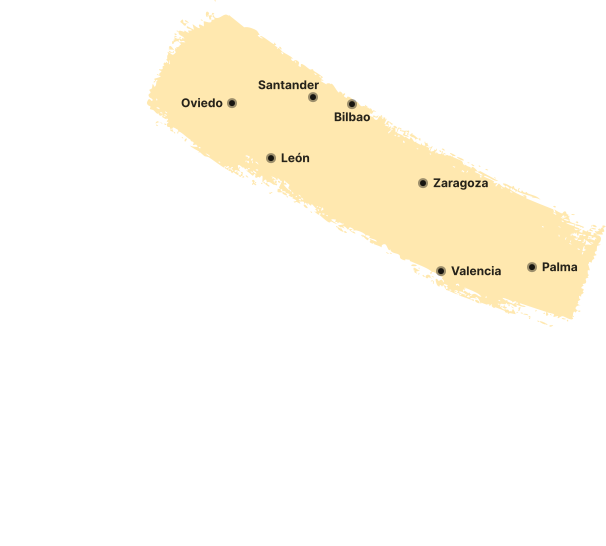
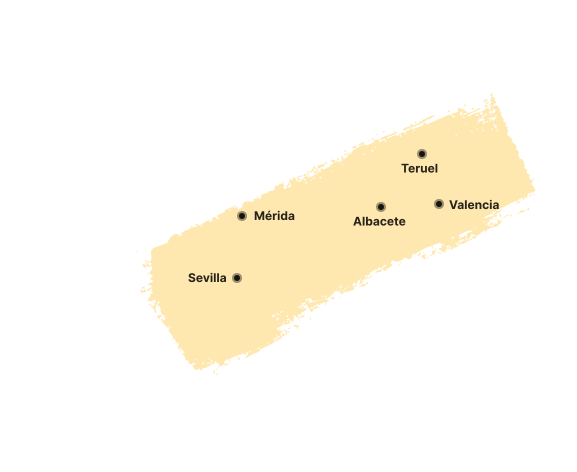
Try to find a clear horizon, free of tall buildings, trees, mountains... to observe the total eclipse. A few days beforehand you can approach the chosen site to check that there are no unforeseen obstacles in the line of sight. Take note of the time of sunset, as the eclipses of 2026 and 2028 will occur at sunset. If you are at a destination outside the bands of totality, remember that you will see it as a partial solar eclipse.You can find detailed information on the start time of each eclipse at your location and at various destinations across Spain using the visualisation tools from the National Geographic Institute (IGN).
-
As a celestial phenomenon, weather conditions are key for observing the eclipse. We recommend that you consult the weather forecast in the days leading up to the event to know if the sky will be clear where you are going to be.
-
On the day of the eclipse, travel to the chosen viewing site well in advance. Always follow the recommendations and indications of traffic officers and civil protection personnel. On the way back, it is best to wait a little while for the traffic to clear. If you are staying overnight on that day, it is advisable to book your stay as soon as possible.
-
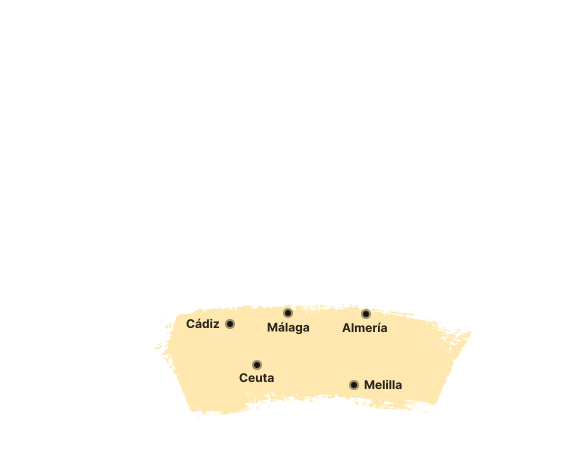
The times of the beginning and end of the eclipse, as well as the beginning of totality and its duration, will vary depending on where you are in Spain.For example, if you’re in Cádiz, the eclipse will begin at 9.40 am and end at 11.59 am; you’ll be able to enjoy a total phase lasting almost 3 minutes, which will begin at 10.45 am. In the case of Málaga, the eclipse will begin at 9.42 am, reach totality at 10.48 am and end at 12.02 pm. Ceuta will be the city in Spain where the totality will last the longest (4 minutes and 48 seconds), followed by Melilla (4 minutes and 34 seconds). On the official website of the National Geographic Institute you’ll find the visualisation tools where you can consult detailed information on the timings of the 2026 and 2027 total eclipses as well as the 2028 annular eclipse in each of Spain's towns and cities.
-
Many of the areas through which the eclipse totality band will pass are inland destinations and places where you will find rural accommodation close to the observation points. Furthermore, a large proportion of them are located in areas and populations with Starlight certification, so you’ll enjoy perfect skies for stargazing. Take the opportunity to enjoy astro-tourism and astrophotography.The days before or after the eclipse are also an excellent option for discovering regions of Spain where you can really disconnect.