Eclipse Hunters


2026 - 2027 - 2028

© NASA-GRC. Jordan Salkin

When the sun and the moon meet

A total solar eclipse is one of nature's most fascinating spectacles; those who have experienced it will never forget it. Spain is lucky enough to be the destination where this exciting phenomenon will be visible, consecutively, in 2026, 2027 and 2028. Don't miss this unique astronomical event, known as the "Iberian trio" and admire all the grandeur of the universe.

© NASA-GRC. Jordan Salkin

The amazing spectacle of a total eclipse

Everyone agrees: experiencing a total eclipse is something that you will remember forever. As the moon hides the sun and the sky grows dark, the sense of astonishment increases, until it reaches its totality; spectators gasp as we admire, for a brief moment and without using protective eyewear, the fascinating beauty of the sun's corona.

©

NASA. Denny Henry

The three eclipses of Spain:
A historic event

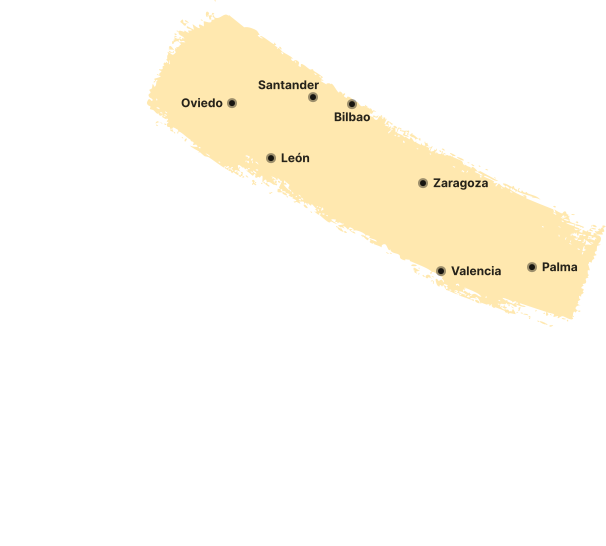
When is it?  The first of the eclipses in Spain will occur at sunset on 12 August 2026, making it the only country in the world where the final phase of a total eclipse can be observed with guarantees. As it is in summer, there is a good chance of having clear skies and enjoying the observation without any problems. Where to watch The band where the total solar eclipse will be visible will cross, from west to east, a large part of the northern half of the country starting in Galicia, where it will begin in A Coruña at 19:31, until the Balearic Islands, where it will start at 19:38. It passes through the territory of up to 13 autonomous communities, including numerous inland towns and cities such as Oviedo, Santander, León, Bilbao, Zaragoza, Valencia and Palma. From the rest of the country it will be seen as a partial eclipse. Consult the detailed information on the destinations and areas of Spain where the total eclipse of 2026 will be observed on the official website of the National Geographic Institute (IGN). Consult the detailed information on the destinations and areas of Spain where the total eclipse of 2026 will be observed on the official website of the National Geographic Institute (IGN).

Map

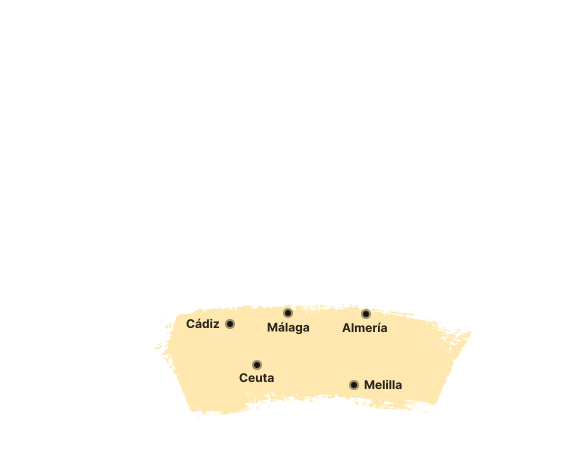
When is it? It will also be in summer, on the morning of 2 August 2027. This total eclipse will be notable for its long duration: For example, in cities such as Tarifa, Ceuta and Melilla, where the eclipse will begin at 9:40 a.m., totality will be visible for more than four and a half minutes; while at Cádiz it will be almost three minutes and at Málaga it will be approximately two minutes. Where to watch The full eclipse will cross Spain through the Strait of Gibraltar, from west to east and will cover the autonomous cities of Ceuta and Melilla; almost the entire province of Cádiz; a large part of the province of Málaga and the south of the provinces of Granada and Almería. It will appear as a partial sun eclipse in all other provinces. Consult the detailed information on the destinations and areas of Spain where the total eclipse will be observed in 2027 on the official website of the National Geographic Institute (IGN).

Map

When is it? At sunset on 26 January 2028, the spectacular "ring of fire" of an annular solar eclipse will occur in Spain: this happens when the moon is at its furthest point from the planet when the alignment occurs and its shadow does not completely cover the solar disc, leaving a kind of reddish ring visible around it. Where to watch The band where it will take place will cover almost half of Spain, from southwest to northeast, starting in Andalusia, where the eclipse will take place at 16:33, to Cataluña, where it will begin at 16:39. Thus, cities such as Cadiz, Malaga and Tarifa will enjoy the unique privilege of witnessing the annular eclipse phenomenon just six months after experiencing the total eclipse of 2027. In the rest of the country it will be seen as a partial eclipse. Consult the detailed information on the destinations and areas of Spain where the annular eclipse will be observed in 2028 on the official website of the National Geographic Institute.

Map

Tips and recommendations

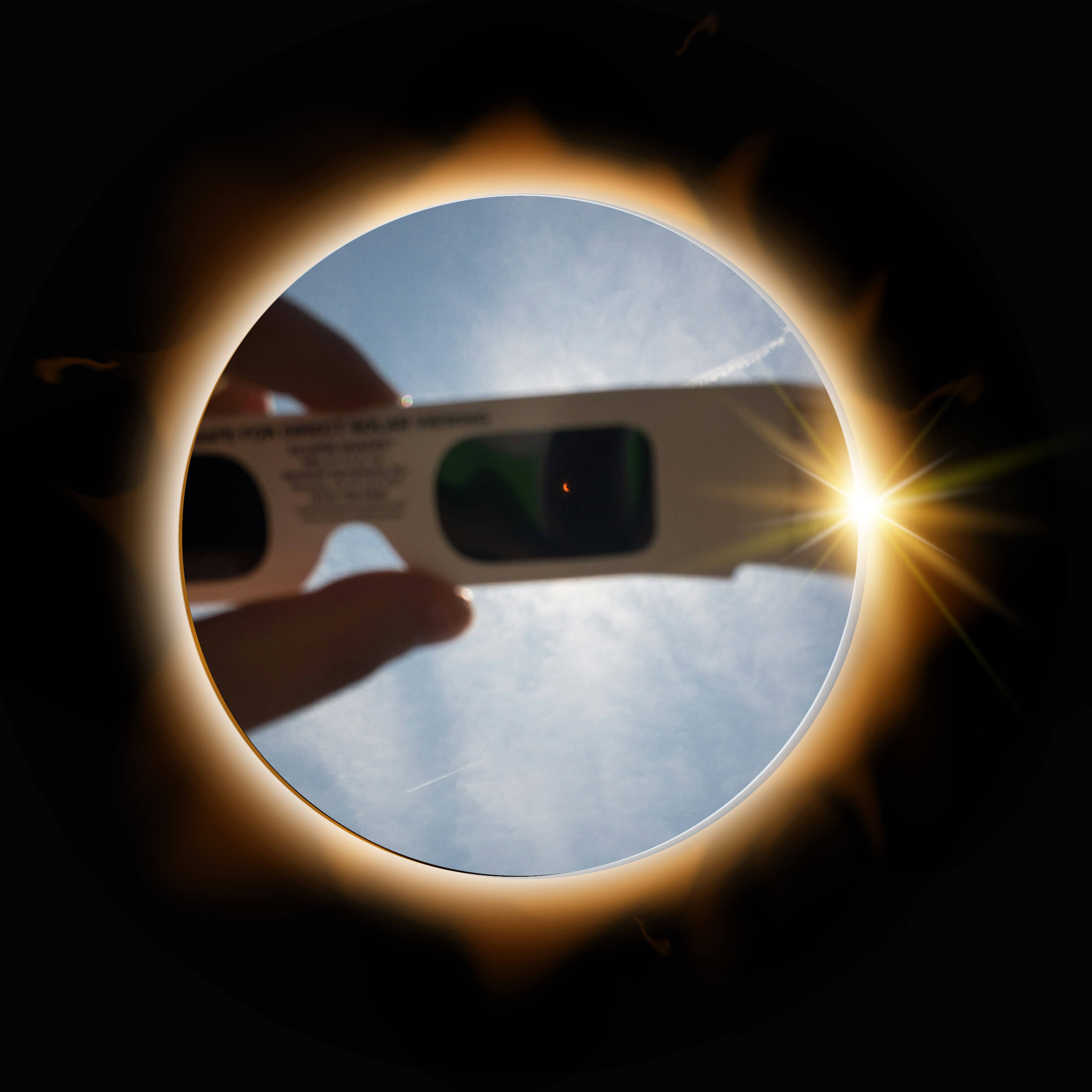
  • If you want to have the best experience, it is very important that you always take the necessary precautions to protect your eyes and observe safely. Please note that you should never look directly at the sun or at a partial eclipse, annular eclipse or the partial phases of a total eclipse without proper protection.

  • To avoid risks, use certified filters and special glasses that are in perfect condition. Consult reliable sources such as planetariums, astronomical associations and scientific bodies to find out which products and distributors meet the quality requirements. Another option for observing the eclipse is to project the image of the sun onto a piece of paper, a screen, a wall or a ceiling, for example. This alternative is also the safest because a very small fraction of the emitted light is re-emitted.

  • It is advisable to plan your holiday to Spain well in advance to avoid complications, as this series of eclipses is a historic event. If you can, plan a trip of at least seven days, so that you can enjoy all the events and activities that will take place. One tip: Book your accommodation as soon as possible, especially for the day of the eclipse. Many institutions and associations will organise special activities on the occasion of the eclipses, including travel to the area of totality. Consider joining an organised tour, as this may be the easiest way to go.

  • Try to find a clear horizon, free of tall buildings, trees, mountains... to observe the total eclipse. A few days beforehand you can approach the chosen site to check that there are no unforeseen obstacles in the line of sight. Be aware of the time of sunset, as the eclipses of 2026 and 2028 will occur at sunset. If you are at a destination outside the bands of totality, remember that you will see it as a partial solar eclipse.

  • As a celestial phenomenon, weather conditions are key for observing the eclipse. Make sure to check the weather forecast in the days leading up to the event to know if the sky will be clear where you are going to be.

  • On the day of the eclipse, travel to the chosen viewing site well in advance. Always follow the recommendations and indications of traffic officers and civil protection personnel. On the way back, it is best to wait a little while for the traffic to clear. If you are staying overnight on that day, it is advisable to book your stay as soon as possible.

  • The times of the beginning and end of the eclipse, as well as the beginning of totality and its duration, will vary depending on where you are in Spain. For example, if you are in Galicia (the first area where it will be visible in 2026), in A Coruña, the eclipse will begin at 19:31 and end at 21:22; the total eclipse will last for 76 seconds, beginning at 20:28 hours. In the case of the Balearic Islands (the last area where the 2026 eclipse will be visible), if you are in Palma, the eclipse will begin at 19:38 hours, will reach maximum totality at 20:32 hours and will end after sunset. You can find detailed information on the timings of the 2026 and 2027 total eclipses as well as the 2028 annular eclipse in each of Spain's towns and cities on the official website of the National Geographic Institute.

  • Many of the areas through which the eclipse totality band will pass are inland destinations and places where you will find rural accommodation close to the observation points. In addition, many of them are in Starlight-certified areas and towns, meaning you will enjoy skies ideal for stargazing. Take the opportunity to enjoy astro-tourism and astrophotography. The days before or after the eclipse are also an excellent option for discovering regions of Spain where you can really disconnect.
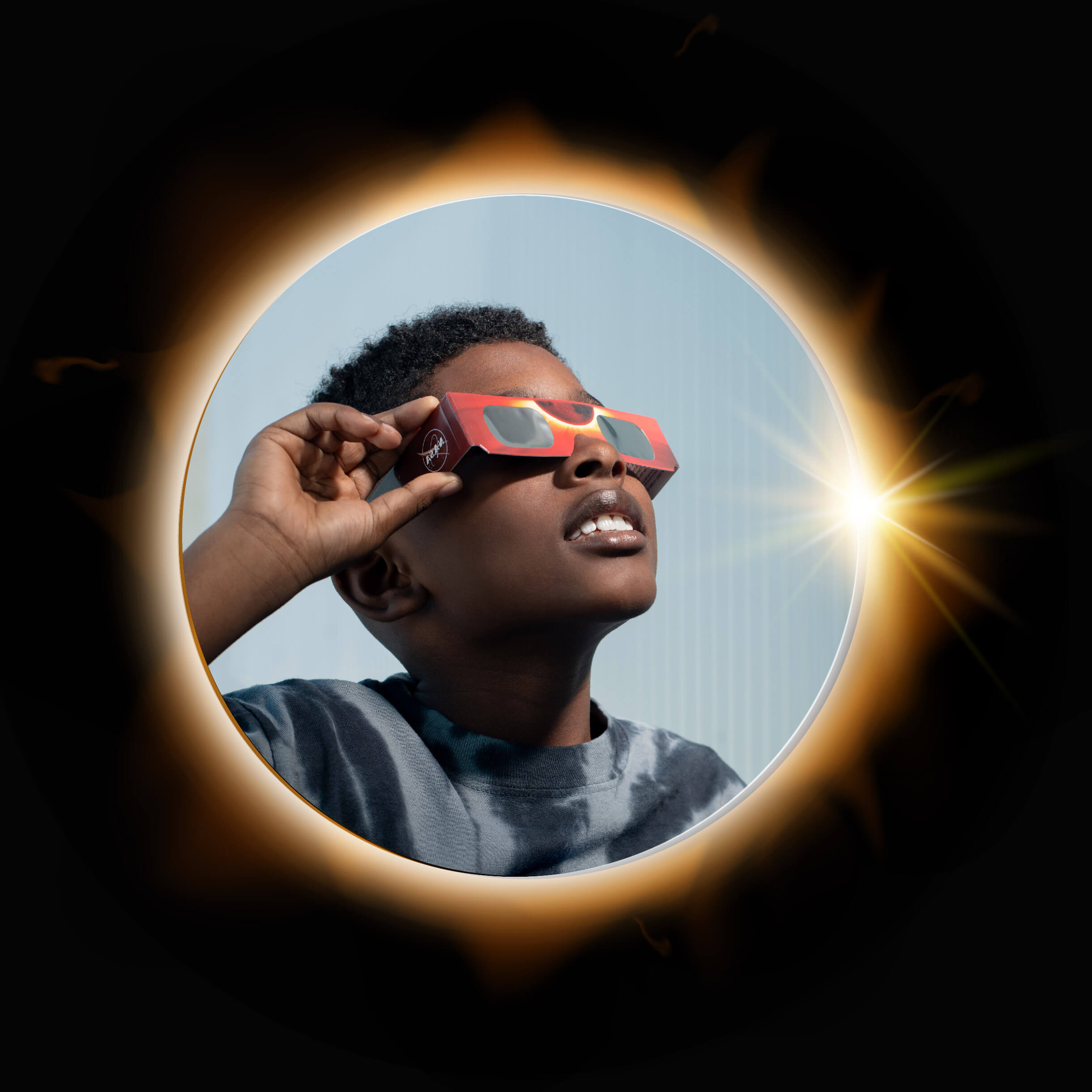
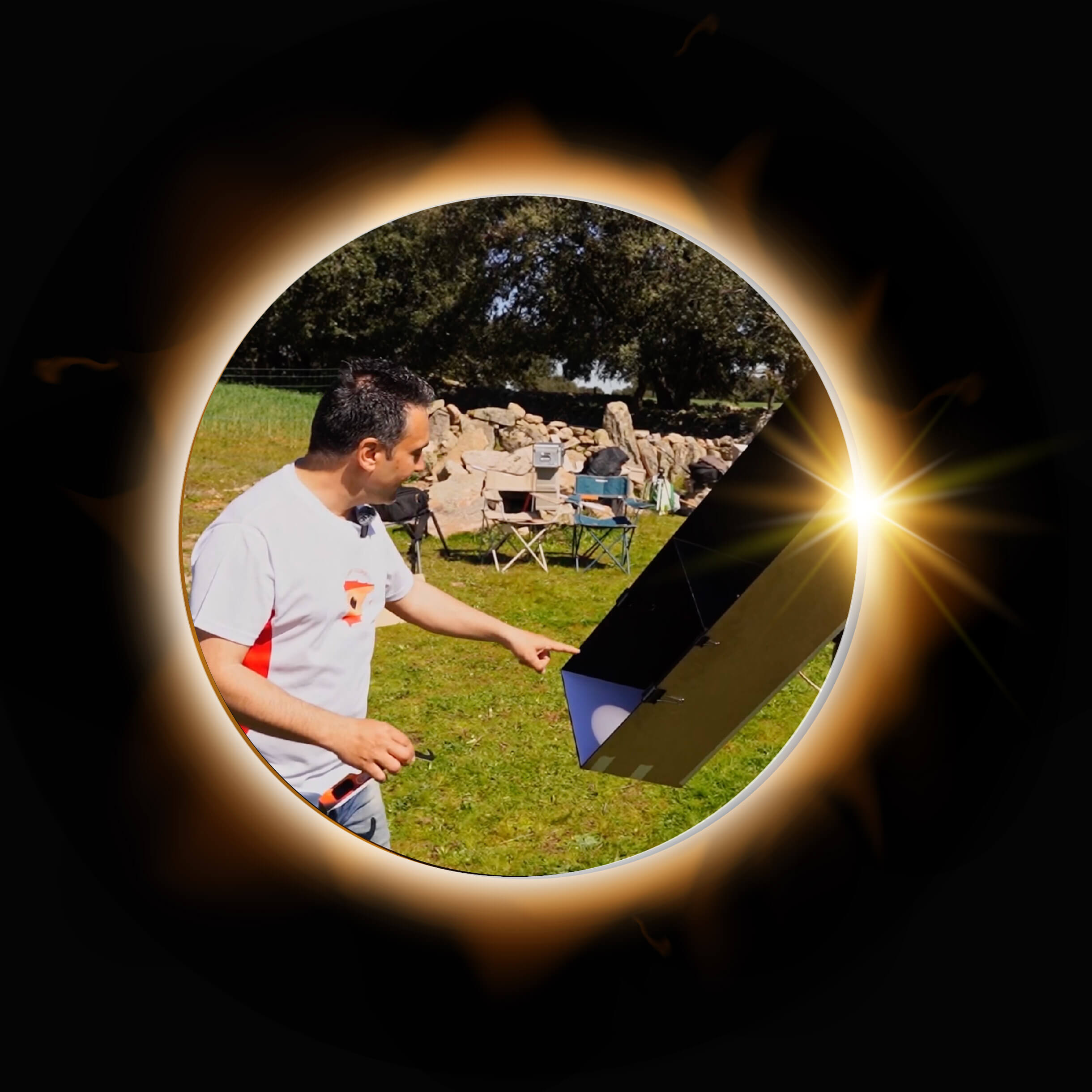
How to observe an eclipse safely?
© NASA. Sara Lowthian Hanna
What protection do I need?
How do I plan my trip if I want to see the eclipses?
Where is the best place to observe the eclipse?
Check the weather forecast a few days in advance
How far in advance should I arrive on the day of the eclipse?
When does the total eclipse start and how long does it last in 2026?
Where can I stay?

Spain, a destination boasting privileged skies

Our country is one of the best places in the world for astro-tourism and stargazing. In Spain you will find many locations, activities and plans that are perfect for stargazing.