What are the wines like?
Rioja Alta stands out for the quality of its red and white wines, many of which are barrel-aged. The most widely planted varieties include Tempranillo, Garnacha, Graciano and Mazuelo among the reds, and Viura and Malvasía among the whites. Each municipality produces Crianza and Reserva wines. Some villages are identified with specialities: for example, San Asensio is the cradle of traditional claret, and Haro boasts its Barrio de la Estación, with centuries-old wine cellars carved into the rock. The route invites you to taste directly at the associated wineries, enjoying the aromatic richness of Rioja wines.
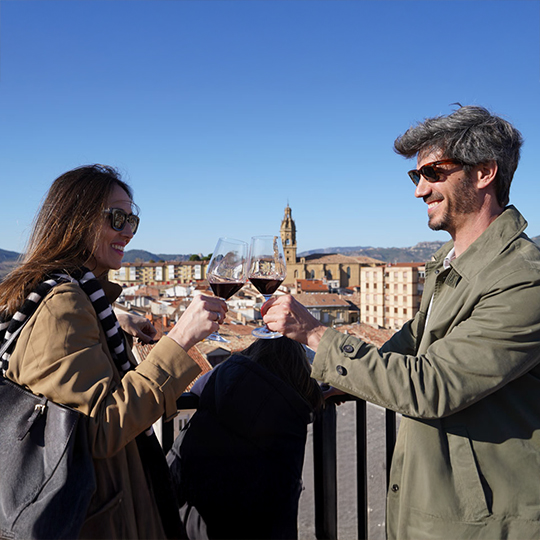
Tourists toasting. Rioja Alta wine route
What I can find
This route offers multiple wine tourism experiences: from guided visits to family-run wineries (many dug underground) to walks through vineyards with explanations of the winemaking process. The following wine trails through vineyards and riverside forests have been signposted. Along the trail you will discover rock-carved cave wine presses and "guardaviñas" (traditional stone huts) that illustrate the history of the vineyard. Dozens of wineries combine tradition and technology to produce exquisite wines. In addition, there are prestigious restaurants, museums dedicated to wine (such as the Vivanco Museum of Wine Culture in Briones) and charming accommodation, all of which make for a unique experience. The official website allows you to consult detailed information about each winery and to book visits or tastings. In addition to strolling through vineyards and wineries, the route offers activities for all tastes. Among the highlights:
- Hiking and cycling:Signposted routes through vineyards and riverside forests.
- Tastings and workshops: DGuided tastings in the wineries and pairing workshops with local produce.
- Cultural eventsPopular festivals (wine festival, wine battles), wine museums (Vivanco, Portal de la Rioja) and gastronomic events.
- Practical services: Tourism offices in Haro, Logroño, Cenicero, etc., offer up-to-date maps and timetables. There are caravan parks and tourist transport options on the route.
In short, the Rioja Alta invites you to experience wine from the inside, immersing the traveller in the rich wine culture of Rioja.

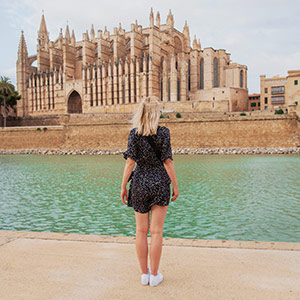
Mobile phone filming a church. Rioja Alta wine route
How to get here
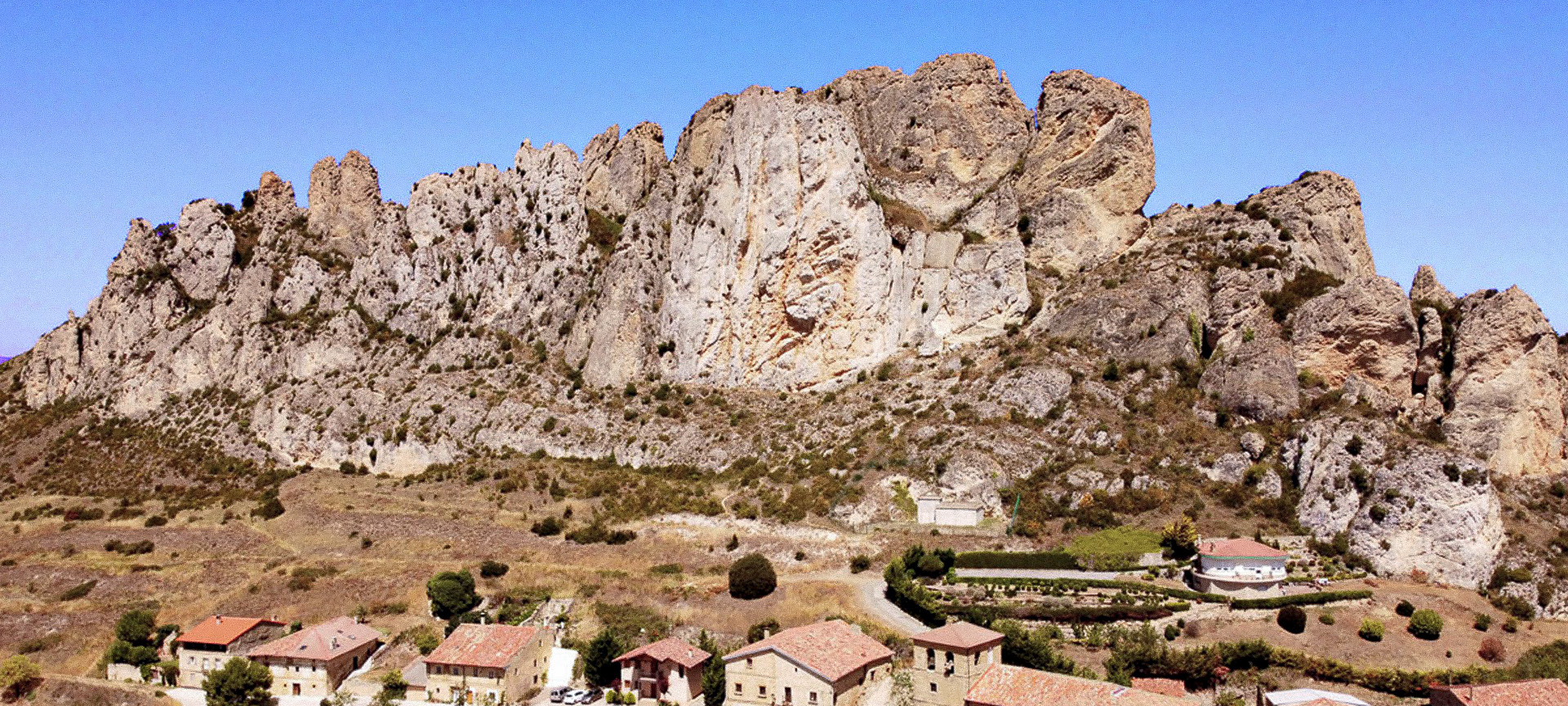
Located to the northwest of La Rioja and just a few dozen kilometres from Logroño, it is easy to reach on the N-232 and the A-68 roads, with exits in Cenicero and Haro. Most of the places along this route are located in this area, parallel to the Ebro river. If you prefer to use the train, there is a station in the town of Haro. What's more, the city of Logroño, the capital of La Rioja, has an airport only 15 km away. The following towns are on this route: Ábalos, Briñas, Briones, Casalarreina, Cenicero, Cuzcurrita de Rio Tirón, Fuentemayor, Haro, Sajazarra, San Asensio, San Vicente de la Sonsierra, Tirgo and Torremontalbo. Many of them organise festivals and events such as the pilgrimage to the shrine of Davalillo and the Claret Battle (in San Asensio), the Medieval Fair in Briones, the Old Music Festival in Sajazarra and the popular Nights of San Lorenzo.
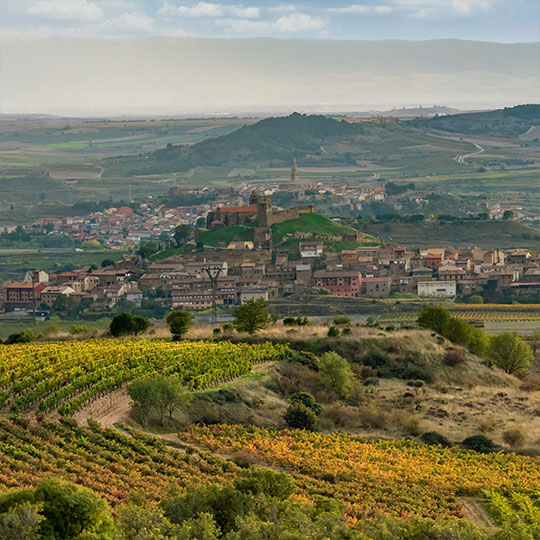
Landscape on the Rioja Alta Wine Route