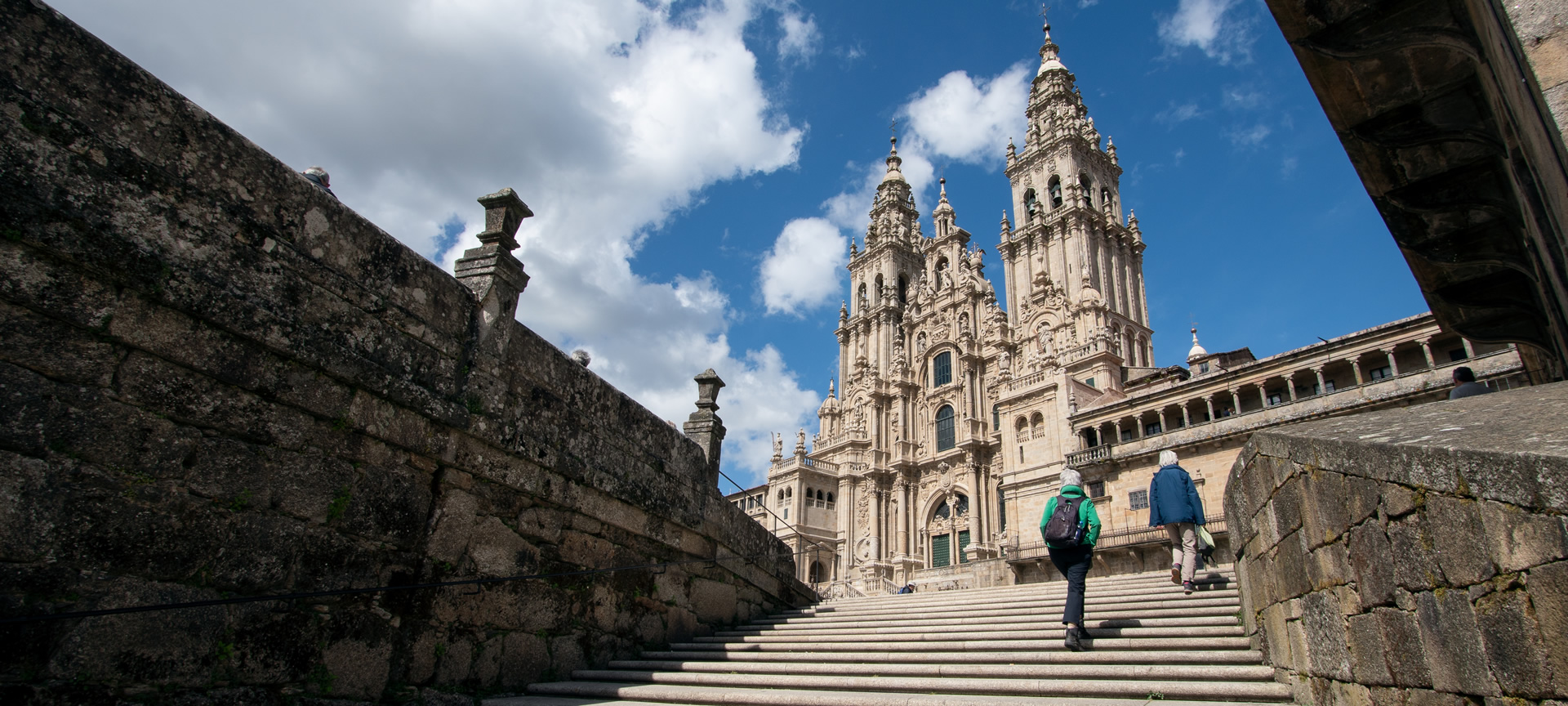
Santiago de Compostela
Pilgrimage destination
The capital of Galicia is famous for being the final destination of the Camino de Santiago, an important pilgrimage route that ends at the city's imressive cathedral, with Romanesque and Gothic architecture.
Stroll through its beautiful old town, declared a World Heritage Site by UNESCO. Visit Alameda Park, Obradoiro Square and the Museum of the Galician People. The Cidade da Cultura de Galicia is an idyllic place to enjoy spectacular sunsets. You will also find countless restaurants and bars where you can savour the region's exquisite seafood.
Santiago de Compostela in pictures


-
MUST-SEE
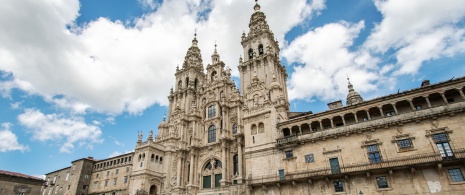
Cathedral of Santiago Since its construction began in 1075, various architectural styles (Romanesque, Gothic, Baroque, Plateresque and Neoclassical) have come together in the building through its many extensions. Look up at the Portico of Glory, approach the figure of the apostle Santiago on the High Altar, go up to the rooftops to enjoy incredible views and, if you happen to be visiting during a festival or celebration, marvel at the awe-inspiring swinging of the botafumeiro (a huge censer) in action. Obradoiro Square The life of the city seems to revolve around this iconic place, where you will always find pilgrims resting after completing the Camino de Santiago. Surrounding the square, you'll find the cathedral, the Raxoi Palace, and the luxurious Hostal dos Reis Católicos Hostal dos Reis Católicos It was founded in 1499 by the Catholic Monarchs to house pilgrims completing the Camino de Santiago. This beautiful Gothic building with a spectacular Plateresque façade is currently a Parador de Turismo hotel. Can you imagine the experience of staying in what is considered to be the oldest hotel in Spain? Cidade da Cultura de Galicia This is an avant-garde cultural complex designed by American architect Peter Eisenman. Its location, on the top of Mount Gaiás, offers a wonderful panoramic view. Stroll around the grounds, from the Hedjuk Towers to the central square or book a guided tour for the full experience. Mercado de Abastos This market is the second most visited place in the city after the cathedral. It has a space dedicated entirely to dining: building 5, with bars and central tables where you can enjoy freshly prepared dishes from a variety of different establishments. Alameda Park Grand promenades, tree-lined paths, fountains, and sculptures create a space that will captivate you with its serene atmosphere. Walk around the perimeter of the park starting from the Paseo dos Leóns, under the triumphal arch. You’ll soon reach the 'Eucalyptus of the Lovers,' where a magnificent, postcard-worthy panorama of the city awaits: the historic city centre framed by the branches of oaks and elms. Galician Contemporary Art Centre Museum that houses mainly works by Spanish, Portuguese and Latin American artists from the second half of the 20th century. Together with the Church and Convent of Santo Domingo de Bonaval and the park of the same name, it forms an architectural ensemble that blends the tradition and modernity of the city.
-
WHERE CAN I EAT?
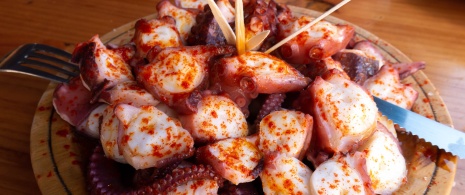
Without leaving the historic centre, around Franco and Raiña streets, you'll find plenty of options to try traditional dishes and tapas. Alongside the variety of boiled or grilled seafood, some recommendations include the popular pulpo a feira (octopus seasoned with olive oil, salt and paprika), squid, steamed mussels and fish. The richness of Galicia's cuisine also includes high-quality meats and other local produce. Choose a confectionery to enjoy a good coffee and delicious desserts such as the Santiago cake or irresistible chocolate-covered almonds. If you walk along Rúa das Orfas to Caldeireiría, you will discover gourmet shops where you can take a sample of Galician flavours with you. Cheeses, canned fish and seafood and the famous artisanal chocolate from Santiago are just some examples.
-
WHAT IF I WANT TO GO SHOPPING?
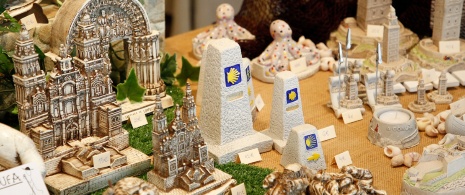
There are many craft, food and antique shops filling the streets of the old town. Silver and jet items are very typical, as are all kinds of souvenirs related to the Camino de Santiago. You will also find ceramics and leather. Another attractive shopping area is El Ensanche, with jewellery shops, boutiques, shoe shops and top clothing brands, as Galicia is a benchmark for Spanish couture and its fashion is exported all over the world.
-
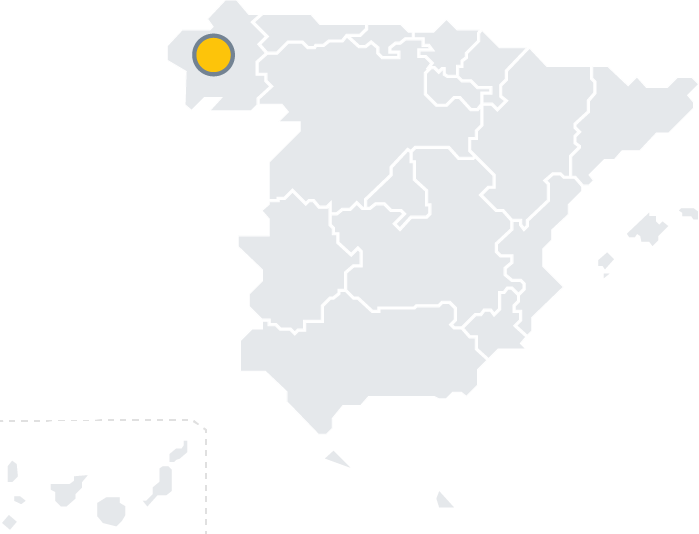
WHERE IS THE CITY LOCATED?
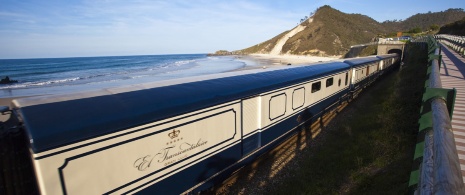
The airport of Santiago de Compostela is only 10 kilometres outside the city. The city is connected to Madrid via high-speed train and is also one of the stops on two luxury tourist trains: the Transcantábrico Gran Lujo and the Costa Verde Express. The Santiago de Compostela station has buses to Portugal, Germany, Belgium, France, Switzerland, the Netherlands and Romania. The AP-9 motorway and the A-6 and A-52 dual carriageways connect Galicia with the rest of Spain, and the A-8 motorway, which crosses the Cantabrian coast, will take you to France.


