
Huesca Planetarium
To trace the spheres of the solar system with your fingertips is to grasp the vastness of space through texture and volume. An astronomical exploration that comes to life when you touch the stars at the Huesca Planetarium.
A child’s hands fit a small painted sphere onto the metal rod of a scale model of the solar system, alongside other textured planets, including one with prominent rings. In the ‘Accessible Universe’ room at Huesca Planetarium, the model features an exhibition of various celestial bodies with different surfaces. The stands are made of metal and the planet surfaces feature rough textures, with reliefs that resemble craters and rings. These shapes make it possible to identify, by touch, the relative volume of each planet within the solar system.
Plaza del Pilar
To stand on the vast esplanade and close your eyes is to feel the wind’s acoustic embrace. You can hear how each strong gust whistles and breaks as it hits the stone, creating a constant murmur right in the heart of Zaragoza’s Plaza del Pilar.
In the foreground, the still water of a rectangular fountain reflects the light from the sky, while some pigeons walk across the light-coloured paving. Behind it rise the imposing brick towers and cupolas of the basilica. The vast open space amplifies the sound of the wind. The 'Cierzo' wind produces a high-pitched, continuous whistling sound as it passes between the tall spires and the geometric mouldings of the towers. There is a sense of rhythmic resonance, accompanied by the low murmur of the water and the fluttering of birds’ wings. This north-westerly wind, which can exceed 100 kilometres per hour, channels its force through the Ebro Valley and shapes the soundscape of Zaragoza.
Stone bridge railing
When you lean against the sturdy stone railing of the bridge, you can feel the pulse of the water beneath your feet. You can feel how the murmur of the River Ebro changes in intensity, shifting from a gentle, constant whisper to a deep, resonant rumble in the heart of Zaragoza.
The Puente de Piedra de Aragon is reflected in the River Ebro; this majestic structure, built of light-coloured stone, dominates the scene and divides it in two. In the foreground, the wide flow of the River Ebro can be seen, and in the background, the tall towers of the Basilica of Our Lady of the Pillar. Leaning against the railing, the riverbed sets the tone for the soundscape. You can hear the constant lapping of the water as it crashes against the pillars. During periods of high water, the murmur turns into a deep, resonant rumble that vibrates through the stone, while at low water a soft, rhythmic murmur can be heard. This Stone Bridge, the oldest in Zaragoza, has acted as a sounding board over Spain’s mightiest river for more than six centuries, translating the precise force of its flow into sound.
Basilica of Santa Engracia
Running your fingers over the façade of the Basilica of Santa Engracia lets you feel the smoothness of the carved alabaster contrasting with the rough brickwork. A tactile experience that brings Renaissance detail to life right in the heart of Zaragoza, Aragon.
An imposing Renaissance façade, carved from pale alabaster, is framed by sturdy walls of tan-coloured brick beneath a clear blue sky. At the Basilica of Santa Engracia in Zaragoza, the façade combines alabaster and brick. Alabaster has a smooth, polished surface, while brick is porous and rough. The ensemble features niches, mouldings and figures carved into the stone, all incorporated into a monumental composition on the façade.
Teruel ham
When you pop a freshly carved slice into your mouth, you can feel the fat melting slowly, revealing subtle, sweet notes. A bite that evokes memories of the cold, dry wind that sweeps through the cobbled taverns of Teruel, in Aragon.
A close-up shows a thin slice of ham on the metal blade of a ham-carving knife, with a deep red colour and streaks of fat glistening in the light, while the whole joint remains out of focus in the background. In an Aragonese tavern, the fat begins to melt in the mouth as soon as it touches the tongue. The flavour is mild, with low saltiness and a sweet, slightly buttery note that lingers in the throat. This flavour profile is due to the cold, dry climate of the province of Teruel, which acts as a natural drying chamber and allows for slow curing – the basis of Spain’s first designation of origin for white-pig ham.
Lleida: Echo from the Central Nave of the Seu Vella
As you walk through this site, you realise how the silence of the stone is broken with every step. The sound of footsteps creates a clear reverberation that lingers in the air, forming an invisible acoustic map of the imposing Seu Vella in Lleida.
Large pointed arches and elaborate windows featuring Gothic tracery frame a vast gallery of exposed stone. The golden sunlight streams through the columns of the arches and casts long shadows across the pavement. As you walk through this space, you can sense how the vastness of the venue envelops your ears. When you strike the ground with your shoes or a walking stick, a clear, resonant sound is produced. The sound echoes off the sturdy vaults and lingers for several seconds in the thick, still air. This reverberation is due to the bare walls and the large dimensions of the room. The old cathedral was used as a military barracks in the 18th century; it lost its interior decoration and the choir stalls were left exposed, transforming the Seu Vella in Lleida into a vast stone resonance chamber.
Agaves
A stroll along the slopes of Montjuïc means letting a rich, sweet and almost heady fragrance envelop you. It is the invisible trail left by the blooming agaves as you walk along the paths of the Jardins de Mossèn Costa i Llobera in Barcelona.
A group of imposing agaves dominates the foreground, with their fleshy, light-green leaves ending in sharp spines, arranged in a rosette on a carpet of small creeping plants. In the Mossèn Costa i Llobera Gardens in Barcelona, the air is filled with a rich, warm and sweet scent. During the flowering season, the breeze takes on honeyed and herbaceous notes that mingle with the salt spray from the nearby Mediterranean Sea. This garden, sheltered by a unique microclimate, is home to succulent species that store energy for decades to produce a single bloom, with stems that can grow up to ten metres tall before withering.
Benches at Parc Güell
Running your hand along the undulating backrest allows you to feel the constant contrast between the smooth ceramic and the small, rough joints that hold each fragment together. A winding, undulating walk beneath the warm Mediterranean sun in Barcelona’s Park Güell.
A wavy wall is covered with small, irregular fragments of glazed pottery in shades of blue, green and yellow beneath a clear sky. Beneath my fingertips, the surface of the tiles is glazed and slightly warm from the sunlight. As you run your hand over this anatomically shaped backrest, you can sense a constant contrast between the smooth, cool surface of the pieces and the rough cracks in the mortar that binds them together. This construction technique, known as trencadís, is used by Antoni Gaudí to cover curved surfaces with fragments of reused ceramic. In Barcelona’s Park Güell, this undulating structure forms a large, continuous shape that follows the curves of the human body.
Sagrada Familia
To embrace the shafts of the columns at the Sagrada Familia is to try to encircle a vast expanse of stone with one’s own arms. As your body touches the cold stone, you sense the sheer magnitude of a colossal weight, held with apparent lightness in the heart of Barcelona.
A dense forest of fluted stone columns rises towards the ceiling and branches out beneath vaults shaped like geometric stars. Inside Barcelona’s Sagrada Família, the porphyry and granite columns have a cool, smooth and extremely solid surface. Its diameter is so wide that it cannot be fully encompassed by one’s arms. The edges of the shaft are smoothly polished and the structure rises to support the upper vaults. Antoni Gaudí designed this space as a biomimetic system in which the columns act like trees, distributing the loads down to the foundations.
L'Ardiaca Tortuga House
To stroke the stone shell is to feel the weight of time beneath your fingertips. As you run your hand over its ‘scales’, you can feel the contrast between the rough wall and the marble, polished by thousands of touches – a superstition that lives on at the Casa de l’Ardiaca in Barcelona.
A carved stone letterbox stands out against an ancient wall, adorned with five swallows sculpted in mid-flight and framed by ivy leaves. A picture of a tortoise appears in the bottom right-hand corner. The surrounding wall is made of rough, porous stone that is cold to the touch, whilst the tortoise has a smooth, polished marble surface with rounded edges. The ensemble forms a sculptural relief that is integrated into the façade. This postbox was designed by the architect Lluís Domènech i Montaner as a satire, with the birds symbolising the swiftness of justice and the tortoise its bureaucratic slowness.
Ebro Delta Natural Park
To wander along the paths near the river mouth is to experience the salty breeze mingling with an intense floral fragrance. As you breathe deeply, the moist air fills the air with sweet and herbal notes that characterise the landscape of the Ebro Delta Natural Park, in Tarragona.
A cluster of wild daffodils reaches up towards a blue sky dotted with white clouds. Its green stems bear bright yellow flowers with orange centres. In the Ebro Delta Natural Park, in Catalonia, the wind carries a complex and heady scent. The air blends the sweet scent of the petals with the earthy notes of lavender and wild lavender, along with the dampness of the soil and the salt spray from the sea. This nature reserve is one of the largest wetlands on the peninsula, where the mixture of fresh and salt water supports a wide variety of native flora.
Tarragona amphitheatre
To sit on the ancient stone steps is to hear the constant murmur of the Mediterranean Sea blend with the echo of the wind. A rhythmic symphony in which the waves seem to applaud from the sand at the Tarragona Amphitheatre in Catalonia.
Imposing semi-circular terraces of golden stone descend in tiers towards the central arena, with the blue waters of the Mediterranean Sea breaking just a few metres from the ruins. The natural acoustics of the venue, originally designed to amplify the roar of the crowd, now capture the sound of the waves. You can hear the constant lapping of the water against the rocks, producing a deep, continuous murmur that echoes off the ancient walls. The sea breeze whistles as it slips through the round arches, creating a striking contrast with the rhythmic lapping of the surf against the shore. This site was built in the late 2nd century AD, just a stone’s throw from the water, to facilitate the direct unloading of wild beasts and heavy equipment intended for the spectacles held at the Tarragona Amphitheatre.
Meduza Girona
Running your fingers along the stone frame at number 33 on the Placeta de l’Institut Vell is a way of physically connecting with history. A small carved groove allows visitors to explore, with their hands, the legacy of Europe’s best-preserved Jewish quarter, located in Girona.
A large, illuminated block of stone features an elongated vertical groove in its centre. At its feet lies a small scroll bearing Hebrew characters and a cylindrical case. At the doorway of number 33 on the Placeta de l’Instituto Vell, the outer surface of the wall is rough and weathered by the passage of centuries, while the central recess is smooth and polished by friction. The incision is carved into the door jamb. This slot housed the mezuzah, the sacred scroll placed in the homes of the Jewish community. In Girona, this building forms part of the Call, the best-preserved Jewish quarter in Europe.
Orange Trees: The Garden of the Hesperides
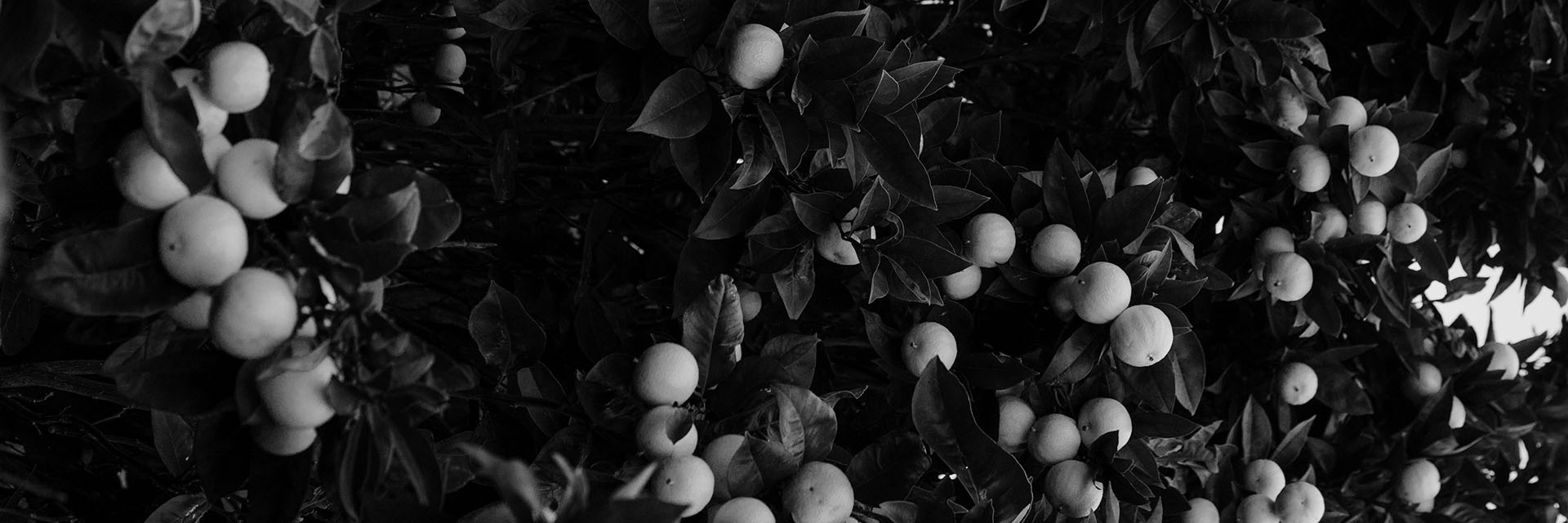
Strolling amongst the collection of citrus trees is like letting the heady scents guide you through the seasons. Sweet and tart notes mingle in the air, creating an invisible yet vibrant landscape in the Garden of the Hesperides in Valencia.
A close-up of ripe oranges with rough, shiny skin peeks out from among the dense, elongated green leaves of an orange tree. In the Garden of the Hesperides in Valencia, the breeze releases the essential oils from the bark. The air is filled with an intense citrus scent, with fresh notes of the fruit and bitter undertones of the foliage. The garden features more than fifty varieties of citrus fruit and pays tribute to the golden apples of classical mythology, showcasing the agricultural diversity of the Levantine orchards.
Trencadis: City of Arts and Sciences
Running your hand over the sinuous shapes of the City of Arts and Sciences is like feeling the warmth and uneven texture of broken pottery. A tactile experience that bridges the vast scales of avant-garde architecture with traditional craftsmanship in Valencia.
A curved wall covered in small, irregular fragments of shiny white ceramic dominates the foreground, bordering a vast pond of clear water beneath a cloudless sky. You can feel the trencadís technique beneath your fingertips. The texture is subtle, with slight indentations in the rough joints that join each smooth, polished tile. As you run your hand over it, the surface absorbs the heat of the Mediterranean sun, warming the pottery unevenly depending on the angle of the light. This mosaic technique, developed to clad warped surfaces, envelops the buildings of the City of Arts and Sciences in Valencia, forming a continuous skin of ceramic scales that adds texture and protects against sea-borne damp.
College of the Fine Art of Silk
Running your fingers over the exquisite fabrics at the College of the Fine Art of Silk is like discovering centuries of textile tradition. One can sense the weight, the drape and the intricate texture of the floral brocades that give shape to the historic Valencian silks in the heart of Valencia.
A close-up of an emerald-green silk fabric, adorned with dense floral embroidery in shades of pink, orange and gold, forming a three-dimensional pattern. When you run your fingers over this piece at the Colegio del Arte Mayor, you can feel a marked contrast in textures. The base is smooth, cool and slippery, as is typical of natural silk, broken up by the dense texture of the interwoven threads. When you hold the fabric, you can feel its substantial weight and firm drape – characteristics of a structured fabric that resists creasing easily. This textile craftsmanship dates back to the 15th century, when the silk trade turned Valencia into a European commercial hub, and ‘espolins’ were woven – a process that even today requires weeks of meticulous manual labour on wooden looms to produce just a few centimetres.
Alboraya Horchata
Taking a sip from a chilled glass of artisanal horchata is like feeling the earth and tradition in every mouthful. Dipping a fluffy fartón into this creamy, sweet drink instantly transports you to the warm summer afternoons in Alboraya, Valencia.
A crystal glass filled with a white, frothy drink is accompanied by an elongated, golden bun, covered in a thin layer of sugar icing that begins to melt on contact with the liquid. In a traditional horchata bar, the first sip reveals a milky, velvety and slightly earthy texture. The flavour is sweet, with subtle notes of walnut and damp root, and contrasts with the fluffy texture of the fartón, which soaks up the drink and intensifies its flavour with every bite. Alboraya is the birthplace of the tiger nut, a tuber grown in sandy soil that gave rise to horchata, one of the drinks most closely associated with the Region of Valencia.
The Esplanade of Spain.
Strolling along the Esplanade of Spain is like letting the wind guide your steps. If you listen carefully, you can hear a distinctive sound: it is not a soft murmur, but the rhythmic, crisp rustling of thousands of date palm fronds brushing against one another by the sea in Alicante.
A mosaic made up of thousands of small marble tiles forms a pattern of undulating lines in shades of red, cream and dark blue. As you stroll along them, the sea breeze rustles the tops of the date palms lining the path. Instead of the usual rustling of leaves, there is a dry, rhythmic crackling sound, caused by the friction of their stiff, pointed palm fronds against each gust of wind. This soundscape accompanies the Explanada de España in Alicante, where the sound of more than four hundred trees merge with a walkway paved with six and a half million tiles that recreate the undulating waves of the Mediterranean.
Santa Clara Square
Strolling through the historic centre, you can really feel the contrast between the dry heat radiating from the cobblestones in the sun and the humid sea breeze that wafts through the wide streets. A dual attraction situated right in the heart of Plaza Santa Clara in Castellón.
A stone archway in the shade frames a large, sun-drenched square, where an imposing co-cathedral with golden hues, a Gothic façade and square towers stands tall. The pavement radiates heat that has built up after hours of sunshine. As you walk across the square, a draught sweeps through the avenues, bringing a damp, sticky, salty breeze from the Mediterranean Sea, just a few kilometres away. This flat, open route is characteristic of Castellón de la Plana, where the sea breeze tempers the temperature in its most monumental squares.
Jijona
Taking a bite of a piece of artisan nougat is to experience the sweetness of honey and the crunch of toasted almonds filling your mouth. A blend of textures that epitomises pure culinary tradition as you stroll along Carrer del Vall in Jijona, the sweet heart of Alicante.
Chunky, irregularly shaped pieces of hard nougat, featuring whole toasted almonds embedded in a firm, white mixture. On the iconic Carrer del Vall de Jijona, every bite gives way with a crisp snap. On the palate, the intense flavour of nuts unfolds, blending with the floral and lingering sweetness of honey. The contrast between the crisp, crunchy crystallised sugar and the firm texture of the almond fills the mouth with toasty notes. This balance has been perfected since the 15th century in the province of Alicante, making turrón a culinary symbol of Spanish Christmas.