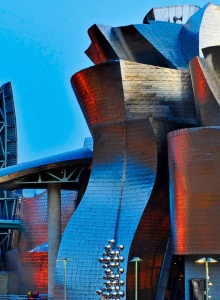
We could also refer to this Basque Country destination as “The City of the Guggenheim”, as when this original museum was built in 1997, Bilbao was changed forever. In fact, to this day it is making an impact with its groundbreaking structures created by prestigious architects and stands as a true international benchmark of modernity.
Yet, curiously, what gives it its unique character is the blend of the avant-garde with the traditional charm of its old town, filled with delightful streets and bars where the counters are packed with pintxos that show just how passionately people here embrace their cuisine. All this has earned Bilbao a place of honour on the lists of Spain’s most interesting cities.
What to visit
Select from the list or hover over the map to find out about points of interest.
What to visit
Select from the list or hover over the map to find out about points of interest.







Other ideas for your trip
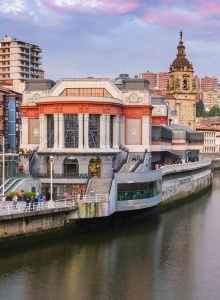
Bilbao, pincho by pincho
Taste and creativity in equal measure in one, or at most two, bites. That's what a pincho is, one of the highlights of Biscay and therefore Basque Country,…
Read more
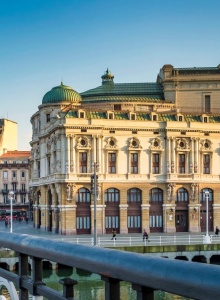
Bilbao art district
The streets of Bilbao are one big exhibition of architecture and contemporary art.…
Read more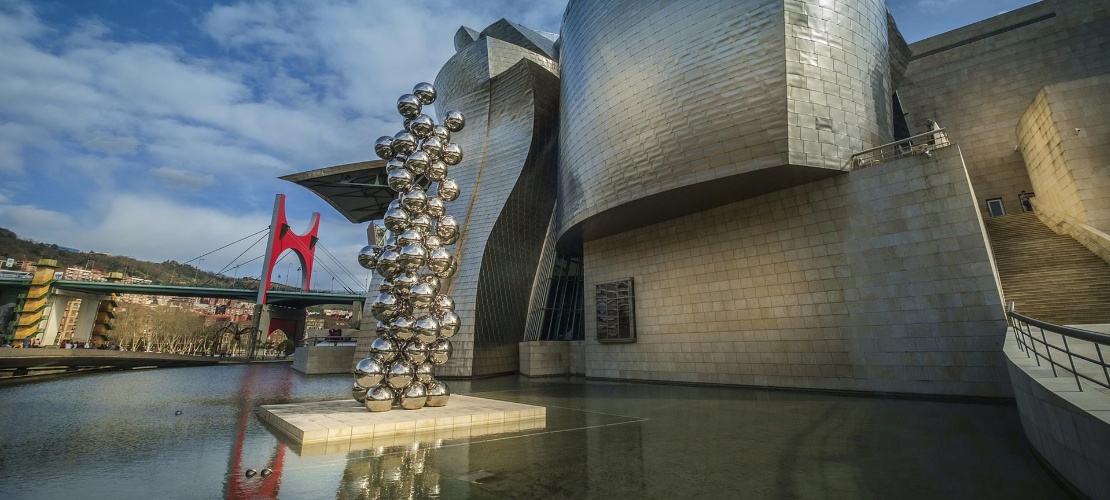
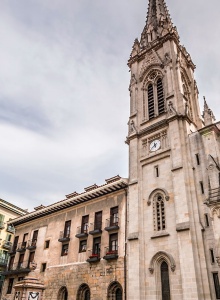
Images of modern architecture in Bilbao
Frank Gehry’s Guggenheim Museum Bilbao started a contemporary architecture movement which transformed the image of Bilbao to make it an emblem of creativity and…
Read more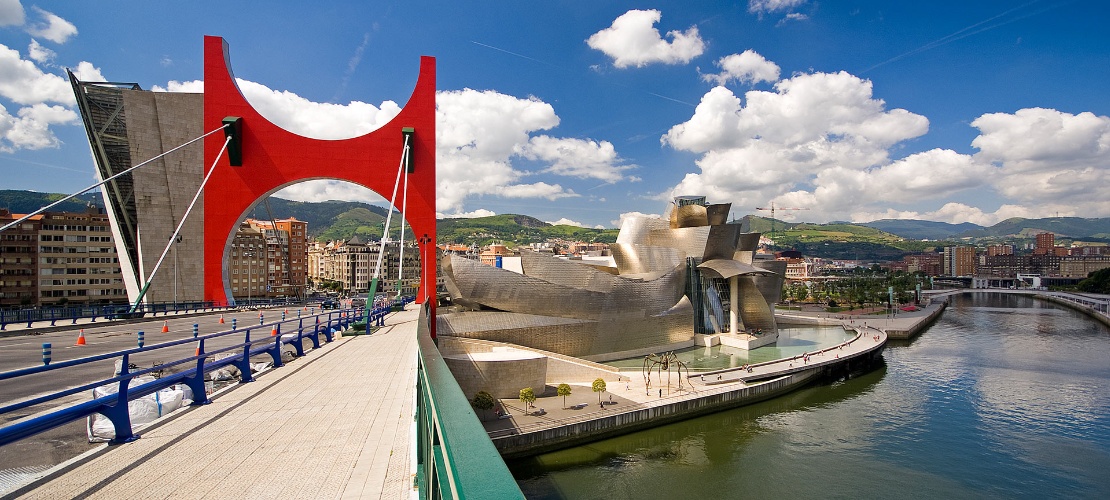
A week in Green Spain
We suggest a route from east to west covering the four regions that make up this part of Green Spain: the Basque Country, Cantabria, Asturias and Galicia.…
Read more
Bilbao: a city filled with art, history and flavour in Northern Spain
When we arrive at the capital of Vizcaya, Puppy is there to give us a warm welcome.…
Read more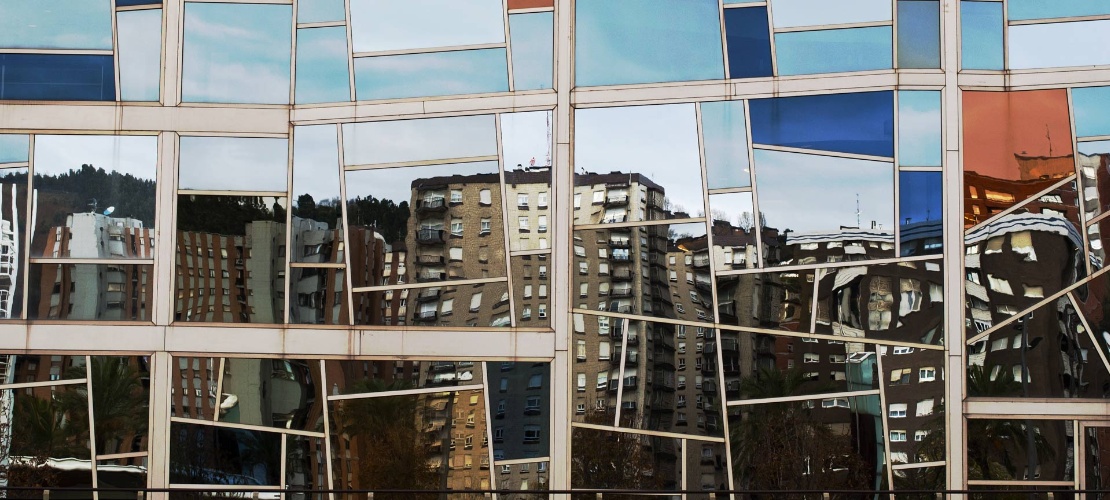
Two days in Bilbao
If you fancy a two-day getaway and you want to visit some of the most avant garde cities in Spain, then Bilbao is the place for you.…
Read more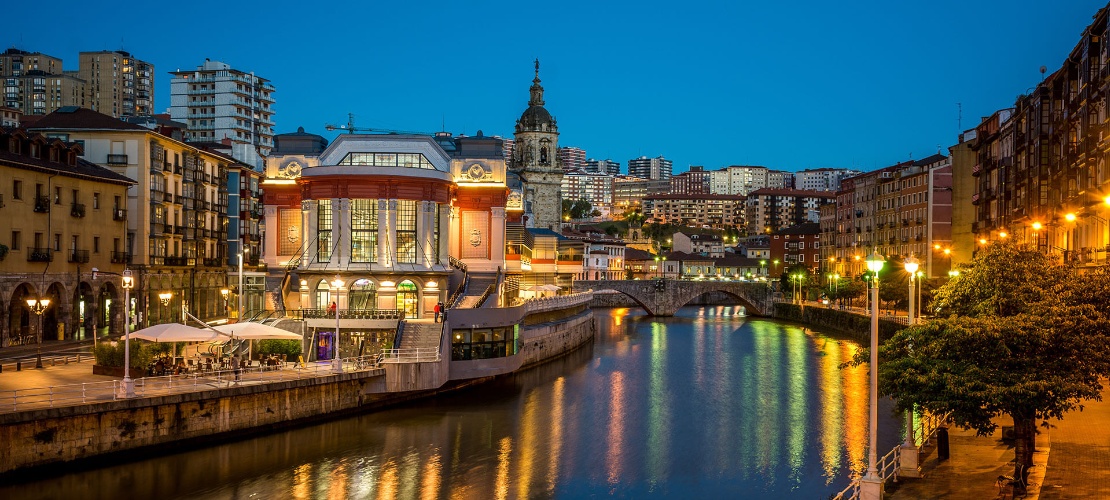


How to get there - transport information
Select the means of transport to see how to get there or how to get around at your destination.
How to get to aeroplane
-
Bilbao Airport is about 12 kilometres from the city centre.
-
The A3247 bus runs to the Bilbao Intermodal bus terminal, with several stops in the city centre. It operates between 06:00 and midnight from the airport to the city and between 05:00 and 22:00 from Bilbao to the airport.
-
To get from the airport to the city centre by car, take the N-637. It will take about 15 minutes.
-
The journey by taxi costs between 24 and 29 euros and takes about 15 minutes.
How to get to bus
-
The Bilbao Intermodal bus and coach station, with routes to the rest of Spain and other countries, is in the city centre.
-
There are several public transport options from here: Metro (San Mamés station), Tram (Zunzunegi stop), commuter train (San Mamés station) and up to 27 bus lines.
How to get to train
-
The city’s main railway station is the Bilbao-Abando station.
-
Renfe trains run to cities including Madrid, Barcelona, Logroño, Zaragoza, Valladolid, Salamanca, Málaga, A Coruña, Vigo, Burgos, León and Segovia. (Book tickets
-
The commuter train services and the Euskotren connect Bilbao to its metropolitan area, other parts of Bizkaia and nearby cities in the rest of the Basque Country.
-
Bilbao is also on the route of tourist trains such as the Transcantábrico.
How to get to boat
-
Ferries:
-
The regular ferry services from Portsmouth (UK) and Rosslare (Ireland) operated by Brittany Ferries arrive in Bilbao twice a week.
-
The Port of Bilbao passenger terminal is in Santurzi, a 15-minute drive by car or taxi from central Bilbao.
-
If you're using public transport, you can take the bus A3321 next to the port, then change to the C-1 commuter train (Peñota station), Line 2 of Metro Bilbao (Santurzi or Peñota stations) or by bus A3115 (Abaro 11 bus stop, in Portugalete). In all cases the journey takes about an hour and 20 minutes.
-
Cruise lines:
-
The Port of Bilbao cruise terminal is located in Getxo, 10 kilometres from the city centre, about 15 minutes by car or taxi.
-
The best options for public transport are the Metro (Neguri or Gobela stations, Line 1); and the bus 3411, Stop on Av. Zugartzarte 54. In both cases it takes about an hour, and you have to walk approximately one kilometre to the terminal.
How to get there by road
-
The AP-8 motorway runs to Donostia-San Sebastián, from where you can travel to France.
-
The AP-68 motorway runs to Barcelona via Burgos, where there are motorways to Madrid or Portugal.
-
Check where to park your vehicle if you are driving to Bilbao and, once you’re there, it’s best to get around using the extensive public transport network.
-
Part of the city centre, the Abando district, has traffic and parking restrictions from Monday to Friday from 7:00 to 20:00 as it is a Low-Emission Zone. If you plan to visit Bilbao by car or motorbike, find out about the possible restrictions before your trip through your accommodation.
Practical information
-
Bilbao is a very walkable city, although it has plenty of public transport options.
-
You have two public transport cards:The Barik public transport card is a “contactless” chip card-wallet for discounts on public transport. You can use it for Metro Bilbao, Bilbobus, Tranvía trams, Euskotren local trains, the Bizkaia Transporter Bridge, the Artxanda and Larreineta funicular railways, and more.The Bilbao Bizkaia Card allows unlimited use of almost all forms of public transport, and also includes guided tours and discounts on cultural and leisure activities. It is available in three versions: 24, 48 and 72 hours.
How to get around in metro/tram
-
Bilbao Metro:
-
The metro has 3 lines that run from 06:00 am to 11:00 pm, until 02:00 am on Friday and the eve of public holidays, and all night long on Saturday.
-
You can buy single tickets or a Barik public transport card, which can be downloaded in various forms and offers journeys at lower prices.
-
Bilbao trams:
-
Trams run from approximately 06:00 am to midnight, connecting Atxuri Station with La Casilla.
-
Here you can view the single ticket prices. You can also use the Barik card.
How to get around in bus
-
Bilbobus, the city bus network, operates from 06:00-07:00 a.m. until 10:00-11:00 p.m.
-
You can buy a single ticket or use the Barik travel card.
-
There are eight night buses, known as Gautxori, which operate between 11.00 p.m. and 2:30 a.m. on Fridays and throughout the night on Saturdays.
-
In the city, you can also find stops for intercity buses, which connect Bilbao with other nearby towns.
How to get around in other means of transport
-
Taxi tours. More information
-
Bilbao taxis are white with a horizontal red stripe on the door. A green light on the roof shows they are available.
-
Artxanda Funicular. More information
-
On the estuary: canoe, paddle, boat or big sup. More information
-
Municipal bicycle hire network. More information
-
Hire bicycles, go-karts, hoverboards, quad bikes and more. More information
Excursions to nearby destinations
Donostia-San Sebastián
Distance from Bilbao 100kmThis coastal city is spread along a bay of white sand between the Urgull an...
See more
Excursions to nearby destinations
Vitoria-Gasteiz
Distance from Bilbao 60kmFounded at the end of the 12th century, present-day Vitoria-Gasteiz is a ci...
See more
Excursions to nearby destinations
Zarautz
Distance from Bilbao 85kmThis town in the province of Guipúzcoa combines its excellent beach with an...
See more
Excursions to nearby destinations
Bermeo
Distance from Bilbao 35kmBermeo is a fishing town whose harbour preserves all its traditional local ...
See more
Excursions to nearby destinations
Santander
Distance from Bilbao 100kmA city that seems straight out of a storybook and whose life revolves aroun...
See more
Excursions to nearby destinations
Guernica
Distance from Bilbao 35kmThe town sits in the valley of the river Oka, which flows into the Gernika ...
See more
Shows, festivals, sports...
View some of the most relevant events you will be able to enjoy at the destination.


Book yours
Choose between thousands of activities to live your best life on holiday.